NY Next Generation ELA 1RF3.a
The Standard
Know the letter-sound correspondences for common blends and consonant digraphs (e.g., sh, ch, th).
New York State Next Generation English Language Arts Learning Standards · Phonics and Word Recognition
Teacher's field guide
What This Standard Means
What Students Need to Do
- Students know sound correspondences for common consonant blends and digraphs. They use those correspondences when reading words.
What Mastery Looks Like
- The student preserves both sounds in blends such as sl or tr and produces one sound for digraphs such as sh, ch, and th. The student blends the full word.
Common Misconceptions
- Students may drop one consonant in a blend. They may sound each letter in a digraph separately or confuse similar digraph sounds.
How to Assess It
- Show ship, chat, thin, stop, and frog. Ask students to identify the blend or digraph and read each word.
Lesson moves
Ways to Teach It
Build blend and digraph words with letter tiles, touching each sound before blending.
Ask students how a blend differs from a digraph.
Play Blend or Digraph Sort with picture and word cards.
Find blends and digraphs in classroom labels, names, and a shared morning message.
Free download
Printable 1RF3.a Worksheet
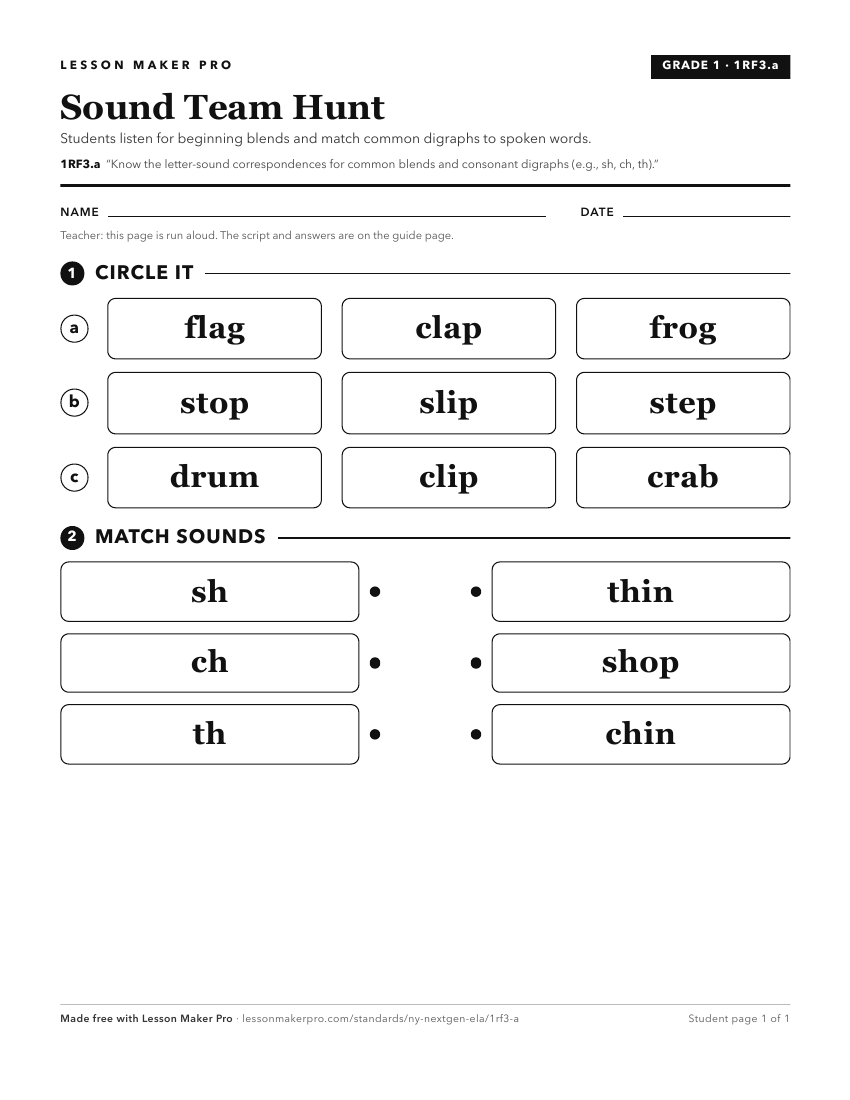
A ready-to-print activity worksheet aligned to 1RF3.a, with an answer key for the teacher on its own page. No account needed.
PDF, US Letter, prints cleanly in black and white.
Download the worksheetKeep exploring
Related Standards
- KRF3.a
Demonstrate one-to-one letter-sound correspondence by producing the primary sound or most frequent sound for each consonant.
- 4RF3.b
Use combined knowledge of all letter-sound correspondences, syllabification patterns, and morphology (e.g. roots, prefixes, and suffixes) to read accurately unf...
- 4RF3.a
Use combined knowledge of all letter-sound correspondences, syllabication patterns, and morphology (e.g., roots and affixes) to read accurately unfamiliar multi...
- 5RF3.a
Use combined knowledge of all letter-sound correspondences, syllabication patterns, and morphology (e.g., roots and affixes) to read accurately unfamiliar multi...
Turn this exact standard into a lesson
Grade, subject, topic, and the complete standard are prefilled. Create one free, no account needed.
Also for this standard:Make a WorksheetMake a QuizMake a Sub Lesson