NY Next Generation ELA 1L5.d
The Standard
Distinguish shades of meaning among verbs differing in manner (e.g., look, peek, glance, stare, glare, scowl) and adjectives differing in intensity (e.g., large, gigantic) by defining or choosing them or by acting out the meanings.
New York State Next Generation English Language Arts Learning Standards
Teacher's field guide
What This Standard Means
What Students Need to Do
- Students distinguish shades of meaning among related verbs and adjectives. They define, choose, or act out differences in manner and intensity, such as peek versus stare or large versus gigantic.
What Mastery Looks Like
- A student can arrange related words by strength or manner and explain the distinctions. The student chooses the word that best matches a pictured or acted situation.
Common Misconceptions
- Students may treat related words as exact synonyms or rank them only by word length. They may act out the general action without showing the particular manner or intensity.
How to Assess It
- Ask students to act out glance, stare, and glare, then order large, huge, and gigantic by intensity and explain the choices.
Lesson moves
Ways to Teach It
Place related verb and adjective cards on meaning lines, then act out or illustrate each position.
Ask, ‘How would peek look different from stare, and when would each word fit?’
Play Shade Charades by acting one related verb while classmates identify the precise word and explain why.
Revise a lost-pet description by choosing verbs and adjectives that communicate exact manner and intensity.
Free download
Printable 1L5.d Worksheet
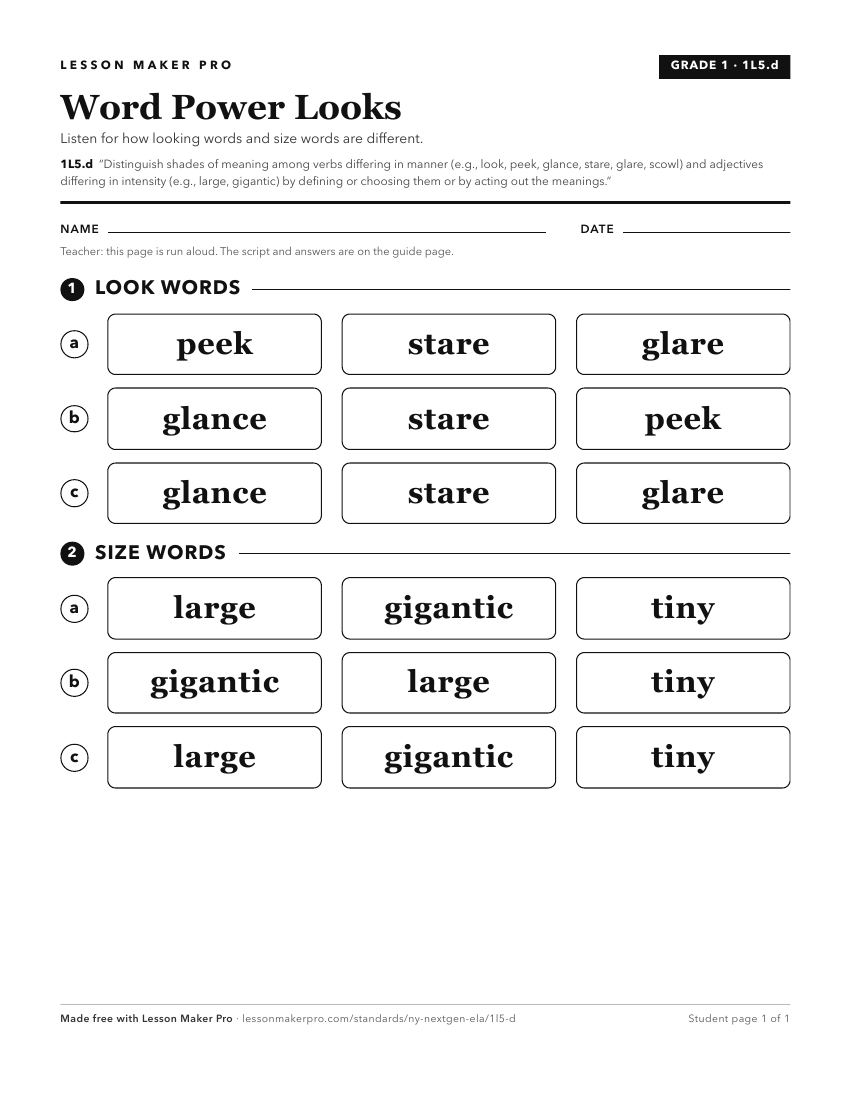
A ready-to-print activity worksheet aligned to 1L5.d, with an answer key for the teacher on its own page. No account needed.
PDF, US Letter, prints cleanly in black and white.
Download the worksheetKeep exploring
Related Standards
- KL5.d
Explore variations among verbs that describe the same general action (e.g., walk, march, gallop) by acting out the meanings.
- 2L5.c
Distinguish shades of meaning among closely related verbs (e.g., toss, throw, hurl) and closely related adjectives (e.g., thin, slender, skinny, scrawny).
- 3L5.c
Distinguish shades of meaning among related words that describe states of mind or degrees of certainty (e.g., knew, believed, suspected, heard, wondered).
- 5R4
Determine the meaning of words, phrases, figurative language, academic, and content- specific words and analyze their effect on meaning, tone, or mood.
Turn this exact standard into a lesson
Grade, subject, topic, and the complete standard are prefilled. Create one free, no account needed.
Also for this standard:Make a WorksheetMake a QuizMake a Sub Lesson