NY Next Generation ELA 2L5.c
The Standard
Distinguish shades of meaning among closely related verbs (e.g., toss, throw, hurl) and closely related adjectives (e.g., thin, slender, skinny, scrawny).
New York State Next Generation English Language Arts Learning Standards
Teacher's field guide
What This Standard Means
What Students Need to Do
- Students distinguish among verbs or adjectives with closely related meanings. They explain how each word shows a different degree, manner, or feeling.
What Mastery Looks Like
- The student orders words such as walk, march, and stomp by manner or intensity. The student chooses the word that best fits a sentence and explains the choice.
Common Misconceptions
- Students may treat synonyms as fully interchangeable. They may order words by length or familiarity instead of the shade of meaning.
How to Assess It
- Give the words toss, throw, and hurl with three short situations. Ask students to match each word and explain one choice.
Lesson moves
Ways to Teach It
Act out closely related verbs and arrange their word cards by force or speed.
Ask students how thin, slender, and scrawny create different impressions.
Play Best Word Match with sentence cards and related verbs or adjectives.
Revise a classroom direction by choosing a precise verb for the intended action.
Free download
Printable 2L5.c Worksheet
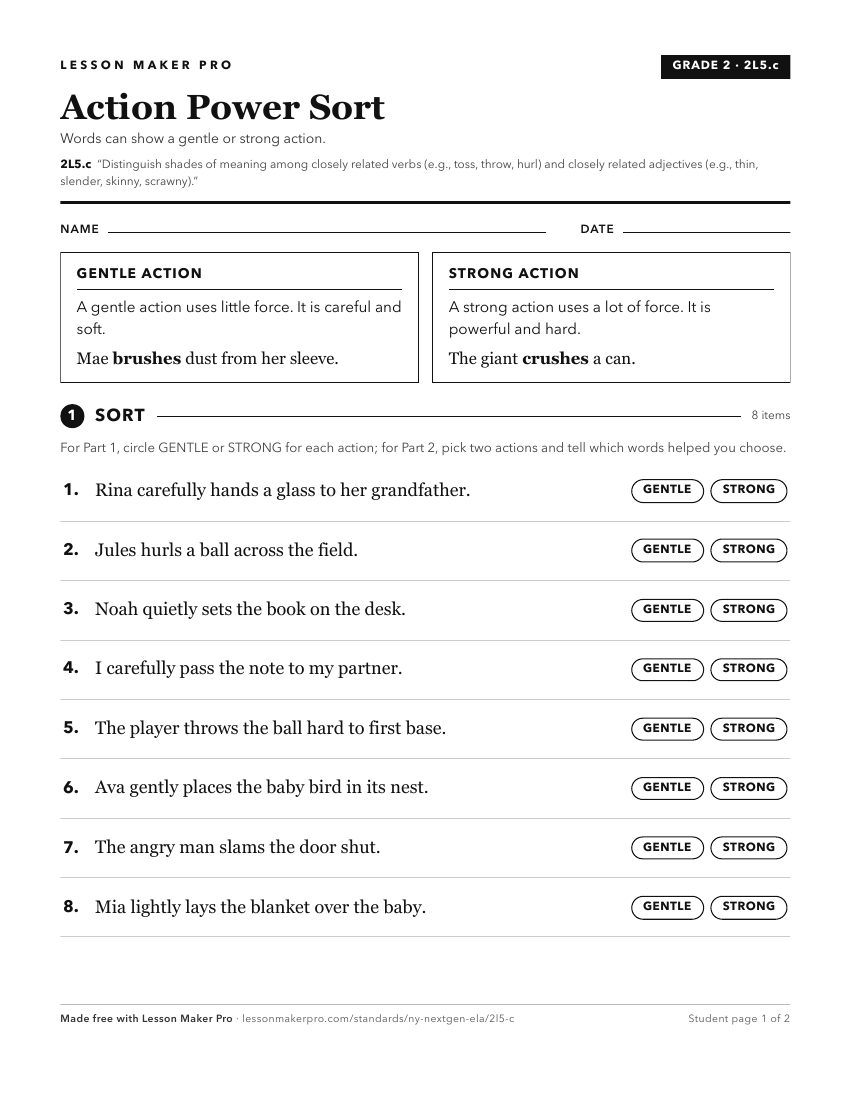
A ready-to-print activity worksheet aligned to 2L5.c, with an answer key for the teacher on its own page. No account needed.
PDF, US Letter, prints cleanly in black and white.
Download the worksheetKeep exploring
Related Standards
- 1L5.d
Distinguish shades of meaning among verbs differing in manner (e.g., look, peek, glance, stare, glare, scowl) and adjectives differing in intensity (e.g., large...
- KL5.b
Demonstrate understanding of frequently occurring verbs and adjectives by relating them to their opposites (antonyms).
- 9-10L5b
Analyze nuances in the meaning of words with similar denotations.
- 6L5.c
Distinguish among the connotations of words with similar denotations (e.g., stingy, scrimping, economical, unwasteful, thrifty).
Turn this exact standard into a lesson
Grade, subject, topic, and the complete standard are prefilled. Create one free, no account needed.
Also for this standard:Make a WorksheetMake a QuizMake a Sub Lesson