NGSS MS-ETS1-4
The Standard
Develop a model to generate data for iterative testing and modification of a proposed object, tool, or process such that an optimal design can be achieved.
Next Generation Science Standards
Teacher's field guide
What This Standard Means
What Students Need to Do
- Students build a physical, digital, or diagram model of a proposed solution. They test it repeatedly, measure results, and use those data to change the design. They compare versions against stated criteria and constraints.
What Mastery Looks Like
- Students choose a model that produces useful measurements, such as load held, travel time, or heat loss. They keep test conditions constant, identify patterns, and make a change supported by data. They can explain why one version is the best fit, even if it is not perfect.
Common Misconceptions
- Students may treat a model as a display rather than something used to collect data. They often change several variables at once, skip repeated trials, or choose a favorite design despite the results. Some think optimal means perfect instead of the best balance of criteria and constraints.
How to Assess It
- Give students one sheet of paper, 30 centimeters of tape, two books, and 10 coins. Ask them to build a bridge, run three load tests, record results, and name one data-based revision.
Lesson moves
Ways to Teach It
Build paper bridges between two books, test coin loads, revise one feature, and graph the load held by each version.
Compare two prototype data tables and write which design should be revised, what to change, and which result supports that choice.
Play Design Relay: teams draw a constraint card, inspect test results, then earn points for choosing a justified single-variable revision.
Analyze packaging for a fragile snack, model two protective inserts, and compare drop-test damage, material use, and cost.
Free download
Printable MS-ETS1-4 Worksheet
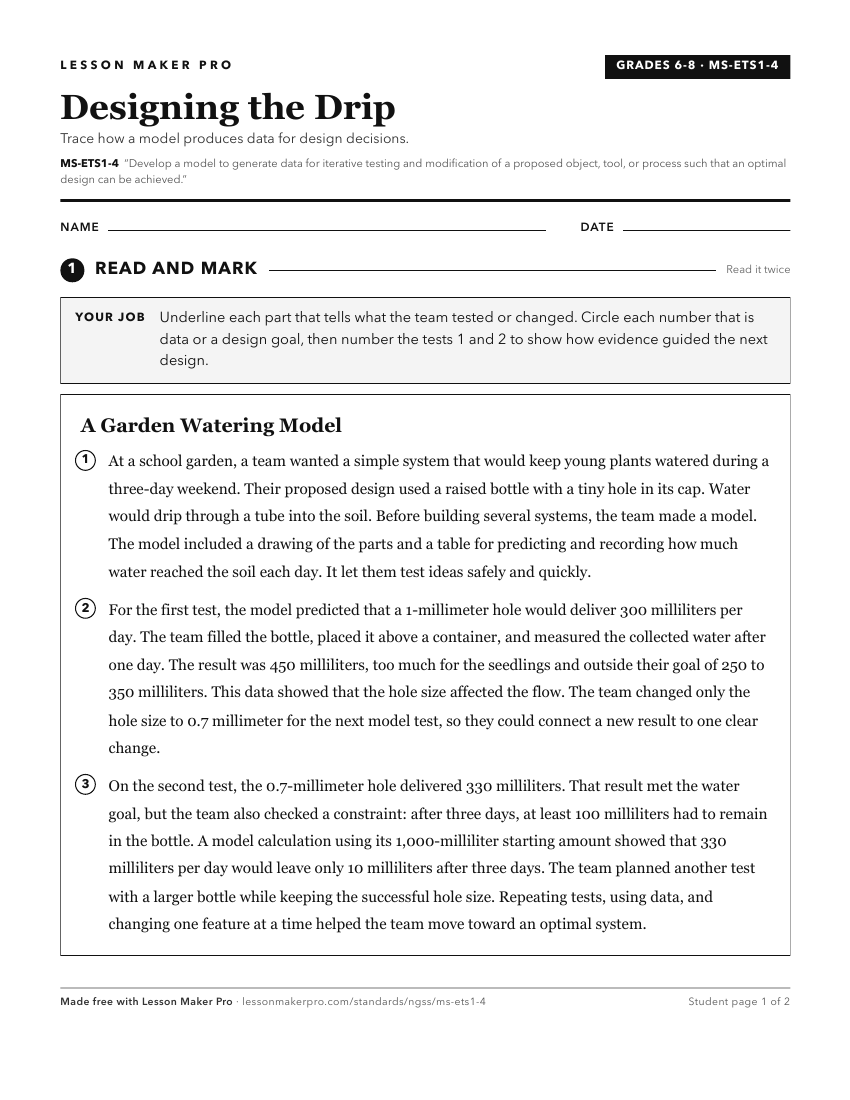
A ready-to-print activity worksheet aligned to MS-ETS1-4, with an answer key for the teacher on its own page. No account needed.
PDF, US Letter, prints cleanly in black and white.
Download the worksheetKeep exploring
Related Standards
- 3-5-ETS1-3
Plan and carry out fair tests in which variables are controlled and failure points are considered to identify aspects of a model or prototype that can be improv...
- MS-ETS1-3
Analyze data from tests to determine similarities and differences among several design solutions to identify the best characteristics of each that can be combin...
- K-2-ETS1-1
Ask questions, make observations, and gather information about a situation people want to change to define a simple problem that can be solved through the devel...
- 3-5-ETS1-2
Generate and compare multiple possible solutions to a problem based on how well each is likely to meet the criteria and constraints of the problem.
Turn this exact standard into a lesson
Grade, subject, topic, and the complete standard are prefilled. Create one free, no account needed.
Also for this standard:Make a WorksheetMake a QuizMake a Sub Lesson