NGSS 3-5-ETS1-2
The Standard
Generate and compare multiple possible solutions to a problem based on how well each is likely to meet the criteria and constraints of the problem.
Next Generation Science Standards
Teacher's field guide
What This Standard Means
What Students Need to Do
- Students sketch or describe several ways to solve one design problem. They use a chart to judge each idea against required features and limits, then explain which option works best.
What Mastery Looks Like
- Students create at least two clearly different ideas. They compare each idea using specific requirements and limits, then justify their choice with evidence and note any trade-offs.
Common Misconceptions
- Students may pick the first idea or the one they like most without checking the requirements. They may confuse criteria, such as strength, with constraints, such as cost or available materials.
How to Assess It
- Give this exit ticket: “A paper bridge must span 20 centimeters, hold 20 counters, and use one sheet of paper. Sketch two designs, then choose one and explain why it better meets the requirements.”
Lesson moves
Ways to Teach It
Give teams ten index cards and 30 centimeters of tape to build two towers, then compare height, stability, and material use.
Show three playground shade sketches and ask students to write which best provides shade, stays safe, and fits a fixed budget.
Run a design card game where pairs rank three backpack designs using weight, storage, cost, and a card naming the user's needs.
Have students compare two classroom pencil organizers, record capacity and desk space used, then recommend one for the class supply table.
Free download
Printable 3-5-ETS1-2 Worksheet
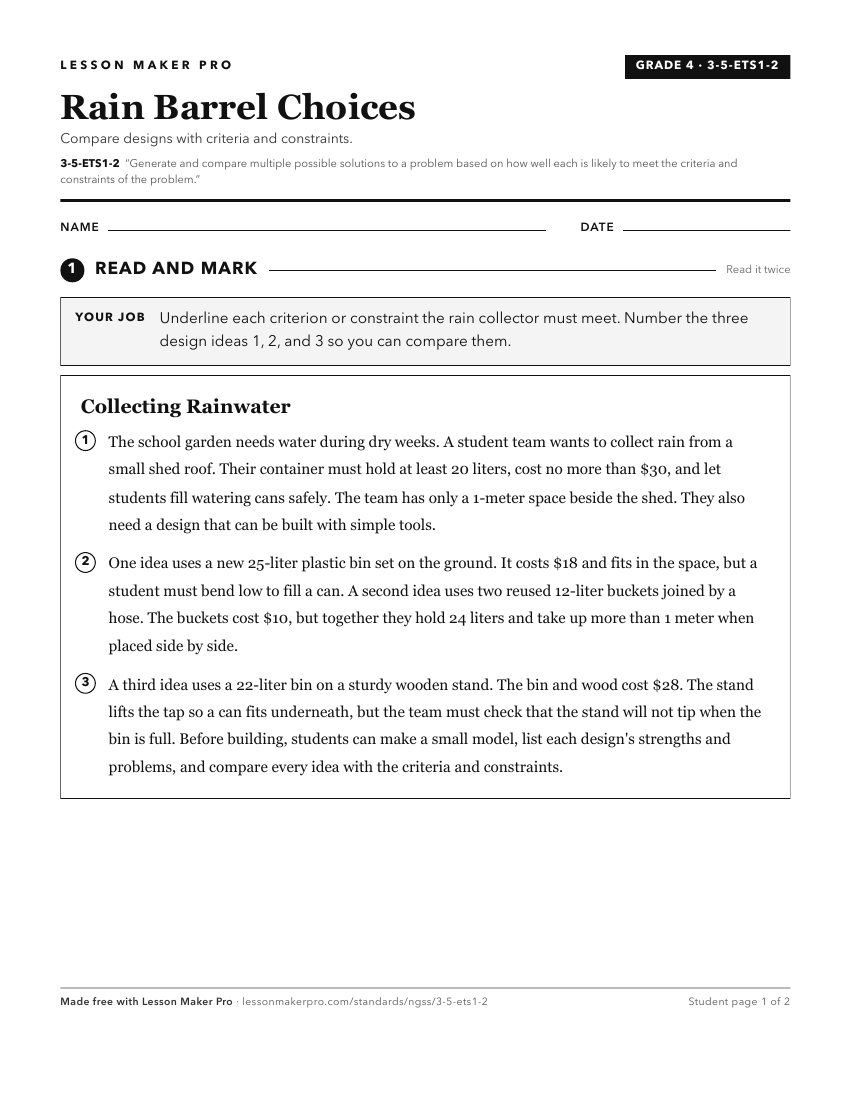
A ready-to-print activity worksheet aligned to 3-5-ETS1-2, with an answer key for the teacher on its own page. No account needed.
PDF, US Letter, prints cleanly in black and white.
Download the worksheetKeep exploring
Related Standards
- HS-ETS1-4
Use a computer simulation to model the impact of proposed solutions to a complex real-world problem with numerous criteria and constraints on interactions withi...
- MS-ETS1-3
Analyze data from tests to determine similarities and differences among several design solutions to identify the best characteristics of each that can be combin...
- MS-ETS1-2
Evaluate competing design solutions using a systematic process to determine how well they meet the criteria and constraints of the problem.
- 4-PS4-3
Generate and compare multiple solutions that use patterns to transfer information.
Turn this exact standard into a lesson
Grade, subject, topic, and the complete standard are prefilled. Create one free, no account needed.
Also for this standard:Make a WorksheetMake a QuizMake a Sub Lesson