Mississippi Science HAP.12
Standard Cluster
Students will investigate the structures and functions of the respiratory system, including the cause and effect of diseases and disorders. Design and use models to illustrate the functions of the organs of the respiratory system. Describe structural adaptations of the respiratory tract and relate these structural features to the function of preparing incoming air for gas exchange at the alveolus. Identify the five mechanics of gas exchange: pulmonary ventilation, external respiration, transport gases, internal respiration, and cellular respiration. Enrichment: Use an engineering design process to develop a model of the mechanisms that support breathing and illustrate the inverse relationship between volume and pressure in the thoracic cavity. * Research and analyze the causes and effects of various pathological conditions (e.g., asthma, bronchitis, pneumonia, and COPD). Research and discuss new environmental causes of respiratory distress (e.g., e-cigarettes, environmental pollutants, and changes in inhaled gas composition).
2026 Mississippi College- and Career-Readiness Standards for Science · Respiratory System
Cluster contents
Standards in This Cluster
HAP.12 is a cluster heading. These are the individual standards under it.
- HAP.12.1
Design and use models to illustrate the functions of the organs of the respiratory system.
- HAP.12.2
Describe structural adaptations of the respiratory tract and relate these structural features to the function of preparing incoming air for gas exchange at the ...
- HAP.12.3
Identify the five mechanics of gas exchange: pulmonary ventilation, external respiration, transport gases, internal respiration, and cellular respiration.
- HAP.12.4
Enrichment: Use an engineering design process to develop a model of the mechanisms that support breathing and illustrate the inverse relationship between volume...
- HAP.12.5
Research and analyze the causes and effects of various pathological conditions (e.g., asthma, bronchitis, pneumonia, and COPD).
- HAP.12.6
Research and discuss new environmental causes of respiratory distress (e.g., e-cigarettes, environmental pollutants, and changes in inhaled gas composition).
Teacher's field guide
What This Cluster Means
What Students Need to Do
- Students trace air from the nose to the alveoli and explain how mucus, cilia, and thin alveolar walls help gas exchange. They use a lung model and distinguish ventilation, external respiration, gas transport, internal respiration, and cellular respiration. They explain how disease or inhaled pollutants can disrupt airflow or oxygen uptake.
What Mastery Looks Like
- A student labels the main airway structures and traces oxygen to a muscle cell and carbon dioxide back out. They use a bottle lung to show why increasing chest volume lowers pressure and draws air in. Given asthma or pneumonia, they predict whether narrowed airways or fluid in the alveoli is the main problem.
Common Misconceptions
- Students may think inhaled air enters the blood as a whole, rather than oxygen crossing the alveolar walls. They may confuse breathing with cellular respiration or think pulling the diaphragm down raises chest pressure. Some treat asthma and pneumonia as the same kind of blockage.
How to Assess It
- On an exit ticket, ask students to trace oxygen from the nose to a muscle cell, name the five processes along the way, and explain how pneumonia affects oxygen uptake.
Lesson moves
Ways to Teach It
Build a bottle lung with balloons and a rubber sheet diaphragm, then pull the sheet and record how chest volume and pressure change.
Ask students to write why mucus and cilia help prepare incoming air, then compare their job with the thin walls of alveoli.
Give pairs cards for the five respiratory processes; have them order the cards and match each to a diagram.
Pair an air-quality alert with a CDC vaping fact sheet; ask which respiratory structures each exposure could harm and why.
Free download
Printable HAP.12 Worksheet
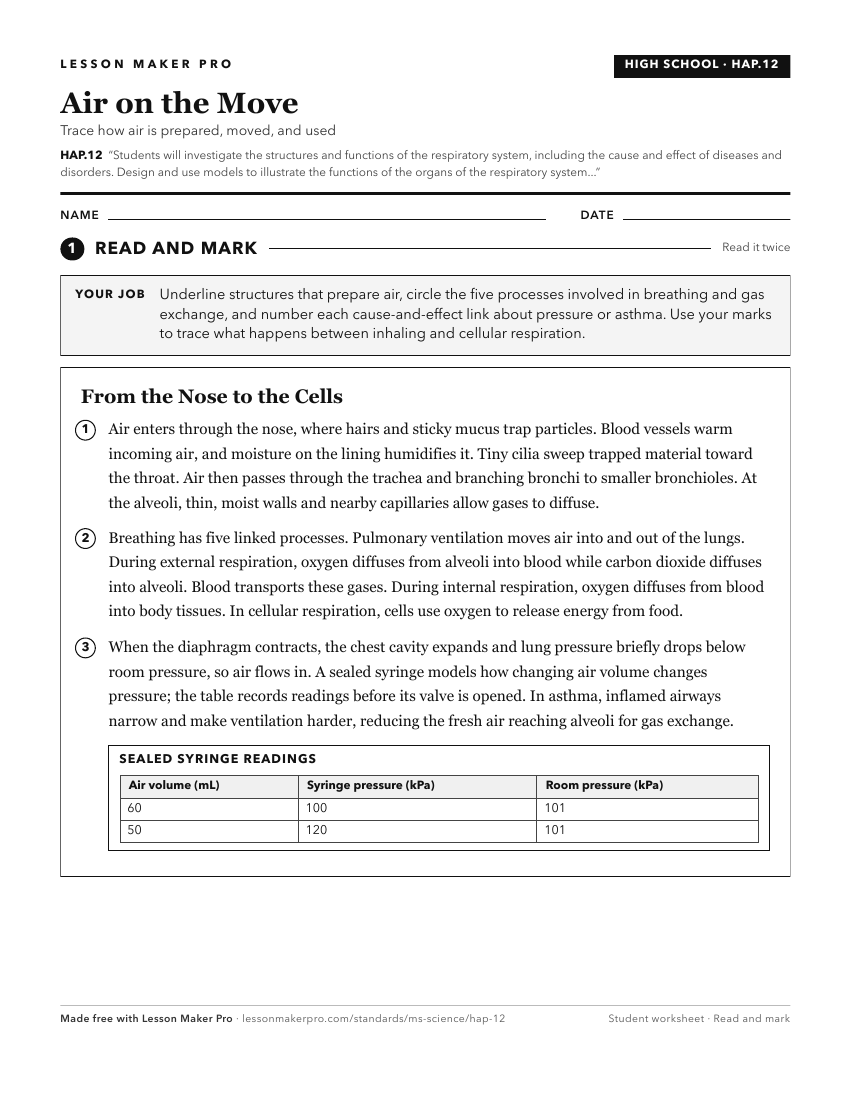
A ready-to-print activity worksheet aligned to HAP.12, with an answer key for the teacher on its own page. No account needed.
PDF, US Letter, prints cleanly in black and white.
Download the worksheetKeep exploring
Related Standards
- HAP.4
Students will investigate the structures and functions of the skeletal system including the cause and effect of diseases and disorders.
- HAP.13
Students will investigate the structures and functions of the digestive system, including the cause and effect of diseases and disorders.
- HAP.14
Students will investigate the structures and functions of the urinary system, including the cause and effect of diseases and disorders.
- HAP.10
Students will investigate the structures and functions of the cardiovascular system, including the cause and effect of diseases and disorders.
Turn this cluster into a lesson
Grade, subject, topic, and the complete cluster are prefilled. Create one free, no account needed.
Also for this cluster:Make a WorksheetMake a QuizMake a Sub Lesson