Mississippi Science BOT.5
Standard Cluster
Students will explore adaptations that allow plants to survive in various habitats. Research plants found in various habitats. Analyze how plants use adaptations for survival in these habitats including extreme habitats. Relate atmospheric factors to biodiversity (e.g., climate as determined by temperature and precipitation). Construct a model using technology that illustrates the levels of succession within a habitat (e.g., graveyard exploration, forest fire area, or reclamation sites). Enrichment: Use an engineering design process to design and build a plant model based on extreme environment criteria to overcome the difficulties presented by this environment. Identify revisions to the proposed model over time. *
2026 Mississippi College- and Career-Readiness Standards for Science · Plant Adaptations to Varying Habitats
Cluster contents
Standards in This Cluster
BOT.5 is a cluster heading. These are the individual standards under it.
- BOT.5.1
Research plants found in various habitats. Analyze how plants use adaptations for survival in these habitats including extreme habitats.
- BOT.5.2
Relate atmospheric factors to biodiversity (e.g., climate as determined by temperature and precipitation).
- BOT.5.3
Construct a model using technology that illustrates the levels of succession within a habitat (e.g., graveyard exploration, forest fire area, or reclamation sit...
- BOT.5.4
Enrichment: Use an engineering design process to design and build a plant model based on extreme environment criteria to overcome the difficulties presented by ...
Teacher's field guide
What This Cluster Means
What Students Need to Do
- Students research plants from different habitats and explain how their traits help them survive. They compare temperature, rainfall, and plant diversity across habitats. They build a digital model of plant growth after a disturbance.
What Mastery Looks Like
- A student can explain how a cactus stem stores water or how mangrove roots help in wet soil. They use climate data to explain possible differences in plant diversity. Their model shows burned ground, grasses, shrubs, and trees in a plausible order.
Common Misconceptions
- Students may think a plant grows a helpful trait because it needs one, rather than inheriting traits. They may assume more rain always means more species. They may think a forest fire removes all soil, so recovery must start from bare rock.
How to Assess It
- Give students a desert plot (30°C, 10 cm annual rain, 8 plant species) and a forest plot (18°C, 120 cm, 35 species). Ask: "Where would a cactus grow better, which trait helps it there, how might climate affect the species counts, and what plants would grow first after a forest fire?"
Lesson moves
Ways to Teach It
In pairs, build a four-slide fire recovery model showing burned ground, grasses, shrubs, and trees, with one change explained on each slide.
Ask: "Why would a cactus struggle in a swamp and a mangrove struggle in a desert?" Require one plant trait in each answer.
Deal habitat cards with temperature and rainfall data and plant trait cards; teams match three traits to habitats and defend their choices.
Use Saguaro and Olympic National Park plant lists and climate summaries to choose one plant from each and explain where it grows.
Free download
Printable BOT.5 Worksheet
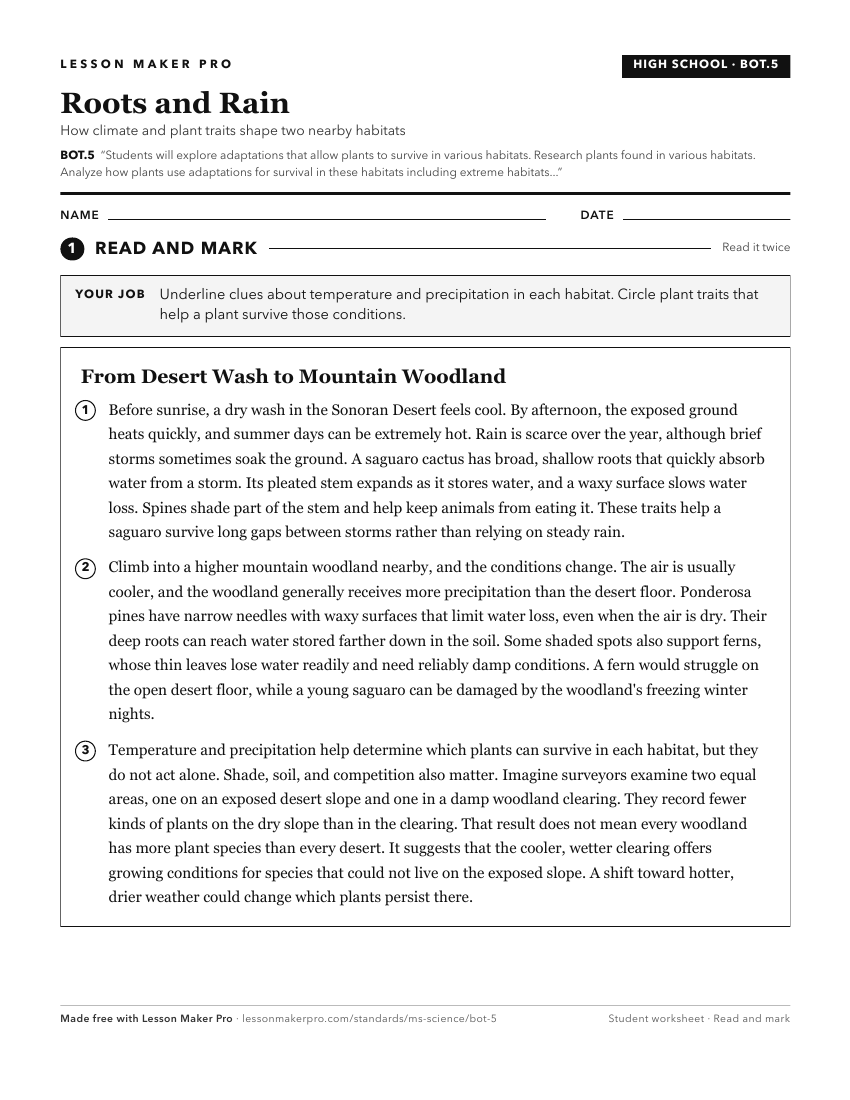
A ready-to-print activity worksheet aligned to BOT.5, with an answer key for the teacher on its own page. No account needed.
PDF, US Letter, prints cleanly in black and white.
Download the worksheetKeep exploring
Related Standards
- BOT.2
Students will identify evolutionary modifications necessary for the terrestrial survival of plants.
- L.1.4
Students will demonstrate an understanding of the ways plants adapt to their environment in order to survive.
- L.2.4
Students will demonstrate an understanding of the ways animals adapt to their environment in order to survive.
Turn this cluster into a lesson
Grade, subject, topic, and the complete cluster are prefilled. Create one free, no account needed.
Also for this cluster:Make a WorksheetMake a QuizMake a Sub Lesson