Florida SS.8.FL.1.2
The Standard
- SS.8.FL.1
- Examine the various methods of preparation, possible benefits and tax responsibilities related to earning income.
Identify the many decisions people must make over a lifetime about their education, jobs and careers that affect their incomes and job opportunities.
Florida Next Generation Sunshine State Standards for Social Studies
Teacher's field guide
What This Standard Means
What Students Need to Do
- Students trace how choices about school, training, work experience, and career changes can shape pay and access to jobs. They compare short-term costs with longer-term income and opportunity.
What Mastery Looks Like
- Given two career paths, students can compare training costs, expected pay, job openings, and advancement options. They can explain how one decision may affect later choices.
Common Misconceptions
- Students may assume more education always guarantees higher pay. They may focus only on starting salary and ignore training costs, debt, benefits, or job availability. They may view a career as one permanent choice.
How to Assess It
- Exit ticket: Jordan can start work now for $32,000 or complete two years of training for a job paying $48,000. Name two factors Jordan should consider and explain why.
Lesson moves
Ways to Teach It
Give pairs education, training, salary, and job opening cards, then have them build and explain two possible career paths.
Ask students to write which matters more for one career choice: starting pay, future growth, training cost, or personal interests.
Run a Career Consequences game where each choice card changes a student's training time, job options, income, or debt.
Have students compare two local job postings, including required education, experience, pay, schedule, and advancement opportunities.
Free download
Printable SS.8.FL.1.2 Worksheet
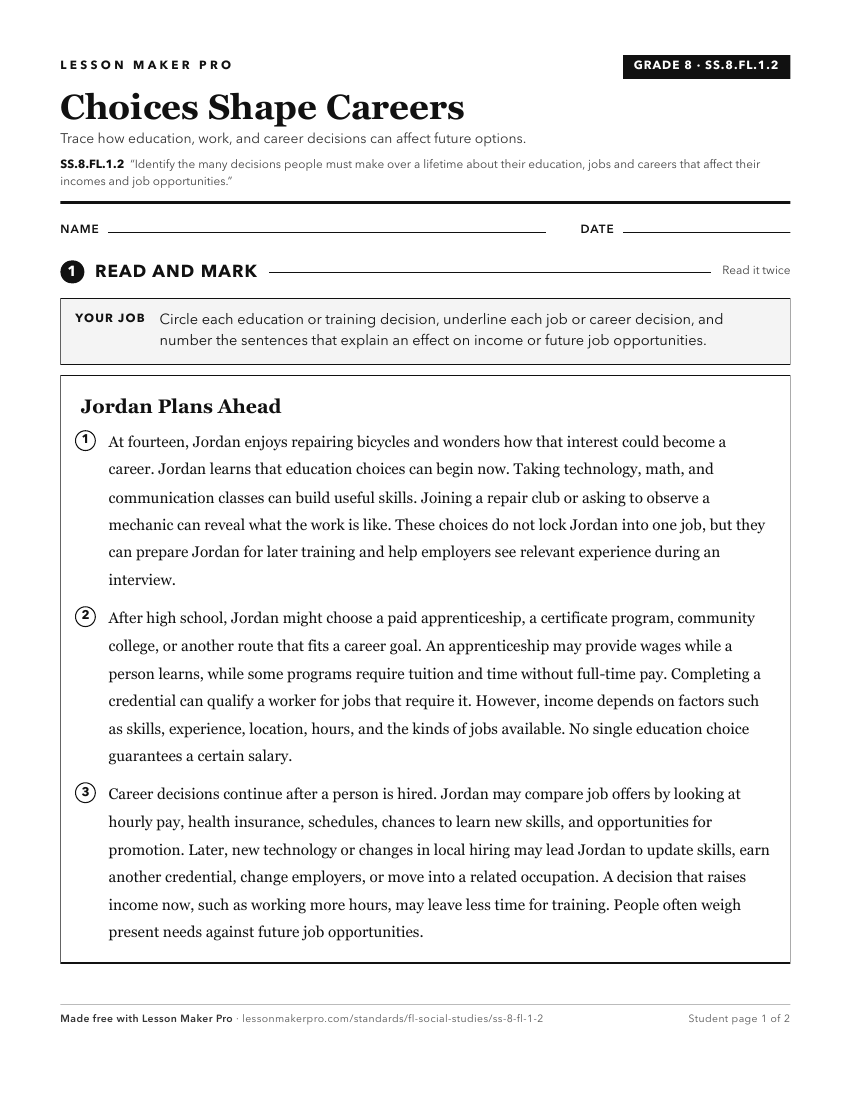
A ready-to-print activity worksheet aligned to SS.8.FL.1.2, with an answer key for the teacher on its own page. No account needed.
PDF, US Letter, prints cleanly in black and white.
Download the worksheetKeep exploring
Related Standards
- SS.8.FL.1.6
Identify the opportunity costs that education, training, and development of job skills have in the terms of time, effort, and money.
- SS.1.E.1.6
Identify that people need to make choices because of scarce resources.
- SS.4.FL.1.1
People have many different types of jobs from which to choose. Identify different jobs requiring people to have different skills.
- SS.8.FL.1.1
Explain that careers are based on working at jobs in the same occupation or profession for many years. Describe the different types of education and training re...
Turn this exact standard into a lesson
Grade, subject, topic, and the complete standard are prefilled. Create one free, no account needed.
Also for this standard:Make a WorksheetMake a QuizMake a Sub Lesson