Florida SS.8.A.4.7
The Standard
- SS.8.A.4
- Demonstrate an understanding of the domestic and international causes, course, and consequences of westward expansion.
Explain the causes, course, and consequences (e.g., industrial growth, subsequent effect on children and women) of New England's textile industry.
Florida Next Generation Sunshine State Standards for Social Studies
Teacher's field guide
What This Standard Means
What Students Need to Do
- Students trace why textile mills developed in New England, how production changed, and what followed. They connect water power, investment, machinery, cotton, and labor to factory growth and its effects on women and children.
What Mastery Looks Like
- Students can place major developments in order and label each as a cause, event, or consequence. They support explanations with details about the Lowell system, working conditions, wages, and industrial growth.
Common Misconceptions
- Students may think New England mills grew cotton rather than processed Southern cotton. They may also view mill work as either complete freedom or total oppression for women, ignoring both wages and harsh conditions.
How to Assess It
- Exit ticket: Use water power, the Lowell system, and wage labor to explain one cause, one development, and two effects of textile mills.
Lesson moves
Ways to Teach It
Groups sort source cards about rivers, machinery, cotton, workers, wages, and injuries, then connect them with arrows on a cause and effect chart.
Ask students to write whether Lowell mill work expanded or limited opportunities for young women, using two details from worker accounts.
Run a sequence relay where teams place textile industry event cards in order and justify each placement for a point.
Compare a historical label from cloth produced by a Lowell mill with a modern shirt label, then trace the materials, labor, and production behind each.
Free download
Printable SS.8.A.4.7 Worksheet
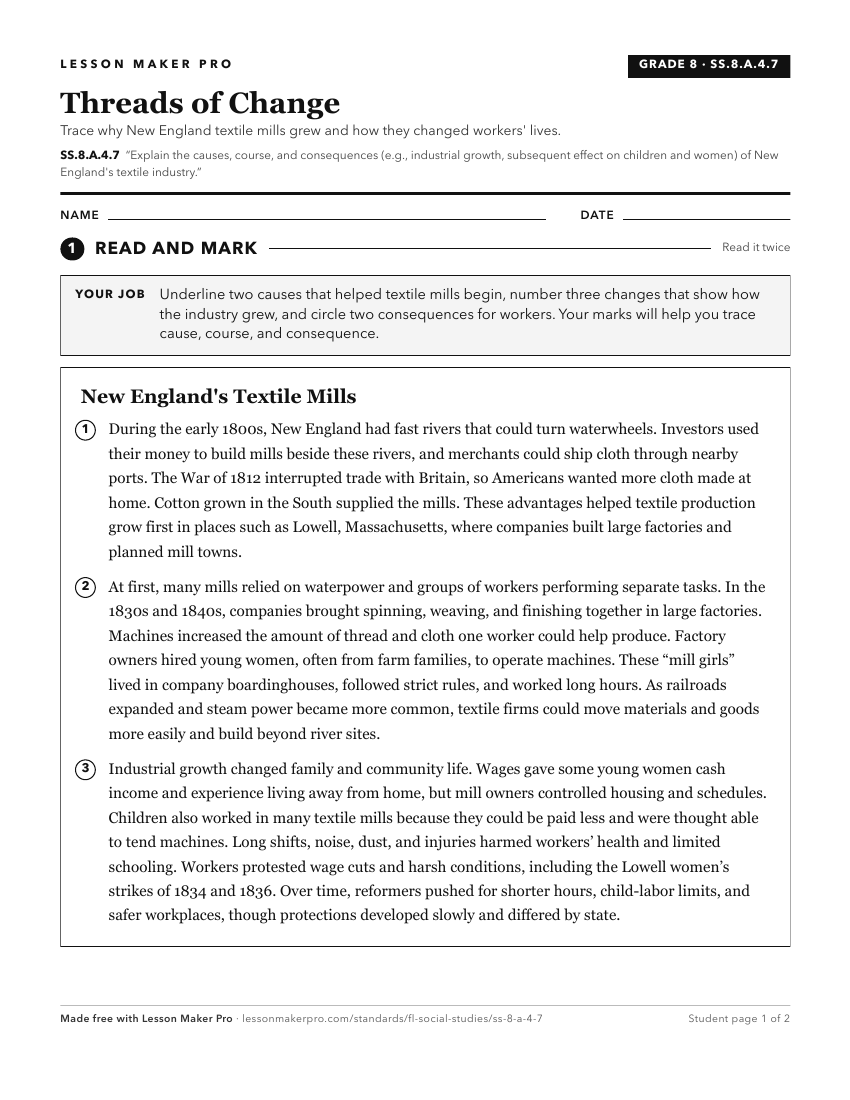
A ready-to-print activity worksheet aligned to SS.8.A.4.7, with an answer key for the teacher on its own page. No account needed.
PDF, US Letter, prints cleanly in black and white.
Download the worksheetKeep exploring
Related Standards
- SS.8.A.4.5
Explain the causes, course, and consequences of the 19th century transportation revolution on the growth of the nation's economy.
- SS.8.A.2
Examine the causes, course, and consequences of British settlement in the American colonies.
- SS.68.AA.2.2
Explain the effect of the cotton industry on the expansion of slavery due to Eli Whitney's Cotton Gin.
- SS.68.AA.1
Understand the causes, courses, and consequences of the slave trade in the colonies.
Turn this exact standard into a lesson
Grade, subject, topic, and the complete standard are prefilled. Create one free, no account needed.
Also for this standard:Make a WorksheetMake a QuizMake a Sub Lesson