Florida SS.4.A.7.1
The Standard
- SS.4.A.7
- Roaring 20’s, the Great Depression, and World War II in Florida
Describe the causes and effects of the 1920's Florida land boom and bust.
Florida Next Generation Sunshine State Standards for Social Studies
Teacher's field guide
What This Standard Means
What Students Need to Do
- Students explain why Florida land prices rose quickly during the 1920s and why the market later collapsed. They connect advertising, migration, speculation, storms, and falling demand to economic effects on Floridians.
What Mastery Looks Like
- Students can build a clear cause and effect chain using accurate events. They name at least two causes of the boom, two causes of the bust, and two effects.
Common Misconceptions
- Students may think the 1926 hurricane alone ended the boom. They may also confuse the land bust with the 1929 stock market crash or assume every buyer became wealthy.
How to Assess It
- Give students this prompt: Name one cause of the land boom, one cause of the bust, and one effect on Florida residents. Explain each link.
Lesson moves
Ways to Teach It
Give groups event cards to sort into boom causes, bust causes, and effects, then arrange the cards as a cause and effect chain.
Ask students to write: Why might a family buy Florida land in 1925, and what risks might they overlook?
Play a matching game where students pair events, such as heavy advertising or the 1926 hurricane, with their economic effects.
Compare a 1920s Florida land advertisement with a current property listing, then list claims and questions a careful buyer should consider.
Free download
Printable SS.4.A.7.1 Worksheet
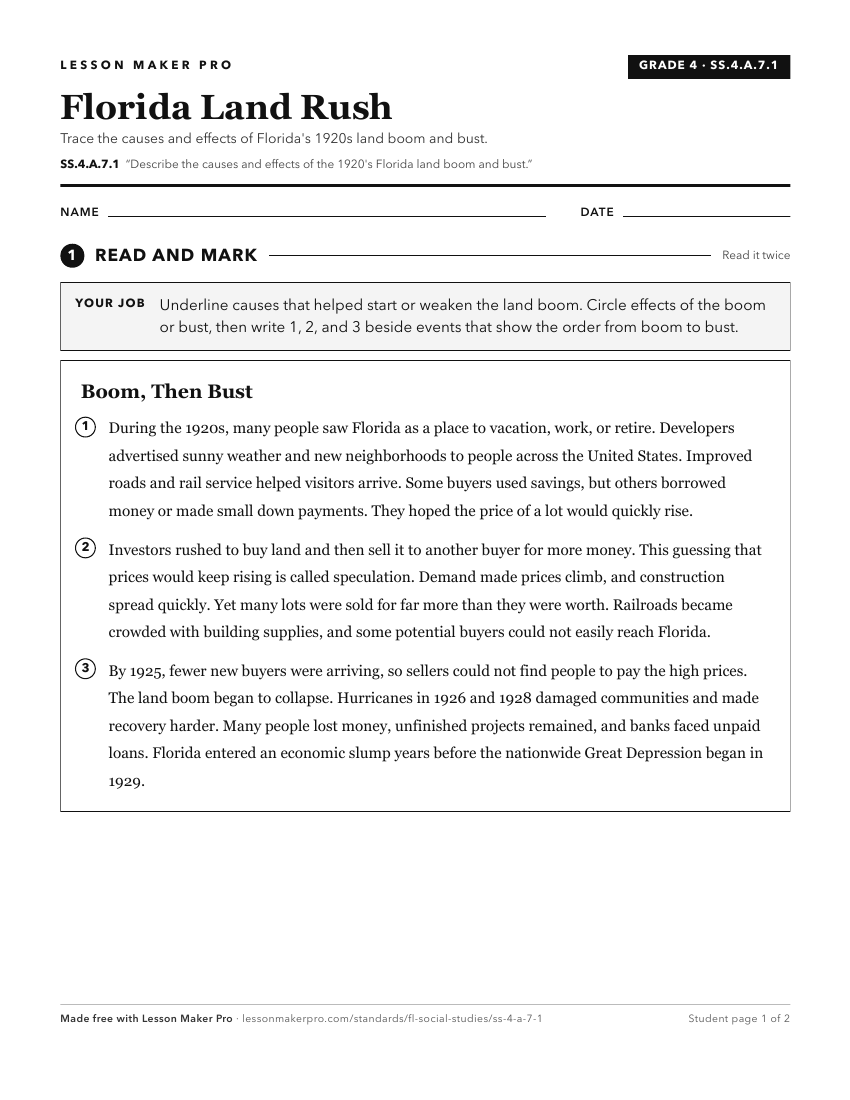
A ready-to-print activity worksheet aligned to SS.4.A.7.1, with an answer key for the teacher on its own page. No account needed.
PDF, US Letter, prints cleanly in black and white.
Download the worksheetKeep exploring
Related Standards
Turn this exact standard into a lesson
Grade, subject, topic, and the complete standard are prefilled. Create one free, no account needed.
Also for this standard:Make a WorksheetMake a QuizMake a Sub Lesson