Florida SS.3.CG.2.1
The Standard
- SS.3.CG.2
- Civic and Political Participation
Describe how citizens demonstrate civility, cooperation, volunteerism, and other civic virtues.
Florida Next Generation Sunshine State Standards for Social Studies
Teacher's field guide
What This Standard Means
What Students Need to Do
- Students identify respectful and responsible actions people take at school and in the community. They explain how those choices help groups solve problems and meet shared needs.
What Mastery Looks Like
- Given a short scenario, students can name the civic virtue being shown and point to supporting details. They can also suggest an appropriate civic action for a community problem.
Common Misconceptions
- Students may think volunteering includes paid work or chores they are required to do. They may also think cooperation means everyone must agree, or that civility only means using polite words.
How to Assess It
- Exit ticket: A neighborhood group cleans a park without being paid. Name one civic virtue shown and explain how the action helps the community.
Lesson moves
Ways to Teach It
Have groups sort scenario cards into respectful conduct, teamwork, volunteering, and responsibility, then defend one choice.
Ask students to write: How can people disagree about a playground rule while still treating one another well?
Play Civic Virtue Charades, with students acting out helping, listening, sharing work, or caring for public spaces.
Examine a school food drive flyer and list how donors, student helpers, and organizers contribute to a shared need.
Free download
Printable SS.3.CG.2.1 Worksheet
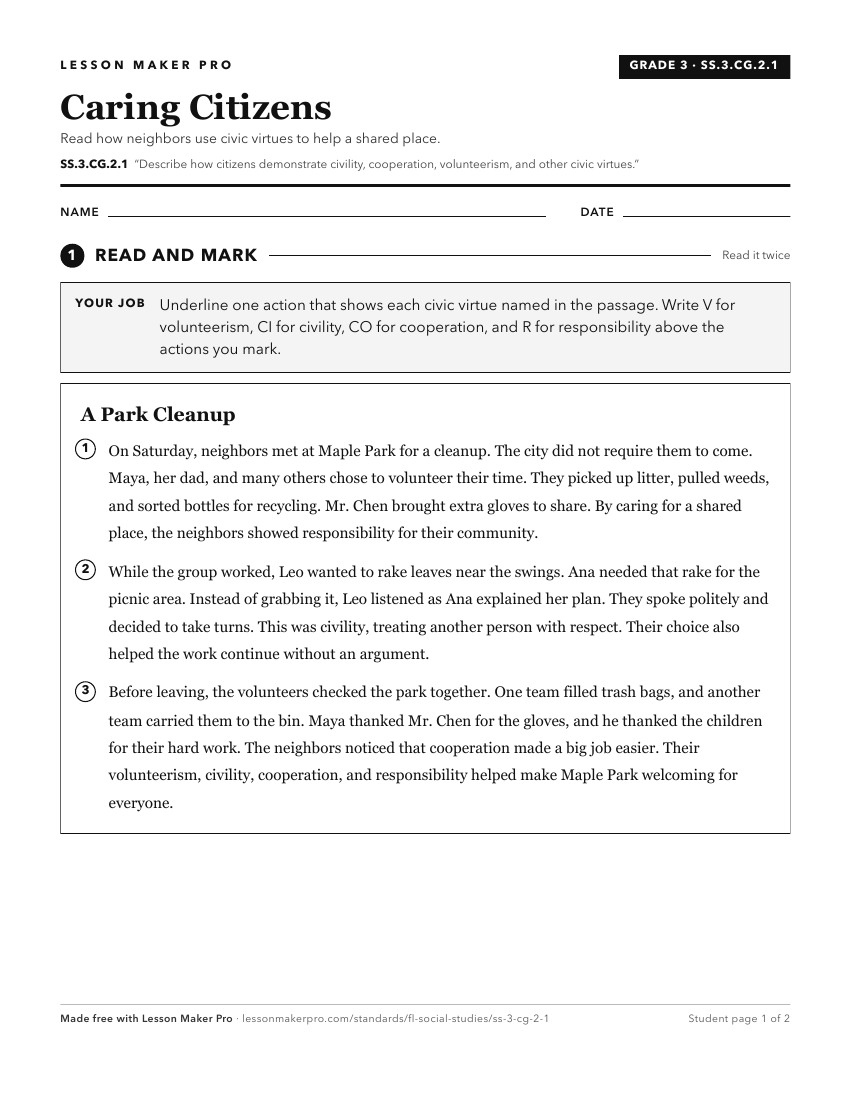
A ready-to-print activity worksheet aligned to SS.3.CG.2.1, with an answer key for the teacher on its own page. No account needed.
PDF, US Letter, prints cleanly in black and white.
Download the worksheetKeep exploring
Related Standards
Turn this exact standard into a lesson
Grade, subject, topic, and the complete standard are prefilled. Create one free, no account needed.
Also for this standard:Make a WorksheetMake a QuizMake a Sub Lesson