Alabama Social Studies SS24.US1.8
Standard Cluster
Explain how the acquisition of new land in the South and the invention of the cotton gin contributed to the growth of the cotton economy and increased demand for enslaved labor. 8a Analyze the domestic slave trade/forced migration, labor, and variations in the practice of slavery in different areas of the United States. 8b Describe how enslaved people maintained African traditions and created their own unique culture, including foodways, spiritual beliefs, and ceremonies.
2024 Alabama Course of Study: Social Studies
Cluster contents
Standards in This Cluster
SS24.US1.8 is a cluster heading. These are the individual standards under it.
- SS24.US1.8a
Analyze the domestic slave trade/forced migration, labor, and variations in the practice of slavery in different areas of the United States.
- SS24.US1.8b
Describe how enslaved people maintained African traditions and created their own unique culture, including foodways, spiritual beliefs, and ceremonies.
Teacher's field guide
What This Cluster Means
What Students Need to Do
- Explain how land taken from Native nations and the cotton gin helped cotton production spread and increased demand for enslaved workers. Trace forced sales within the United States and compare enslaved labor in different regions. Describe how enslaved people kept and adapted foodways, spiritual beliefs, and ceremonies.
What Mastery Looks Like
- A student explains that the gin removed seeds but did not pick cotton, so expanding production still required more field labor. They can use a map to trace forced migration from the Upper South to the Deep South and compare work on cotton and rice plantations. They can name examples of traditions enslaved communities kept or adapted, such as rice dishes, spirituals, and wedding practices.
Common Misconceptions
- Students may think the cotton gin replaced workers rather than increasing demand for enslaved labor. They may think enslaved people came only from Africa, missing forced sales that separated families within the United States. They may assume all enslaved people did the same work and lost all ties to African traditions.
How to Assess It
- On an exit ticket, ask: How did new southern land and the cotton gin increase forced migration? Name one difference in enslaved labor by region and one tradition enslaved people kept or adapted.
Lesson moves
Ways to Teach It
Give pairs a blank U.S. map, a cotton belt map, and a forced migration map; have them shade growing cotton areas and mark routes.
Ask students to write: Why did a machine that removed cotton seeds increase hand picking and forced sales of enslaved people?
Make six cards describing cotton fieldwork in Mississippi, rice work in South Carolina, and urban trades in Virginia; have pairs sort them by place and task.
Bring a cotton T-shirt and have students trace cotton's 1800s route from a Southern plantation to a Northern mill on a map.
Free download
Printable SS24.US1.8 Worksheet
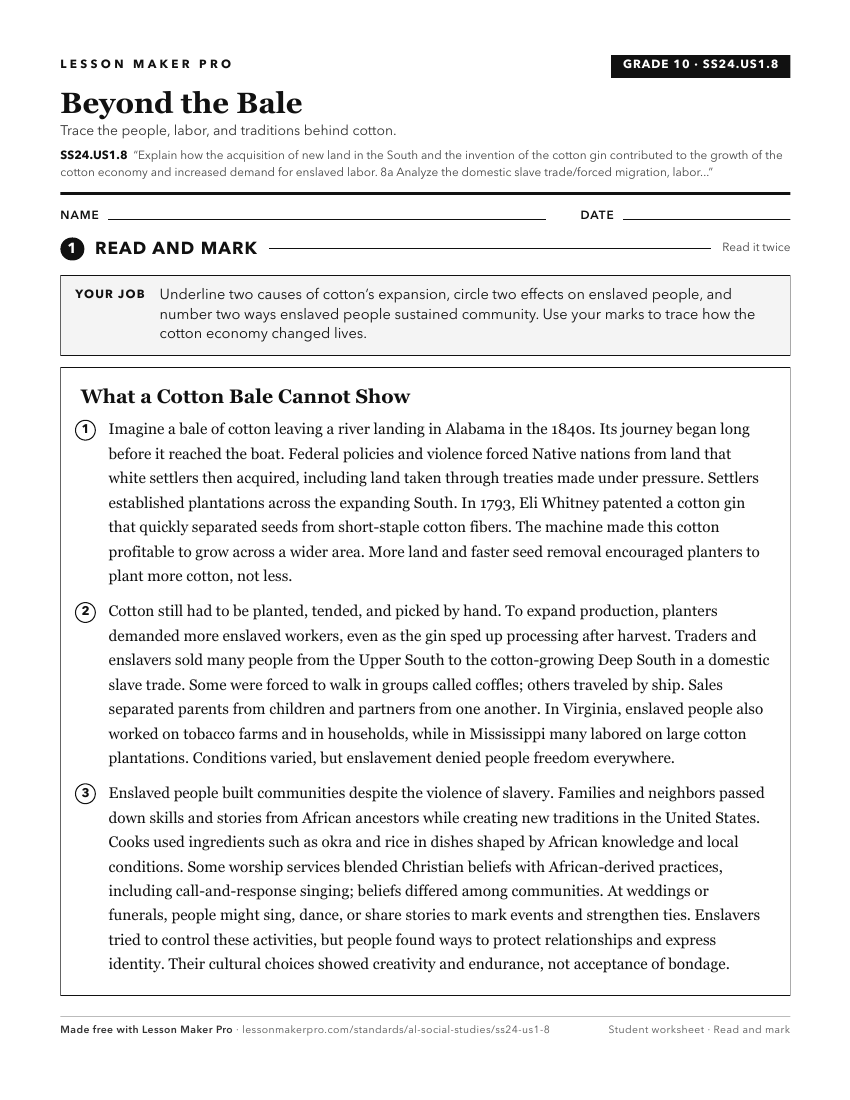
A ready-to-print activity worksheet aligned to SS24.US1.8, with an answer key for the teacher on its own page. No account needed.
PDF, US Letter, prints cleanly in black and white.
Download the worksheetKeep exploring
Related Standards
- SS24.US1.19
Describe the emergence of the New South economy and Jim Crow era, and explain the corresponding efforts to secure civil rights by Black Americans after Reconstr...
- SS24.4.13
Describe how slavery contributed to sectional disagreements, divisions over states’ rights, and economic disputes resulting in the Civil War.
- SS24.US1.13c
Explain how ownership of one’s own labor and land were equated with freedom by freedpeople, and describe emerging labor systems that sought to limit this freedo...
- SS24.4.12
Explain how the growth of the United States from 1812 to 1860 changed economic and social life in Alabama.
Turn this cluster into a lesson
Grade, subject, topic, and the complete cluster are prefilled. Create one free, no account needed.
Also for this cluster:Make a WorksheetMake a QuizMake a Sub Lesson