Alabama Social Studies SS24.US1.8a
The Standard
- SS24.US1.8
- Explain how the acquisition of new land in the South and the invention of the cotton gin contributed to the growth of the cotton economy and increased demand for enslaved labor.
Analyze the domestic slave trade/forced migration, labor, and variations in the practice of slavery in different areas of the United States.
2024 Alabama Course of Study: Social Studies
Teacher's field guide
What This Standard Means
What Students Need to Do
- Students trace how enslaved people were sold and forced from the Upper South to the Deep South as cotton farming expanded. They compare labor on farms and in towns, including how sales separated families. They use maps and firsthand accounts to support their claims.
What Mastery Looks Like
- A student can explain why sales from Virginia to Alabama increased as cotton plantations grew. They can use evidence to compare field labor with skilled work in a city, while recognizing that both were forced labor.
Common Misconceptions
- Students may think most enslaved people arrived in the cotton South directly from Africa, missing the large trade within the United States. They may assume everyone worked in cotton fields or that enslaved people in cities were free.
How to Assess It
- Give students a cotton production map marking Virginia and Alabama and a short excerpt from Charles Ball's account of being sold south. Ask why people were forced south and how the move affected work or family ties, using one detail from each source.
Lesson moves
Ways to Teach It
Give pairs printed cotton production and slave trade route maps; have them trace a route from Virginia to Alabama and annotate why people were forced along it.
Read a short Charles Ball excerpt aloud; ask, "What changed when he was sold south, and what stayed the same?"
Give groups cards showing tobacco harvesting, cotton picking, and shipyard caulking; match each job to a Virginia farm, Alabama plantation, or Baltimore shipyard.
Write a two-sentence label for a county museum display explaining how cotton demand drove sales of enslaved people from Virginia to Alabama.
Free download
Printable SS24.US1.8a Worksheet
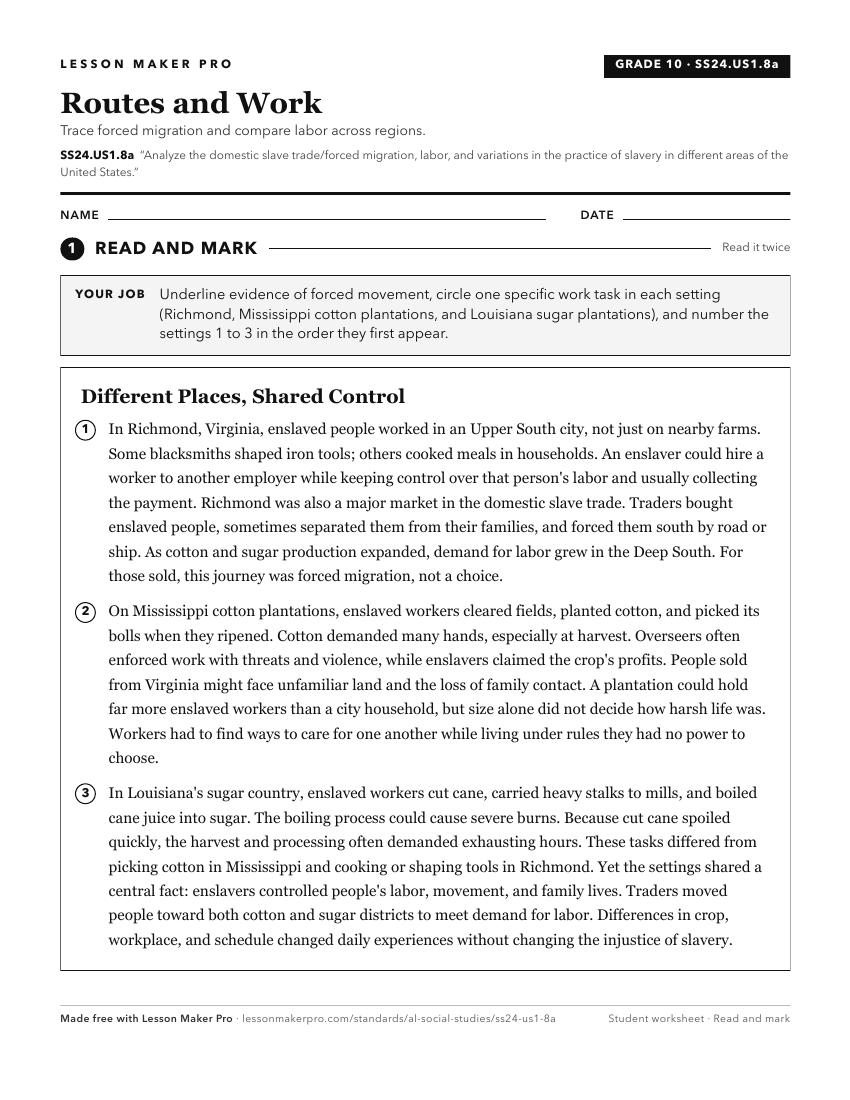
A ready-to-print activity worksheet aligned to SS24.US1.8a, with an answer key for the teacher on its own page. No account needed.
PDF, US Letter, prints cleanly in black and white.
Download the worksheetKeep exploring
Related Standards
- SS24.US1.11
Analyze how government policies and events related to slavery led to increased sectionalism throughout the United States prior to the Civil War.
- SS24.4.12b
Describe the living and working conditions and the cultural practices of enslaved persons engaged in skilled trades, domestic roles, and agricultural production...
- SS24.6.6a
Compare and contrast the institution of slavery in different colonial regions.
- SS24.8.13
Analyze the economic, political, and social effects of the transatlantic slave trade on African societies and American colonies.
Turn this exact standard into a lesson
Grade, subject, topic, and the complete standard are prefilled. Create one free, no account needed.
Also for this standard:Make a WorksheetMake a QuizMake a Sub Lesson