Alabama Social Studies SS24.S.4
Standard Cluster
Explain how values and norms influence individual behavior.* 4a Describe ways in which cultures differ, change, and resist change, including countercultures, subcultures, and ethnocentric beliefs. 4b Illustrate and explain key concepts and goals of socialization, including self-concept, looking-glass self, significant others, and role-taking. 4c Describe the major agents of socialization and evaluate the role that each one plays.*
2024 Alabama Course of Study: Social Studies
Cluster contents
Standards in This Cluster
SS24.S.4 is a cluster heading. These are the individual standards under it.
- SS24.S.4a
Describe ways in which cultures differ, change, and resist change, including countercultures, subcultures, and ethnocentric beliefs.
- SS24.S.4b
Illustrate and explain key concepts and goals of socialization, including self-concept, looking-glass self, significant others, and role-taking.
- SS24.S.4c
Describe the major agents of socialization and evaluate the role that each one plays.*
Teacher's field guide
What This Cluster Means
What Students Need to Do
- Students explain how values and norms shape choices and how cultures change or resist change. They distinguish subcultures, countercultures, and ethnocentric judgments. They use self-concept, looking-glass self, significant others, and role-taking to compare the effects of family, peers, school, and media.
What Mastery Looks Like
- Given a teen who changes clothes after friends comment, they identify the peer norm and explain the looking-glass self. They tell a subculture from a counterculture and spot an ethnocentric judgment. They explain which agent most shaped the teen's choice and why.
Common Misconceptions
- Students may treat values as written rules and norms as personal opinions. They may call every subculture a counterculture or judge unfamiliar practices by their own culture's rules. They may think the looking-glass self reveals others' actual thoughts rather than a person's guess about them.
How to Assess It
- Exit ticket: A student stops wearing a favorite jacket after classmates laugh. Name the norm and agent, then explain how the looking-glass self may affect the student's choice.
Lesson moves
Ways to Teach It
Give pairs sticky notes and a school lunch scenario; have them mark the norm, the value behind it, and two possible reactions.
Ask: How might a friend's comment about your music change your self-concept, even if you misread what the friend meant?
Read six short scenarios aloud; students hold up cards labeled family, peers, school, or media and defend which agent has the strongest influence.
Compare two school yearbook photos from different decades; students name one changed clothing norm and discuss why schools still publish yearbooks.
Free download
Printable SS24.S.4 Worksheet
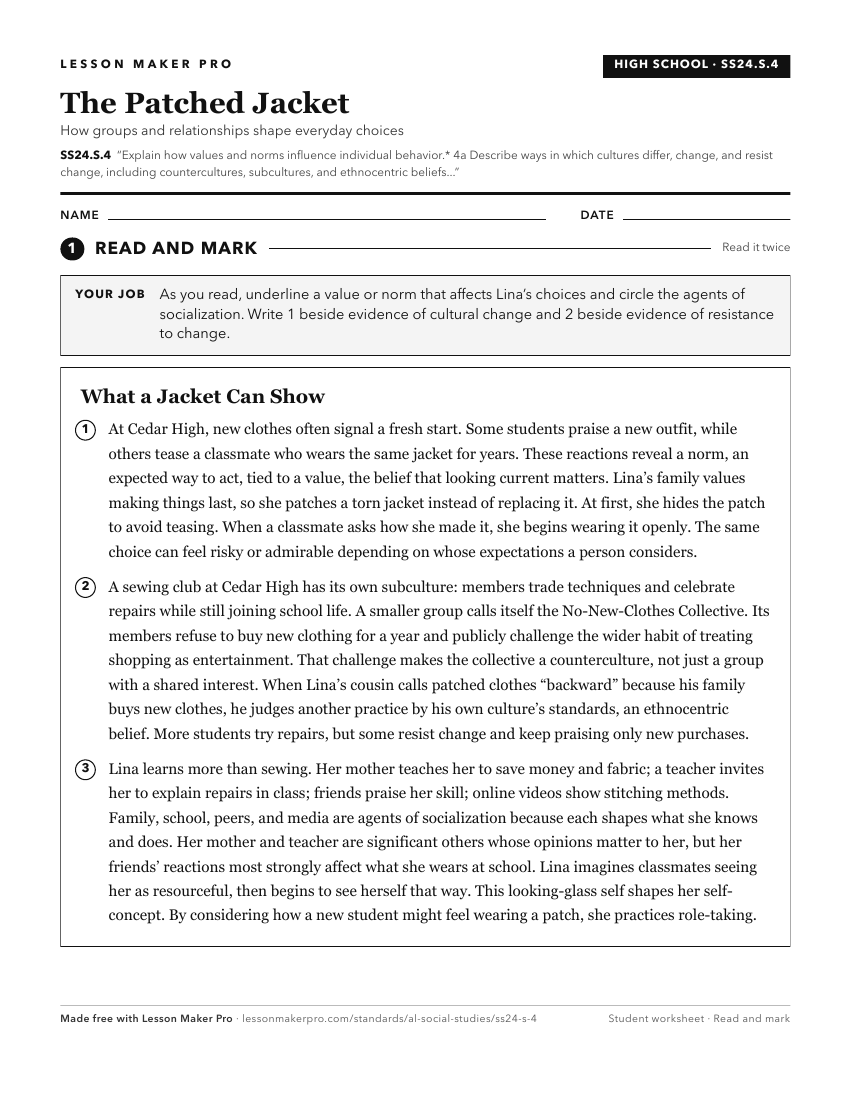
A ready-to-print activity worksheet aligned to SS24.S.4, with an answer key for the teacher on its own page. No account needed.
PDF, US Letter, prints cleanly in black and white.
Download the worksheetKeep exploring
Related Standards
- SS24.S.6
Identify and describe human behaviors that deviate from social norms.*
- SS24.P.17
Describe how attitudes, conditions of obedience and conformity, and other influences affect actions and shape human behavior, including actor-observer, self-ser...
- SS24.S.7
Analyze how different types of social groups can influence individual and group behavior.*
- SS24.HG.12
Explain how interaction between people and the environment affects culture in today's society.
Turn this cluster into a lesson
Grade, subject, topic, and the complete cluster are prefilled. Create one free, no account needed.
Also for this cluster:Make a WorksheetMake a QuizMake a Sub Lesson