Alabama Social Studies SS24.S.6
Standard Cluster
Identify and describe human behaviors that deviate from social norms.* 6a Analyze deviance from each of the three sociological perspectives (interactionist, functional, and conflict). 6b Trace how society has reacted to deviant behaviors throughout history and explain the theoretical principles of punishment, including retributive, rehabilitative, and deterrent.*
2024 Alabama Course of Study: Social Studies
Cluster contents
Standards in This Cluster
SS24.S.6 is a cluster heading. These are the individual standards under it.
Teacher's field guide
What This Cluster Means
What Students Need to Do
- Students identify behavior that breaks a group's expectations and describe the setting. They explain it through interactionist, functional, and conflict views. They compare reactions across time and distinguish retribution, rehabilitation, and deterrence.
What Mastery Looks Like
- Given a theft case, students explain who applies the label, how the response reinforces rules, and whose interests shape enforcement. They compare a historical public penalty with a modern counseling program and explain the goals of each.
Common Misconceptions
- Students often equate deviance with crime, though wearing pajamas to a wedding can break a norm without breaking a law. They may assume being called deviant proves someone caused harm. They may call counseling a deterrent when its main goal is rehabilitation.
How to Assess It
- Exit ticket: A student steals a bike. Explain the case through all three sociological views, then compare an 1800s public whipping for theft with one retributive, one rehabilitative, and one deterrent response today.
Lesson moves
Ways to Teach It
Hand pairs cards describing an 1800s public whipping, a modern counseling plan, and a modern fine; have them sort by likely punishment goals.
Ask students to write three explanations for a hallway protest: one based on labels, one on shared rules, and one on power.
Read aloud 'called lazy,' 'rule keeps classes running,' and 'wealthier students avoid penalties'; teams raise interactionist, functional, or conflict cards.
Use your school's phone policy; students identify who enforces it and compare detention, a warning, and a coaching meeting as responses.
Free download
Printable SS24.S.6 Worksheet
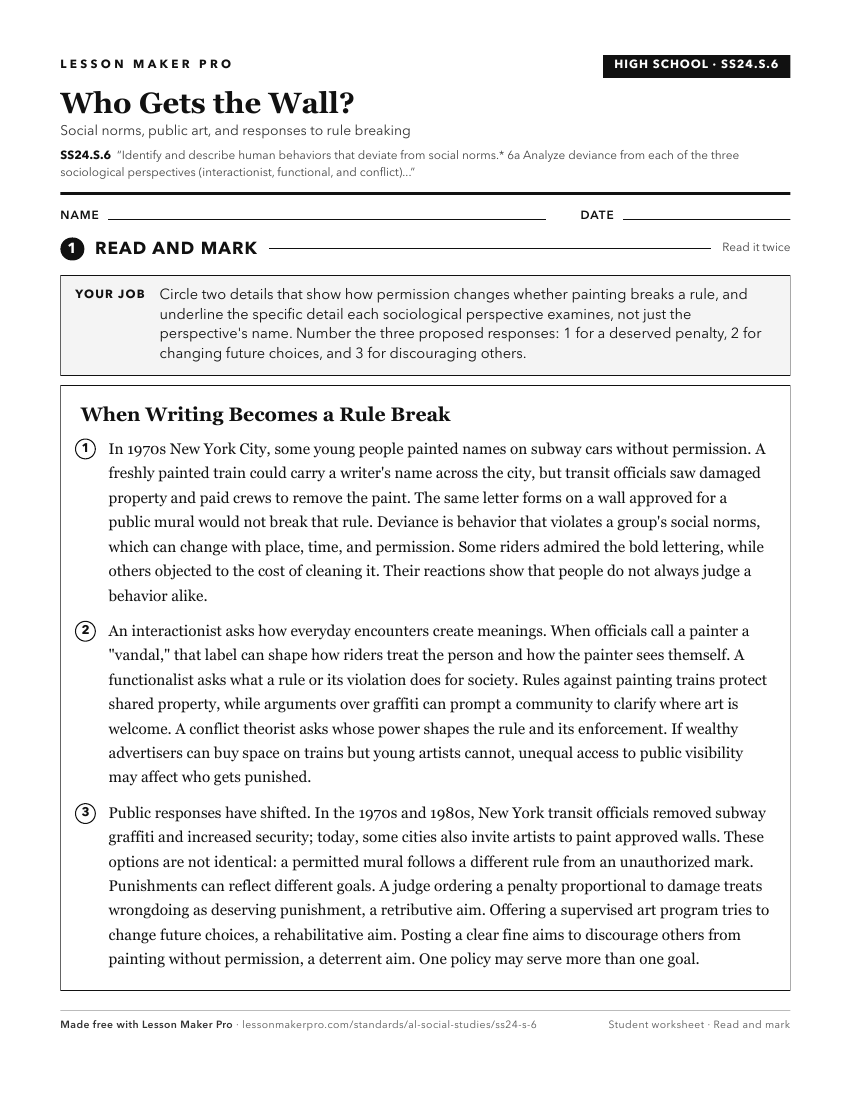
A ready-to-print activity worksheet aligned to SS24.S.6, with an answer key for the teacher on its own page. No account needed.
PDF, US Letter, prints cleanly in black and white.
Download the worksheetKeep exploring
Related Standards
Turn this cluster into a lesson
Grade, subject, topic, and the complete cluster are prefilled. Create one free, no account needed.
Also for this cluster:Make a WorksheetMake a QuizMake a Sub Lesson