Virginia SOL LS.1.e.ii
The Standard
- LS.1
- The student will demonstrate an understanding of scientific and engineering practices by
developing and using models evaluate limitations of models
Virginia Standards of Learning for Science · The student will demonstrate an understanding of scientific and engineering practices by
Teacher's field guide
What This Standard Means
What Students Need to Do
- Students create or examine a model of a living system and use it to explain or predict what happens. They identify features the model leaves out, simplifies, or represents inaccurately.
What Mastery Looks Like
- Students explain what a model shows well and where it may lead to weak conclusions. They support each limitation with a specific comparison to the real system.
Common Misconceptions
- Students may think a detailed model is always accurate or that one model can answer every question. They may name missing features without explaining how those gaps affect the model's use.
How to Assess It
- Give students a diagram of a cell and ask: "Name one useful feature, one limitation, and one conclusion this model cannot support."
Lesson moves
Ways to Teach It
Build lung models with bottles and balloons, then list where each part differs from real lungs.
Compare a food web and an energy pyramid, then write which question each model answers better and why.
Play Model Match by pairing biology questions with diagrams, simulations, or physical models, then defend each match.
Examine a weather app's pollen forecast and discuss which living and environmental factors its model may miss.
Free download
Printable LS.1.e.ii Worksheet
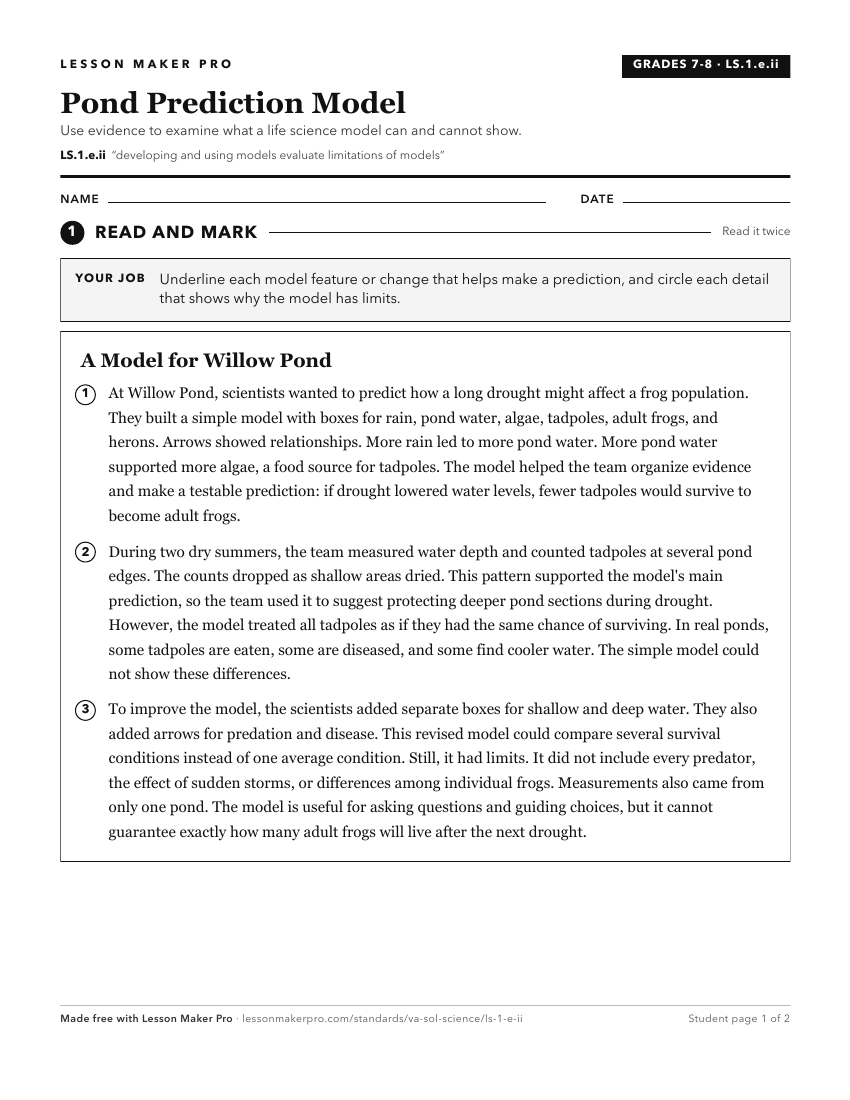
A ready-to-print activity worksheet aligned to LS.1.e.ii, with an answer key for the teacher on its own page. No account needed.
PDF, US Letter, prints cleanly in black and white.
Download the worksheetKeep exploring
Related Standards
Turn this exact standard into a lesson
Grade, subject, topic, and the complete standard are prefilled. Create one free, no account needed.
Also for this standard:Make a WorksheetMake a QuizMake a Sub Lesson