Virginia SOL 3.8.a
The Standard
- 3.8
- The student will investigate and understand that natural events and humans influence ecosystems. Key ideas include
human activity affects the quality of air, water, and habitats
Virginia Standards of Learning for Science
Teacher's field guide
What This Standard Means
What Students Need to Do
- Students identify how actions such as littering, burning fuel, and clearing land can change local environments. They explain the effect on air, water, or places where organisms live.
What Mastery Looks Like
- Students can match a human action to a specific environmental effect and explain the link. They can also suggest a practical action that reduces the damage.
Common Misconceptions
- Students may think pollution only means visible trash or that dirty water always looks cloudy. They may also assume all human activity causes harm or that one cleanup removes every effect.
How to Assess It
- Give students this prompt: “Rain washes oil from a parking lot into a stream. Name one likely effect and one way to prevent it.”
Lesson moves
Ways to Teach It
Build a runoff model with soil, paper litter, a spray bottle, and a catch cup, then observe what enters the collected water.
Ask students to write about one school activity that affects air, water, or animal shelter, then suggest a safer choice.
Sort action cards, such as planting trees or dumping paint, into helps, harms, or depends, and defend each choice.
Walk around the school grounds, map storm drains, litter, plants, and animal shelters, then recommend one realistic improvement.
Free download
Printable 3.8.a Worksheet
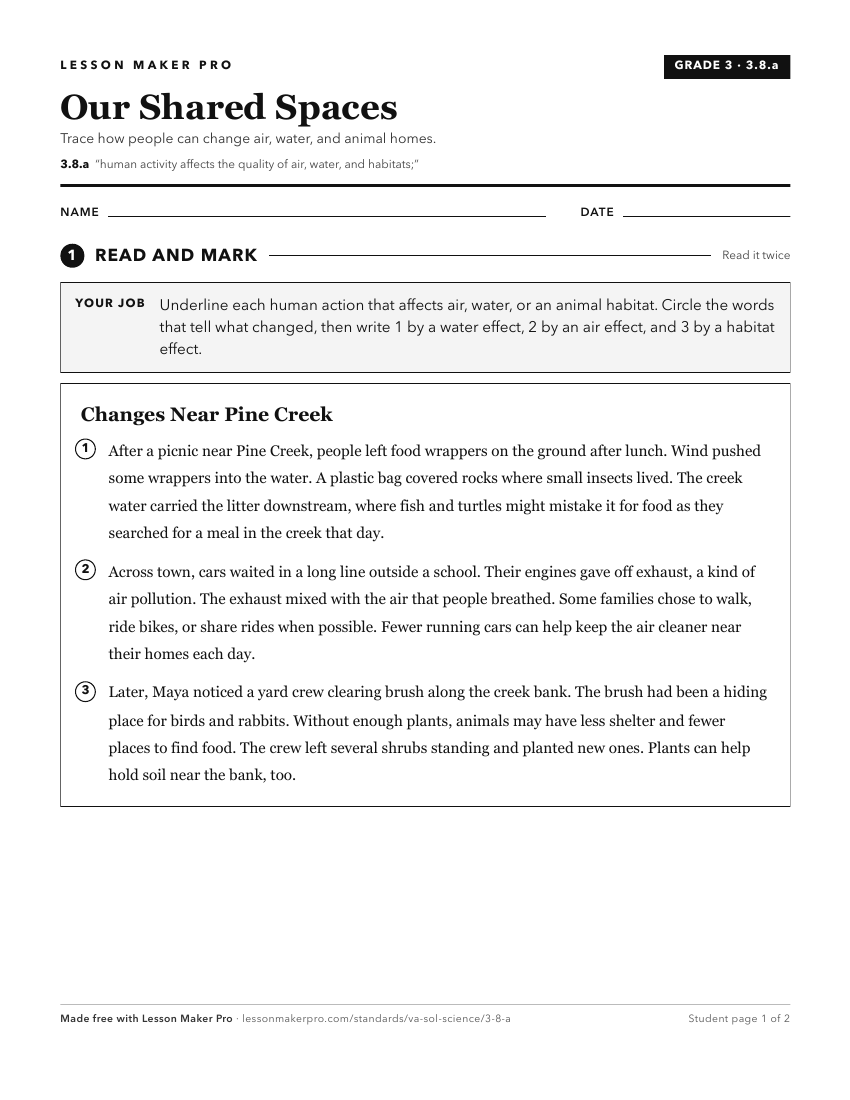
A ready-to-print activity worksheet aligned to 3.8.a, with an answer key for the teacher on its own page. No account needed.
PDF, US Letter, prints cleanly in black and white.
Download the worksheetKeep exploring
Related Standards
Turn this exact standard into a lesson
Grade, subject, topic, and the complete standard are prefilled. Create one free, no account needed.
Also for this standard:Make a WorksheetMake a QuizMake a Sub Lesson