Virginia SOL 6.9.c
The Standard
- 6.9
- The student will investigate and understand that humans impact the environment and individuals can influence public policy decisions related to energy and the environment. Key ideas include
major health and safety issues are associated with air and water quality
Virginia Standards of Learning for Science
Teacher's field guide
What This Standard Means
What Students Need to Do
- Students identify common air and water contaminants and connect them to specific health problems. They explain how monitoring, treatment, and public warnings reduce exposure.
What Mastery Looks Like
- Students can examine a pollution scenario, name the likely health risk, and suggest a safe response. They distinguish visible dirt from contaminants that require testing.
Common Misconceptions
- Students may think clear water is always safe to drink or that air pollution occurs only outdoors. They may also assume simple filters remove germs, dissolved chemicals, and all harmful particles.
How to Assess It
- Give students two exit ticket scenarios: an orange air quality alert and bacteria found in a well. For each, ask for one health risk and one safe action.
Lesson moves
Ways to Teach It
Pour muddy water through gravel, sand, and a coffee filter, then discuss why the filtered water is still unsafe to drink.
Ask students to write advice for a family deciding whether to exercise outside during a poor air quality alert.
Have teams sort pollutant cards by source, health effect, and whether they affect air, water, or both.
Check the local air quality index and water report, then identify one warning and the action residents should take.
Free download
Printable 6.9.c Worksheet
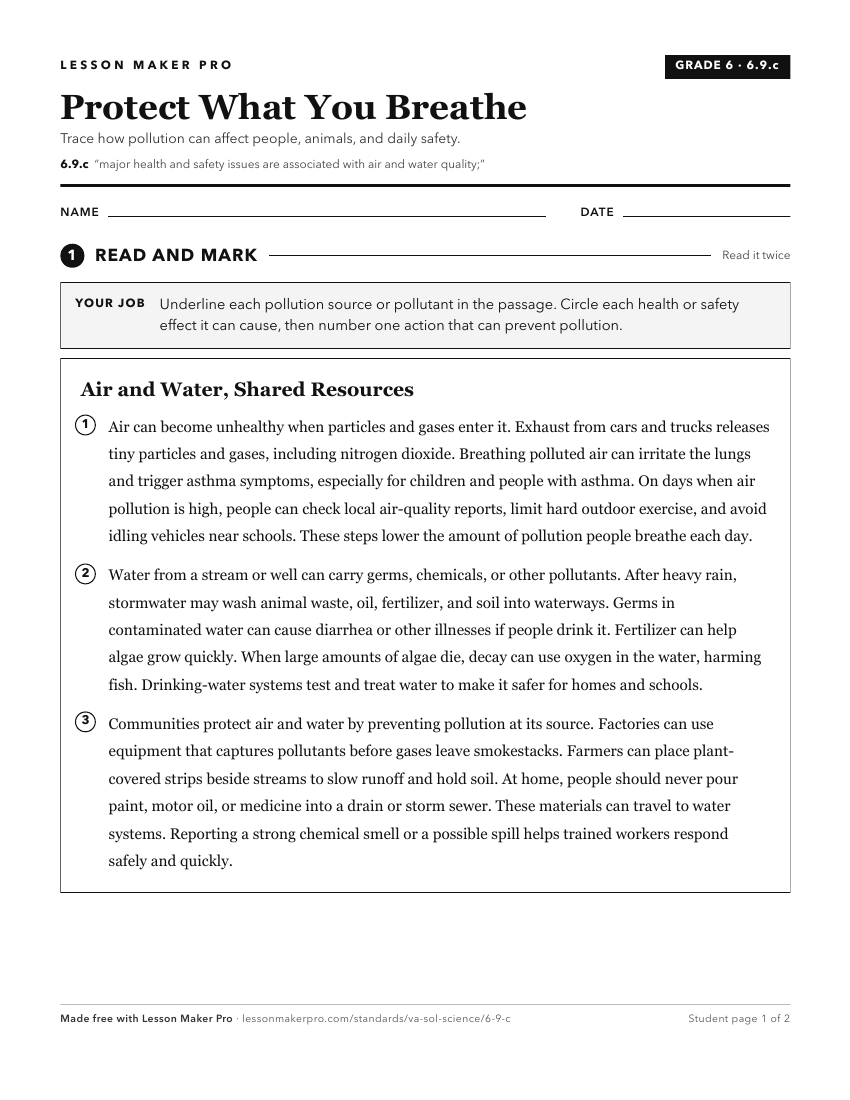
A ready-to-print activity worksheet aligned to 6.9.c, with an answer key for the teacher on its own page. No account needed.
PDF, US Letter, prints cleanly in black and white.
Download the worksheetKeep exploring
Related Standards
Turn this exact standard into a lesson
Grade, subject, topic, and the complete standard are prefilled. Create one free, no account needed.
Also for this standard:Make a WorksheetMake a QuizMake a Sub Lesson