Virginia SOL 2.3.b
The Standard
- 2.3
- The student will investigate and understand that matter can exist in different phases. Key ideas include
solids, liquids, and gases have different characteristics
Virginia Standards of Learning for Science
Teacher's field guide
What This Standard Means
What Students Need to Do
- Students identify whether a sample is a solid, liquid, or gas by observing how it behaves. They compare shape, movement, and how each takes up space.
What Mastery Looks Like
- A student can sort familiar and unfamiliar samples into the three states and explain each choice. The explanation uses observable evidence, such as flowing or keeping a fixed shape.
Common Misconceptions
- Students may think gases are not matter because many gases cannot be seen. They may believe liquids have no set amount or that every soft material is a liquid. Some confuse tiny solids, such as sand, with liquids because they pour.
How to Assess It
- Show a rock, water in a cup, and an air-filled balloon. Ask students to label each sample and write one observed property that supports each label.
Lesson moves
Ways to Teach It
Set out a block, water in clear cups, and an inflated bag, then have students test shape, flow, and space taken up.
Ask, “How does each kind of matter behave when moved to a new container?” and record claims with evidence.
Play a sorting relay where teams place picture cards under solid, liquid, or gas and explain one choice.
Compare an ice cube, drinking water, and air in a bicycle tire, noting how each keeps or changes shape.
Free download
Printable 2.3.b Worksheet
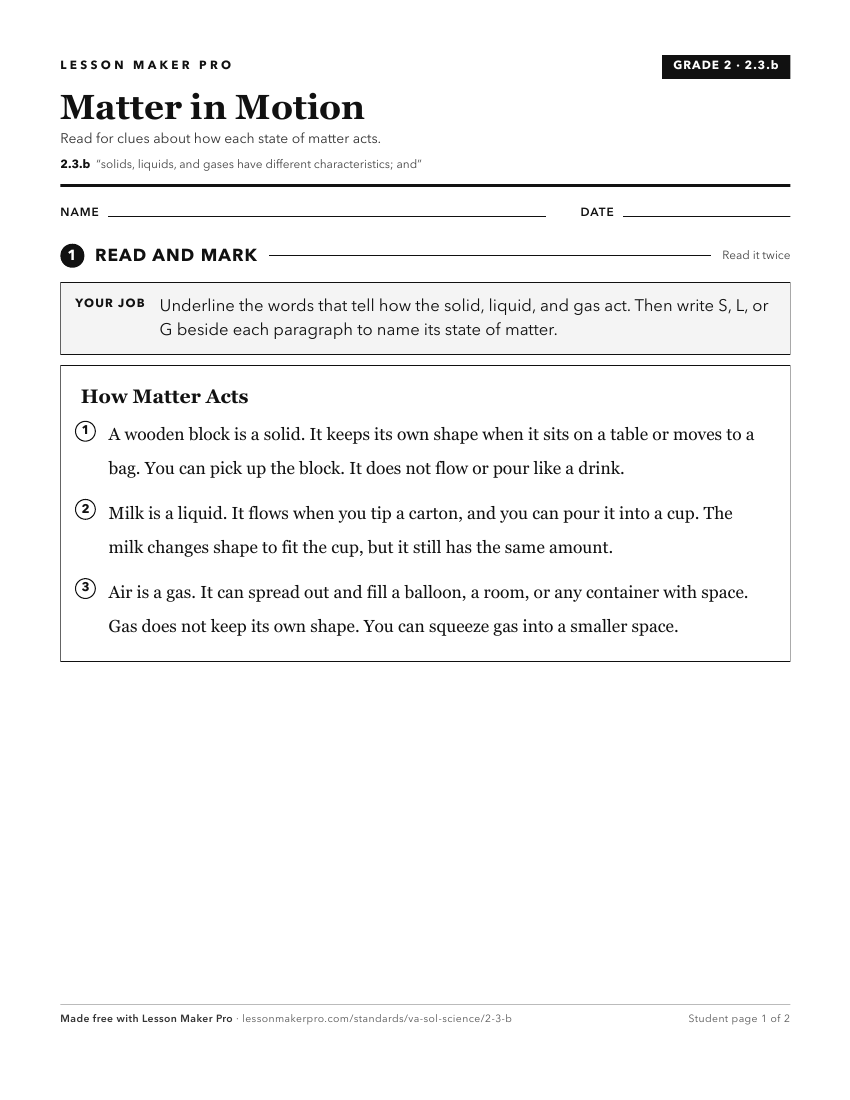
A ready-to-print activity worksheet aligned to 2.3.b, with an answer key for the teacher on its own page. No account needed.
PDF, US Letter, prints cleanly in black and white.
Download the worksheetKeep exploring
Related Standards
Turn this exact standard into a lesson
Grade, subject, topic, and the complete standard are prefilled. Create one free, no account needed.
Also for this standard:Make a WorksheetMake a QuizMake a Sub Lesson