Virginia SOL K.4.c
The Standard
- K.4
- The student will investigate and understand that water is important in our daily lives and has properties. Key ideas include
water occurs in different phases
Virginia Standards of Learning for Science
Teacher's field guide
What This Standard Means
What Students Need to Do
- Students identify water as ice, liquid water, or water vapor. They sort familiar examples and describe how heating or cooling can change water.
What Mastery Looks Like
- A student correctly names solid, liquid, and gas when shown familiar examples of water. The student explains that ice and puddles are the same material in different forms.
Common Misconceptions
- Students may think ice and snow are different materials from water. They may think water disappears when it dries or that visible mist is water vapor.
How to Assess It
- Give students picture cards showing an ice cube, a glass of water, and water vapor above warm water. Ask them to name each form and explain one choice.
Lesson moves
Ways to Teach It
Place an ice cube in a clear cup, let it melt, and have students draw what changed and what stayed the same.
Ask, “How can ice, puddles, and water in the air all be water?” Record students’ evidence on a class chart.
Play Phase Corners: students carry water picture cards to solid, liquid, or gas signs and explain each placement.
Match weather examples to water forms: snow or ice as solid, rain as liquid, and invisible water vapor in the air as gas.
Free download
Printable K.4.c Worksheet
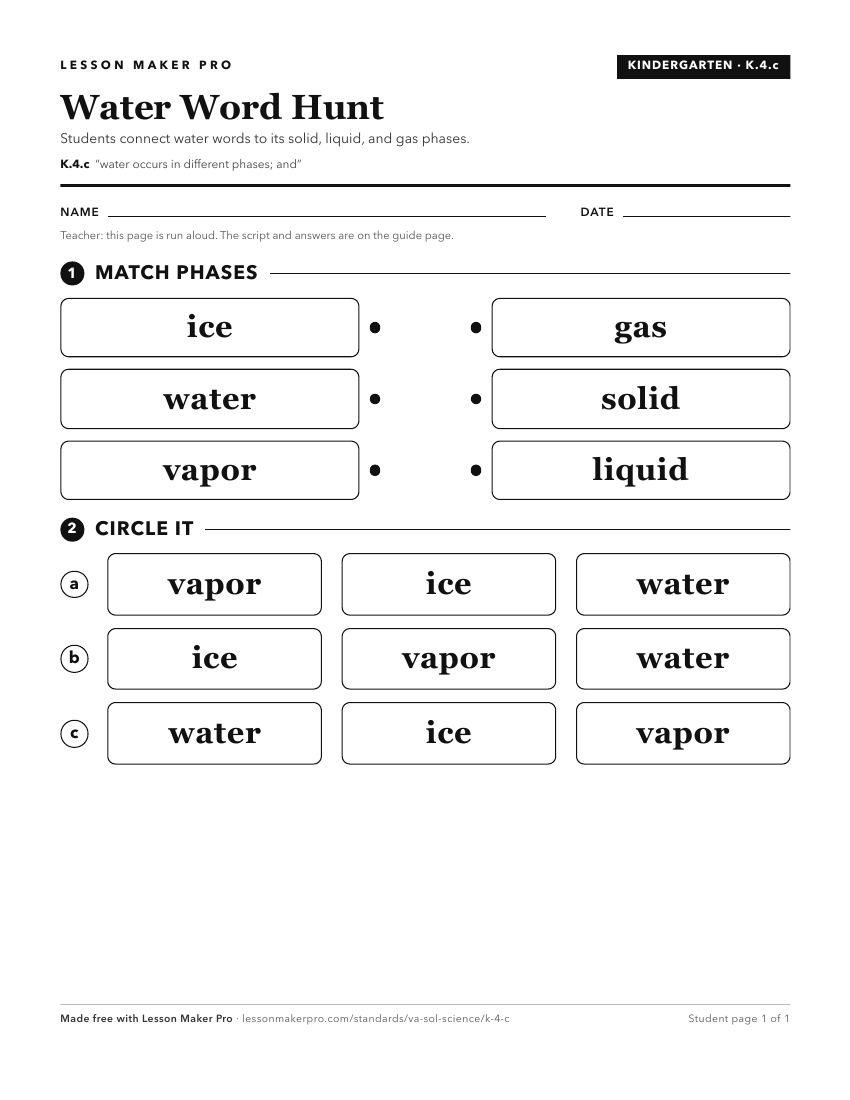
A ready-to-print activity worksheet aligned to K.4.c, with an answer key for the teacher on its own page. No account needed.
PDF, US Letter, prints cleanly in black and white.
Download the worksheetKeep exploring
Related Standards
Turn this exact standard into a lesson
Grade, subject, topic, and the complete standard are prefilled. Create one free, no account needed.
Also for this standard:Make a WorksheetMake a QuizMake a Sub Lesson