Virginia SOL 1.7.a
The Standard
- 1.7
- The student will investigate and understand that there are weather and seasonal changes. Key ideas include
changes in temperature, light, and precipitation occur over time
Virginia Standards of Learning for Science
Teacher's field guide
What This Standard Means
What Students Need to Do
- Students observe weather on several days and record how warm, bright, cloudy, rainy, or snowy each day is. They compare records and tell what changed over time.
What Mastery Looks Like
- A student can read a simple weather chart and compare two days using evidence. They can explain that one day was cooler, darker, or wetter than another.
Common Misconceptions
- Students may think weather stays the same all day or that every cloudy day brings rain. They may assume a sunny day must be warmer than a cloudy day.
How to Assess It
- Give students picture cards for a sunny, dry Monday and a cooler, rainy Tuesday. Ask them to name two changes and point to the evidence.
Lesson moves
Ways to Teach It
Set up a class weather station with a thermometer, rain cup, and sky chart, then record observations in the morning and afternoon.
Show two dated weather photos and ask, “What changed, and what evidence in each picture supports your answer?”
Play Weather Change Match: students pair two day cards, then state how temperature, light, or precipitation changed.
Compare the week’s weather chart with clothing choices, then explain which coat, hat, or umbrella fits each day.
Free download
Printable 1.7.a Worksheet
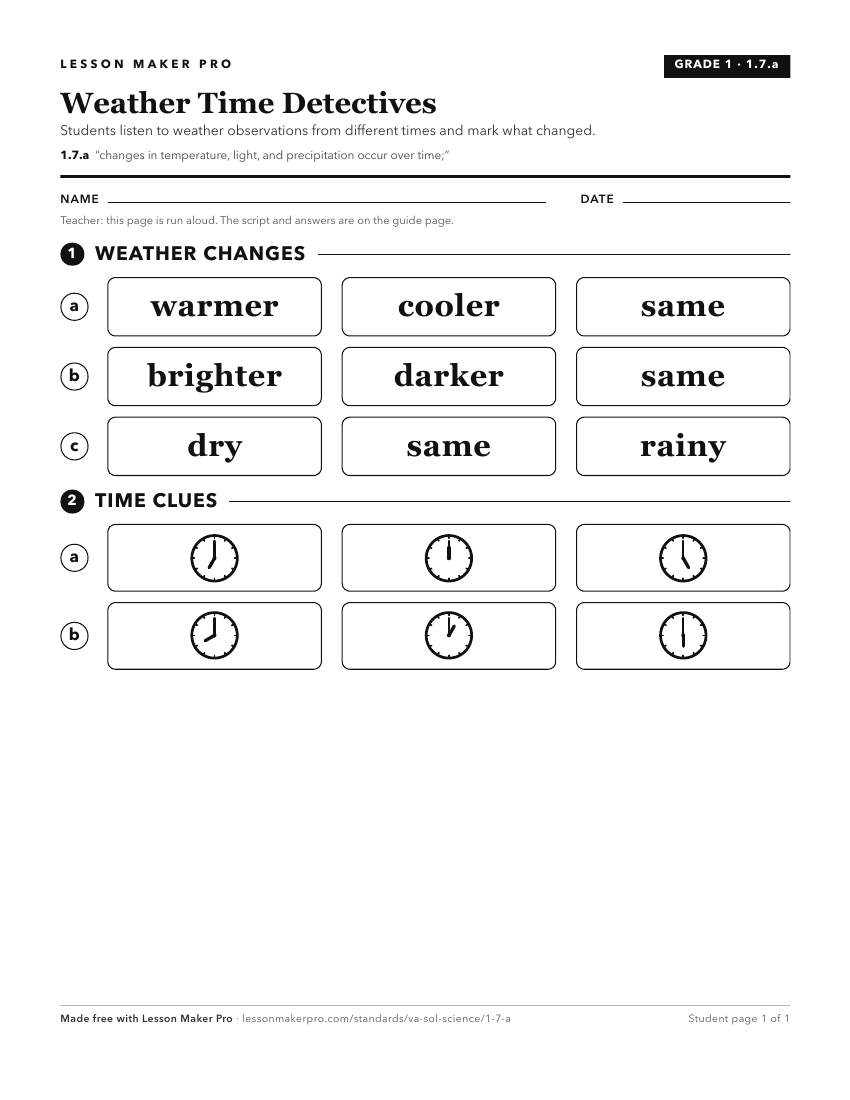
A ready-to-print activity worksheet aligned to 1.7.a, with an answer key for the teacher on its own page. No account needed.
PDF, US Letter, prints cleanly in black and white.
Download the worksheetKeep exploring
Related Standards
Turn this exact standard into a lesson
Grade, subject, topic, and the complete standard are prefilled. Create one free, no account needed.
Also for this standard:Make a WorksheetMake a QuizMake a Sub Lesson