Virginia SOL 2.7.a
The Standard
- 2.7
- The student will investigate and understand that weather patterns and seasonal changes affect plants, animals, and their surroundings. Key ideas include
weather and seasonal changes affect the growth and behavior of living things
Virginia Standards of Learning for Science
Teacher's field guide
What This Standard Means
What Students Need to Do
- Students connect changes in temperature, rainfall, and daylight to what plants and animals do. They use observations or examples to explain changes such as flowering, migration, hibernation, and growing thicker fur.
What Mastery Looks Like
- Students can compare two seasons and predict how a plant or animal may respond. They support the prediction with a specific condition, such as colder air, less daylight, or more rain.
Common Misconceptions
- Students may think all animals hibernate or leave during winter. They may also think plants are dead when leaves fall, or that one unusually warm day changes the season.
How to Assess It
- Show a picture of the same tree in summer and winter. Ask, “What changed, and how did seasonal conditions cause that change?”
Lesson moves
Ways to Teach It
Place bean seedlings in three spots, warm and bright, warm and dim, cool and bright, then measure growth over several days.
Ask students to write why a squirrel may gather food in fall but search less during a cold winter day.
Play a season match game using cards showing weather conditions, plant changes, and animal behaviors.
Review a local garden calendar and identify when people plant vegetables based on frost, rainfall, and warmer temperatures.
Free download
Printable 2.7.a Worksheet
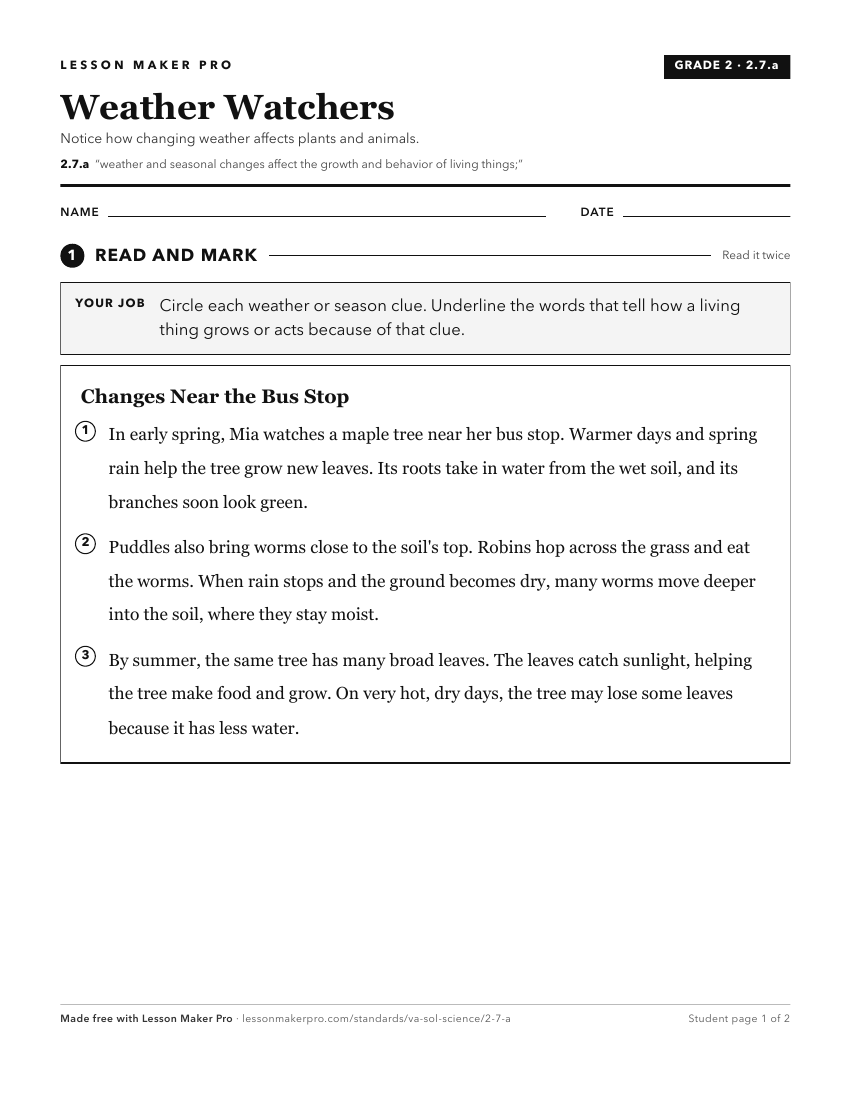
A ready-to-print activity worksheet aligned to 2.7.a, with an answer key for the teacher on its own page. No account needed.
PDF, US Letter, prints cleanly in black and white.
Download the worksheetKeep exploring
Related Standards
- 2.7
The student will investigate and understand that weather patterns and seasonal changes affect plants, animals, and their surroundings. Key ideas include
- LS.8.a
organisms respond to daily, seasonal, and long-term changes
- 1.7.c
changes in temperature, light, and precipitation affect plants and animals, including humans.
- 1.7.a
changes in temperature, light, and precipitation occur over time
Turn this exact standard into a lesson
Grade, subject, topic, and the complete standard are prefilled. Create one free, no account needed.
Also for this standard:Make a WorksheetMake a QuizMake a Sub Lesson