Virginia SOL 7.R.1
SOL Standard (Knowledge and Skills Cluster)
Evaluation and Synthesis of Information
Virginia Standards of Learning for English
Cluster contents
Knowledge and Skills in This Standard
7.R.1 is a Standards of Learning standard. These are the knowledge and skills expectations under it.
- 7.R.1.A
Formulate questions about a research topic, broadening or narrowing the inquiry as necessary.
- 7.R.1.B
Collect, organize, and synthesize information from multiple sources using various notetaking formats.
- 7.R.1.C
Evaluate and analyze the relevance, validity, and credibility of each source (primary, secondary, digital, and print), determining what information to include a...
- 7.R.1.D
Quote, summarize, and paraphrase research findings from primary and secondary sources, avoiding plagiarism by using own words and following ethical and legal gu...
- 7.R.1.E
Organize and share findings in formal and informal oral written formats.
- 7.R.1.F
Give credit for information quoted or paraphrased, using standard citations (e.g., author, article title and webpage, and publication date).
- 7.R.1.G
Demonstrate ethical and responsible use of all sources, including the Internet, Artificial Intelligence (AI), and new technologies, as they develop.
Teacher's field guide
What This Cluster Means
What Students Need to Do
- Students develop a focused research question and adjust it when the topic is too broad or narrow. They gather information from several source types, judge each source, and organize useful notes. They quote, paraphrase, summarize, synthesize, cite sources, and report AI use honestly.
What Mastery Looks Like
- A student creates a manageable research question and selects relevant, trustworthy sources. Their notes clearly separate quotations, paraphrases, summaries, and original thinking. Their final product connects ideas across sources, cites borrowed material, and explains any AI use.
Common Misconceptions
- Students may assume the first search result or a polished website is trustworthy. They may paraphrase by changing a few words, cite only direct quotes, or list facts without connecting them. They may also submit AI-generated claims without checking them or naming the tool used.
How to Assess It
- Give students two short sources on one topic. Ask them to choose the more credible source, explain why, paraphrase one relevant fact, and add a citation.
Lesson moves
Ways to Teach It
Give groups printed source cards to sort by relevance and credibility, then require one written reason for each placement.
Ask students to write: Which source would you trust most, and what details about its author, evidence, date, or publisher support your choice?
Run a paraphrase challenge where pairs rewrite a short passage, compare versions, and flag wording that remains too close to the original.
Research a school lunch claim using a menu, student survey, and district webpage, then write a cited recommendation to the principal.
Free download
Printable 7.R.1 Worksheet
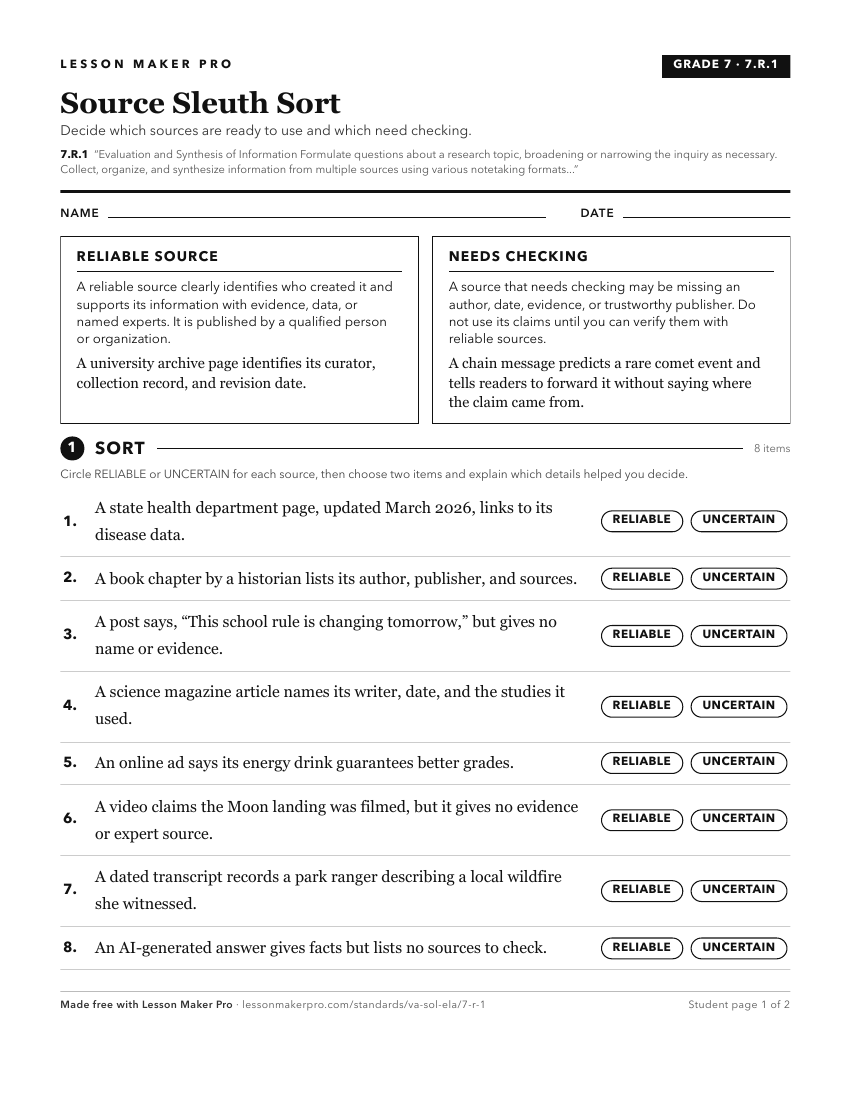
A ready-to-print activity worksheet aligned to 7.R.1, with an answer key for the teacher on its own page. No account needed.
PDF, US Letter, prints cleanly in black and white.
Download the worksheetKeep exploring
Related Standards
Turn this cluster into a lesson
Grade, subject, and topic are prefilled; the lesson picks the standards under this heading. Create one free, no account needed.
Also for this cluster:Make a WorksheetMake a QuizMake a Sub Lesson