Virginia SOL 12.RL
SOL Standard (Knowledge and Skills Cluster)
The student will use textual evidence to demonstrate comprehension and build knowledge from a variety of grade-level complex literary texts read to include literary nonfiction (including world, British and American literature), narratives, poetry, and drama, with an emphasis on British literature.
Virginia Standards of Learning for English
Cluster contents
Knowledge and Skills in This Standard
12.RL is a Standards of Learning standard. These are the knowledge and skills expectations under it.
- 12.RL.1
Key Ideas and Plot Details
- 12.RL.1.A
Analyze the development of universal themes (e.g., loss of innocence, coming of age, relationship with nature) prevalent in British literature (e.g., short stor...
- 12.RL.1.B
Examine how authors structure a text and order events within it through parallel episodes, subplots, and conflicts, and explain how they create such effects as ...
- 12.RL.1.C
Analyze how complex characters-those with multiple or conflicting motivations-develop over the course of texts, interact with other characters, and advance the ...
- 12.RL.1.D
Analyze and evaluate how dramatic conventions (e.g., soliloquy, aside, narration, direct address to the audience) contribute to the theme and effect of plays fr...
- 12.RL.2
Craft and Style
- 12.RL.2.A
Evaluate how the use of figurative language in poetry and prose contributes to the reader’s understanding of the subject, form, mood, and theme.
- 12.RL.2.B
Interpret and analyze how authors create intended effects using diction and impact the tone and mood of the story, play, or poem.
- 12.RL.2.C
Evaluate the use of satire, sarcasm, irony, and understatement to differentiate between what is directly stated and what is implied.
- 12.RL.3
Integration of Concepts
- 12.RL.3.A
Compare and contrast traditional and contemporary texts that draw on similar themes, patterns of events, or character types with an emphasis on poetry, from var...
- 12.RL.3.B
Compare and contrast the development of a universal theme over the course of two or more literary works including how each theme emerges and is shaped and refin...
- 12.RL.3.C
Analyze how authors’ attitudes, viewpoints, and beliefs reflect larger historical, social, or cultural contexts.
Teacher's field guide
What This Cluster Means
What Students Need to Do
- Students cite precise passages to explain themes, character choices, plot design, dramatic techniques, and the effects of language. They compare works across periods and cultures, then connect an author’s choices to historical and social context.
What Mastery Looks Like
- A student can make a clear interpretation, select evidence that supports it, and explain how the evidence works. The student can trace changes across a text, compare two works without merely summarizing, and distinguish direct meaning from irony or implication.
Common Misconceptions
- Students often name a topic, such as love or power, instead of stating a theme as a complete idea. They may summarize events or label a device without explaining its effect. They also confuse narrators with authors, overlook conflicting motives, or compare texts using surface similarities only.
How to Assess It
- Exit ticket: After reading two short excerpts on the same theme, write one claim comparing how the theme develops. Cite one detail from each excerpt and explain how structure, diction, or irony shapes the difference.
Lesson moves
Ways to Teach It
Give groups printed scene cards from a short story to reorder, then have them defend how the author’s order builds tension or surprise.
Write and discuss: Which conflicting motive drives the protagonist’s most important choice, and what two lines best prove your answer?
Play Effect Match: Teams pair excerpt cards with devices and effects, earning a point only when their explanation cites exact words.
Pair a Swift satire excerpt with a current satirical article, then identify each target, implied criticism, and relevant social context.
Free download
Printable 12.RL Worksheet
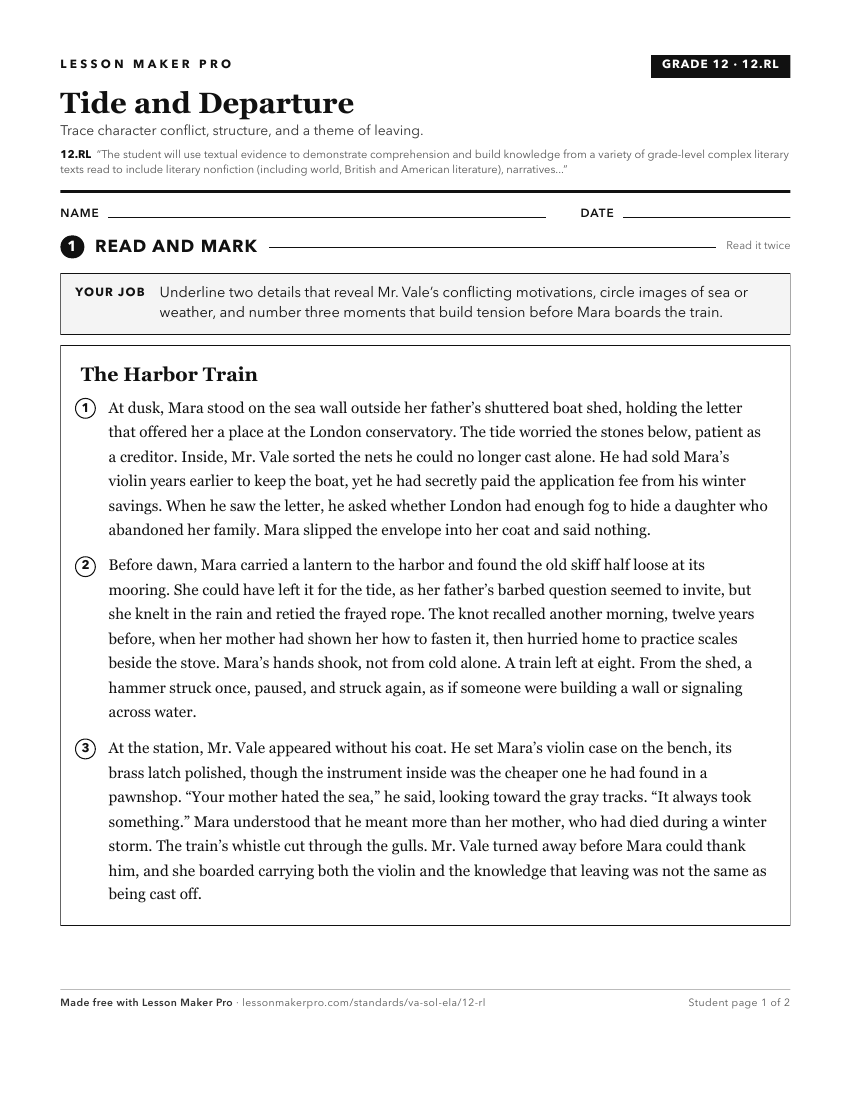
A ready-to-print activity worksheet aligned to 12.RL, with an answer key for the teacher on its own page. No account needed.
PDF, US Letter, prints cleanly in black and white.
Download the worksheetKeep exploring
Related Standards
- 10.RL
The student will use textual evidence to demonstrate comprehension and build knowledge from a variety of grade-level complex literary texts read to include lite...
- 8.RL
The student will use textual evidence to demonstrate comprehension and build knowledge from a variety of grade-level complex literary texts read to include shor...
- 6.RL
The student will use textual evidence to demonstrate comprehension and build knowledge from a variety of grade-level complex literary texts read to include shor...
- 11.RL
The student will use textual evidence to demonstrate comprehension and build knowledge from a variety of grade-level complex literary texts read to include lite...
Turn this cluster into a lesson
Grade, subject, topic, and the complete cluster are prefilled. Create one free, no account needed.
Also for this cluster:Make a WorksheetMake a QuizMake a Sub Lesson