Virginia SOL 12.RL.1.B
The Standard
Examine how authors structure a text and order events within it through parallel episodes, subplots, and conflicts, and explain how they create such effects as mystery, tension, or surprise.
Virginia Standards of Learning for English · Key Ideas and Plot Details
Teacher's field guide
What This Standard Means
What Students Need to Do
- Students trace how a literary work arranges events, conflicts, subplots, and repeated or parallel episodes. They explain how that arrangement controls what readers know and feel.
What Mastery Looks Like
- Students identify parallel episodes, subplots, conflicts, flashbacks, and delayed revelations in a literary text. They connect each structural choice to a specific effect and support the explanation with evidence.
Common Misconceptions
- Students may summarize events instead of explaining why the author placed them in that order. They may confuse a subplot with an unrelated detail or assume chronological order always reduces tension.
How to Assess It
- Give students a one-page excerpt with a flashback or subplot. Ask: “How does the placement of this section shape mystery, tension, or surprise? Cite two details.”
Lesson moves
Ways to Teach It
Give groups scene cards from a short story to arrange by chronology and publication order, then label where tension rises or information is withheld.
Ask students to write one paragraph explaining how moving a key revelation earlier would change the reader’s response.
Run a structure hunt where pairs earn points for locating a subplot, parallel episode, conflict shift, flashback, and delayed revelation.
Compare the event order in a thriller trailer with the full film synopsis, noting how each version creates mystery or surprise.
Free download
Printable 12.RL.1.B Worksheet
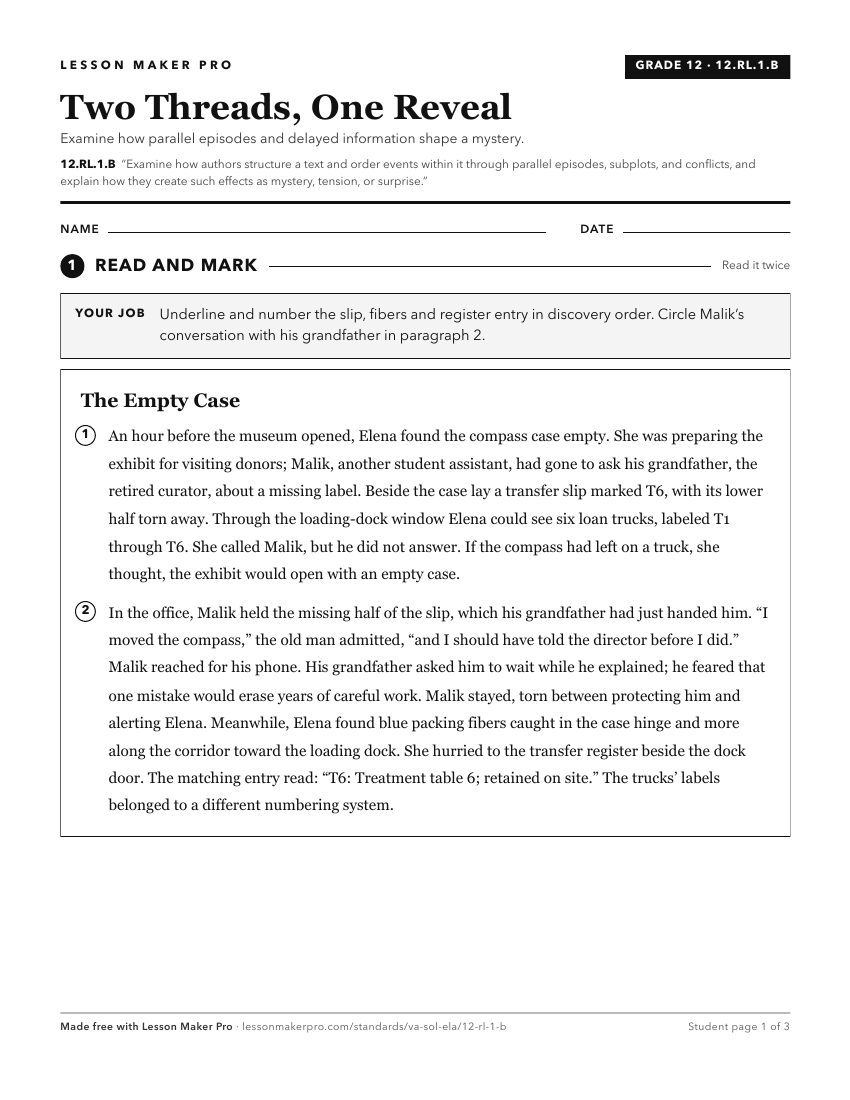
A ready-to-print activity worksheet aligned to 12.RL.1.B, with an answer key for the teacher on its own page. No account needed.
PDF, US Letter, prints cleanly in black and white.
Download the worksheetKeep exploring
Related Standards
- 10.RI.2.A
Analyze how authors use structure to explain relationships among concepts in a text, including how key sentences, paragraphs, and sections of texts contribute t...
- 8.RL.1.B
Explain how different plot patterns (e.g., comedy, drama, tragedy) and subplots create meaning and examine their influence on characters, theme, pacing, and poi...
- 8.RL.2.D
Analyze how an author’s use of literary devices including foreshadowing, flashback, symbolism, and irony are used to build mystery, suspense, or surprise.
- 10.RL.1.B
Analyze how authors structure texts to advance the plot, explaining how each event gives rise to the next or foreshadows a future event.
Turn this exact standard into a lesson
Grade, subject, topic, and the complete standard are prefilled. Create one free, no account needed.
Also for this standard:Make a WorksheetMake a QuizMake a Sub Lesson