Virginia SOL 12.RL.2.A
The Standard
Evaluate how the use of figurative language in poetry and prose contributes to the reader’s understanding of the subject, form, mood, and theme.
Virginia Standards of Learning for English · Craft and Style
Teacher's field guide
What This Standard Means
What Students Need to Do
- Students analyze metaphors, similes, imagery, symbols, personification, and other nonliteral language in poetry and prose. They judge how those choices shape the topic, structure, emotional tone, and larger message.
What Mastery Looks Like
- Students identify specific figurative language and explain how it shapes meaning rather than merely labeling it. They use precise evidence to evaluate effects on subject, form, mood, and theme.
Common Misconceptions
- Students often name a metaphor or symbol without explaining its effect. They may confuse mood with theme, treat figurative language literally, or assume a symbol has one fixed meaning.
How to Assess It
- Exit ticket: Choose one example of figurative language from today’s text. In four sentences, explain how it shapes the mood and develops a theme, using quoted evidence.
Lesson moves
Ways to Teach It
Use colored sticky notes to mark metaphors, imagery, and personification in a poem, then connect each note to mood or theme.
Write two paragraphs explaining how an author’s extended metaphor shapes both the subject and the text’s form.
Play a card-matching game that pairs quoted figurative language with possible effects, then require teams to defend or revise each match.
Compare figurative language in a poem and a song lyric about the same subject, focusing on differences in mood and theme.
Free download
Printable 12.RL.2.A Worksheet
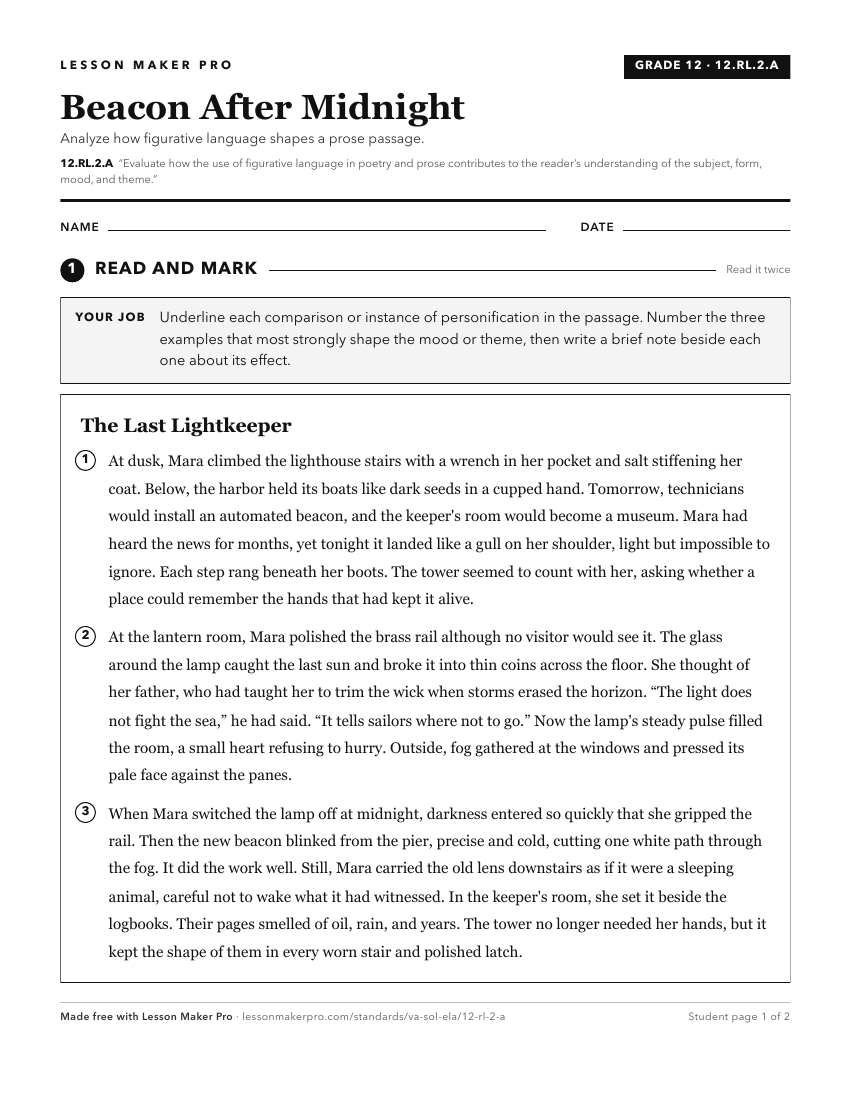
A ready-to-print activity worksheet aligned to 12.RL.2.A, with an answer key for the teacher on its own page. No account needed.
PDF, US Letter, prints cleanly in black and white.
Download the worksheetKeep exploring
Related Standards
- 8.RL.2.A
Interpret the meaning and analyze the impact of poetic elements in prose and poetry (e.g., rhyme, rhythm, repetition, alliteration, and onomatopoeia) on the rea...
- 5.RL.2.B
Analyze the author’s use of language (e.g., synonyms, figurative language, sensory words, dialogue, dialect) and their impact on understanding characters, setti...
- 11.RL.2.A
Interpret and analyze how the sound and imagery of poetry support the subject, mood, form, and theme and appeal to the reader’s senses.
- 7.RL.2.A
Analyze how elements of authors’ styles (e.g., word choice, dialogue, form, voice, rhyme, rhythm, and/or sound devices) contribute to meaning in various forms o...
Turn this exact standard into a lesson
Grade, subject, topic, and the complete standard are prefilled. Create one free, no account needed.
Also for this standard:Make a WorksheetMake a QuizMake a Sub Lesson