Texas TEKS 8.23.B
The Standard
- 8.23
- Culture. The student understands the relationships between and among people from various groups, including racial, ethnic, and religious groups, during the 17th, 18th, and 19th centuries. The student is expected to:
explain how urbanization contributed to conflicts resulting from differences in religion, social class, and political beliefs
Texas Essential Knowledge and Skills for Social Studies
Teacher's field guide
What This Standard Means
What Students Need to Do
- Students trace how rapid city growth brought groups with different faiths, incomes, and political views into close contact. They explain cause-and-effect links using examples such as nativism, labor disputes, and political machines.
What Mastery Looks Like
- Students can identify a city conflict, name the groups involved, and explain how urban growth increased tension. They support the explanation with accurate evidence from the period.
Common Misconceptions
- Students may treat urbanization as population growth without connecting it to conflict. They may also confuse immigrants with all urban workers or assume political machines caused every city dispute.
How to Assess It
- Give students this exit prompt: Choose nativism, a labor strike, or a political machine, then explain in three sentences how city growth helped create conflict.
Lesson moves
Ways to Teach It
Give groups city maps, immigration data, and wage records, then have them mark where religious, class, and political tensions could develop.
Ask students to write: Why might a factory owner, immigrant worker, and native-born voter view the same growing city differently?
Play a cause-and-effect card sort matching tenement growth, immigration, factory labor, and political machines with specific urban conflicts.
Analyze a local zoning or housing dispute, then compare its competing economic and political interests with those in nineteenth-century cities.
Free download
Printable 8.23.B Worksheet
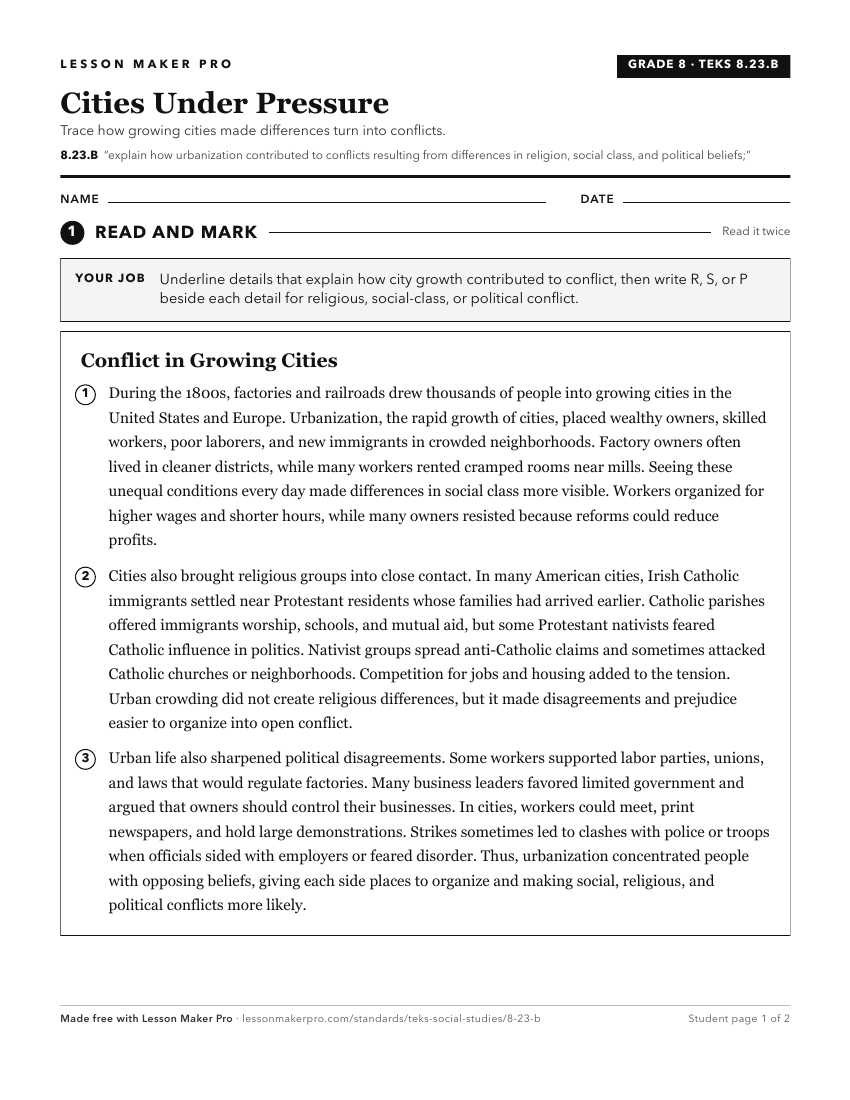
A ready-to-print activity worksheet aligned to 8.23.B, with an answer key for the teacher on its own page. No account needed.
PDF, US Letter, prints cleanly in black and white.
Download the worksheetKeep exploring
Related Standards
- 5.5.A
explain the significance of issues and events of the 20th century such as industrialization, urbanization, the Great Depression, the world wars, the civil right...
- 8.23.C
identify ways conflicts between people from various racial, ethnic, and religious groups were addressed
- 5.4.B
identify and explain how changes resulting from the Industrial Revolution led to conflict among sections of the United States
- 6.1.B
analyze the historical background of various contemporary societies to evaluate relationships between past conflicts and current conditions
Turn this exact standard into a lesson
Grade, subject, topic, and the complete standard are prefilled. Create one free, no account needed.
Also for this standard:Make a WorksheetMake a QuizMake a Sub Lesson