Texas TEKS 7.7
TEKS Knowledge Statement (Expectation Cluster)
History. The student understands how individuals, events, and issues shaped the history of Texas during the late 19th, 20th, and early 21st centuries. The student is expected to: explain how the oil industry led to the industrialization of Texas; define and trace the impact of "boom-and-bust" cycles of leading Texas industries throughout the 20th and early 21st centuries such as farming, oil and gas production, cotton, ranching, real estate, banking, and computer technology; describe and compare the impact of reform movements in Texas in the 19th and 20th centuries such as progressivism, populism, women's suffrage, agrarianism, labor reform, and the conservative movement of the late 20th century; describe and compare the civil rights and equal rights movements of various groups in Texas in the 20th century and identify key leaders in these movements such as James L. Farmer Jr., Hector P. Garcia, Oveta Culp Hobby, Lyndon B. Johnson, the League of United Latin American Citizens (LULAC), Jane McCallum, and Lulu Belle Madison White; and analyze the political, economic, and social impact of World War I, the Great Depression, World War II, and significant issues in the latter half of the 20th and early 21st centuries such as political and economic controversies, immigration, and migration on the history of Texas.
Texas Essential Knowledge and Skills for Social Studies
Cluster contents
Student Expectations in This Statement
7.7 is a TEKS knowledge and skills statement. These are the student expectations under it.
- 7.7.A
explain how the oil industry led to the industrialization of Texas
- 7.7.B
define and trace the impact of "boom-and-bust" cycles of leading Texas industries throughout the 20th and early 21st centuries such as farming, oil and gas prod...
- 7.7.C
describe and compare the impact of reform movements in Texas in the 19th and 20th centuries such as progressivism, populism, women's suffrage, agrarianism, labo...
- 7.7.D
describe and compare the civil rights and equal rights movements of various groups in Texas in the 20th century and identify key leaders in these movements such...
- 7.7.E
analyze the political, economic, and social impact of World War I, the Great Depression, World War II, and significant issues in the latter half of the 20th and...
Teacher's field guide
What This Cluster Means
What Students Need to Do
- Students explain how industries, reform movements, rights campaigns, wars, economic crises, immigration, and migration changed Texas. They trace causes and effects, compare movements, and connect leaders to specific actions and outcomes.
What Mastery Looks Like
- Students can build an accurate timeline and explain links among events, people, industries, and changes in Texas. They support comparisons with specific evidence and identify political, economic, and social effects.
Common Misconceptions
- Students may treat an industry boom as steady growth and overlook later job losses, bank failures, or migration. They may confuse reform movements, combine distinct civil rights campaigns, or credit leaders with work outside their roles.
How to Assess It
- Exit ticket: Choose oil, one reform movement, or one major national crisis. Name one cause, then explain one political, economic, and social effect on Texas.
Lesson moves
Ways to Teach It
Have students build a floor timeline with event, industry, reform, and leader cards, then connect each cause to two Texas effects.
Ask students to write: Which changed Texas more, oil industrialization or civil rights reform, and what evidence supports your claim?
Run a card sort race matching industries to boom causes, bust causes, and effects on Texas jobs, cities, and politics.
Students compare a current Texas industry headline with an earlier boom or bust, then identify likely economic, political, and social effects.
Free download
Printable 7.7 Worksheet
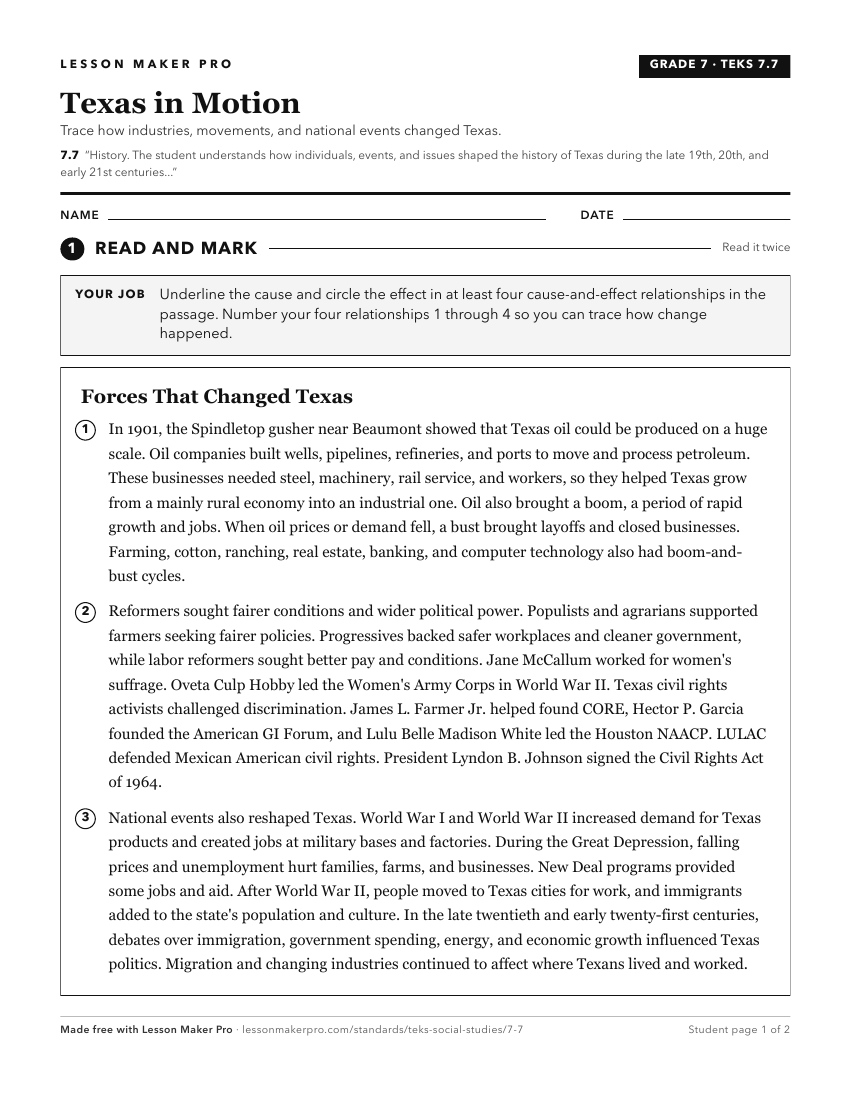
A ready-to-print activity worksheet aligned to 7.7, with an answer key for the teacher on its own page. No account needed.
PDF, US Letter, prints cleanly in black and white.
Download the worksheetKeep exploring
Related Standards
- 7.6
History. The student understands how individuals, events, and issues shaped the history of Texas from Reconstruction through the beginning of the 20th century. ...
- 7.2
History. The student understands how individuals, events, and issues through the Mexican National Era shaped the history of Texas. The student is expected to:
- 4.5
History. The student understands important issues, events, and individuals of the 20th century in Texas. The student is expected to:
- 4.4
History. The student understands the political, economic, and social changes in Texas during the last half of the 19th century. The student is expected to:
Turn this cluster into a lesson
Grade, subject, topic, and the complete cluster are prefilled. Create one free, no account needed.
Also for this cluster:Make a WorksheetMake a QuizMake a Sub Lesson