Texas TEKS 7.6.D
The Standard
- 7.6
- History. The student understands how individuals, events, and issues shaped the history of Texas from Reconstruction through the beginning of the 20th century. The student is expected to:
explain the political, economic, and social impact of the agricultural industry and the development of West Texas resulting from the close of the frontier.
Texas Essential Knowledge and Skills for Social Studies
Teacher's field guide
What This Standard Means
What Students Need to Do
- Students trace how the end of open frontier land changed ranching, farming, transportation, settlement, and government decisions in West Texas. They explain political, economic, and social effects with clear cause and effect links.
What Mastery Looks Like
- A student can explain how railroads, barbed wire, windmills, farming, and ranching changed markets, towns, migration, land use, and political movements. The student uses specific evidence and clearly labels political, economic, and social effects.
Common Misconceptions
- Students may think frontier closure ended western settlement, rather than shifting land into fenced ranches, farms, and towns. They often treat every effect as economic, overlook Indigenous displacement and farm political movements, or assume cattle drives continued unchanged.
How to Assess It
- Exit ticket: Explain how the end of open frontier land contributed to one political, one economic, and one social change in West Texas. Include one named example.
Lesson moves
Ways to Teach It
Give groups a blank West Texas map and cards for railroads, ranches, farms, windmills, towns, and fences to build a cause and effect map.
Write a town council speech supporting or opposing a new railroad, using one political, economic, and social consequence.
Play a three-column card sort, then defend whether each impact belongs under politics, economics, or society.
Compare a current West Texas water use map with an 1890s settlement map, then identify one lasting effect of agricultural growth.
Free download
Printable 7.6.D Worksheet
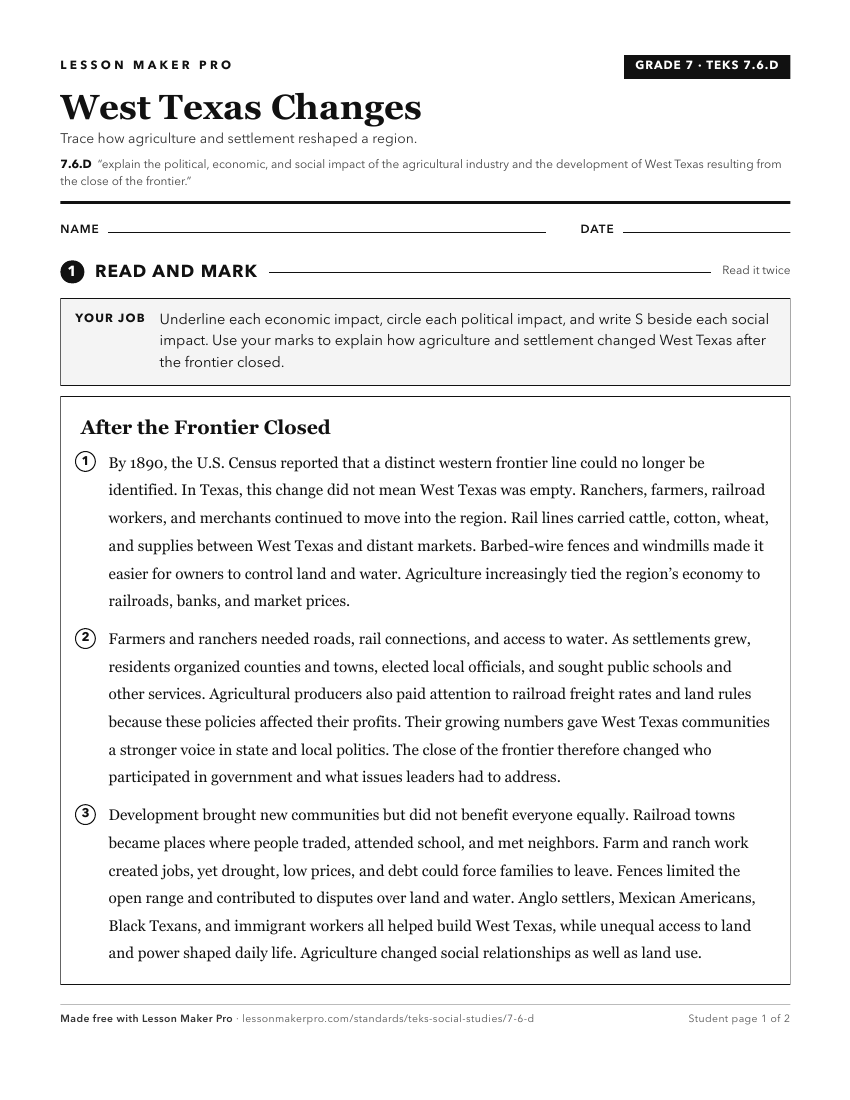
A ready-to-print activity worksheet aligned to 7.6.D, with an answer key for the teacher on its own page. No account needed.
PDF, US Letter, prints cleanly in black and white.
Download the worksheetKeep exploring
Related Standards
- 7.12.A
explain the impact of national and international markets on the production of goods and services in Texas, including agriculture and oil and gas
- 7.7.B
define and trace the impact of "boom-and-bust" cycles of leading Texas industries throughout the 20th and early 21st centuries such as farming, oil and gas prod...
- 7.5.C
explain the political, economic, and social effects of the Civil War and Reconstruction in Texas.
- 7.11.A
explain economic factors and the development of major industries that led to the urbanization of Texas such as transportation, oil and gas, and manufacturing
Turn this exact standard into a lesson
Grade, subject, topic, and the complete standard are prefilled. Create one free, no account needed.
Also for this standard:Make a WorksheetMake a QuizMake a Sub Lesson