Texas TEKS 6.6.E
The Standard
- 6.6
- Matter and energy. The student knows that matter is made of atoms, can be classified according to its properties, and can undergo changes. The student is expected to:
identify the formation of a new substance by using the evidence of a possible chemical change, including production of a gas, change in thermal energy, production of a precipitate, and color change.
Texas Essential Knowledge and Skills for Science
Teacher's field guide
What This Standard Means
What Students Need to Do
- Students observe a material before and after substances interact. They use clues such as bubbles, an unexpected temperature shift, a new solid, or a lasting color change to infer that a new substance may have formed.
What Mastery Looks Like
- Students can identify relevant evidence in a written scenario or investigation. They explain why the evidence suggests a chemical change rather than melting, freezing, boiling, or mixing.
Common Misconceptions
- Students may treat bubbles from boiling as proof of a chemical change. They may confuse dissolving or melting with forming a new substance. They may also assume that one clue always proves a chemical change.
How to Assess It
- Give this exit ticket: Two clear liquids are mixed, the container warms, and a yellow solid appears. Name two clues and explain what they suggest.
Lesson moves
Ways to Teach It
Mix vinegar and baking soda in a sealed bag, record temperature before and after, and describe the evidence that new substances formed.
Ask students whether boiling water forms a new substance, then require them to defend their answer using observations.
Sort scenario cards into chemical change, physical change, or not enough evidence, then compare answers with a partner.
Examine a disposable hand warmer as it heats, and connect the temperature change to the reaction between iron and oxygen.
Free download
Printable 6.6.E Worksheet
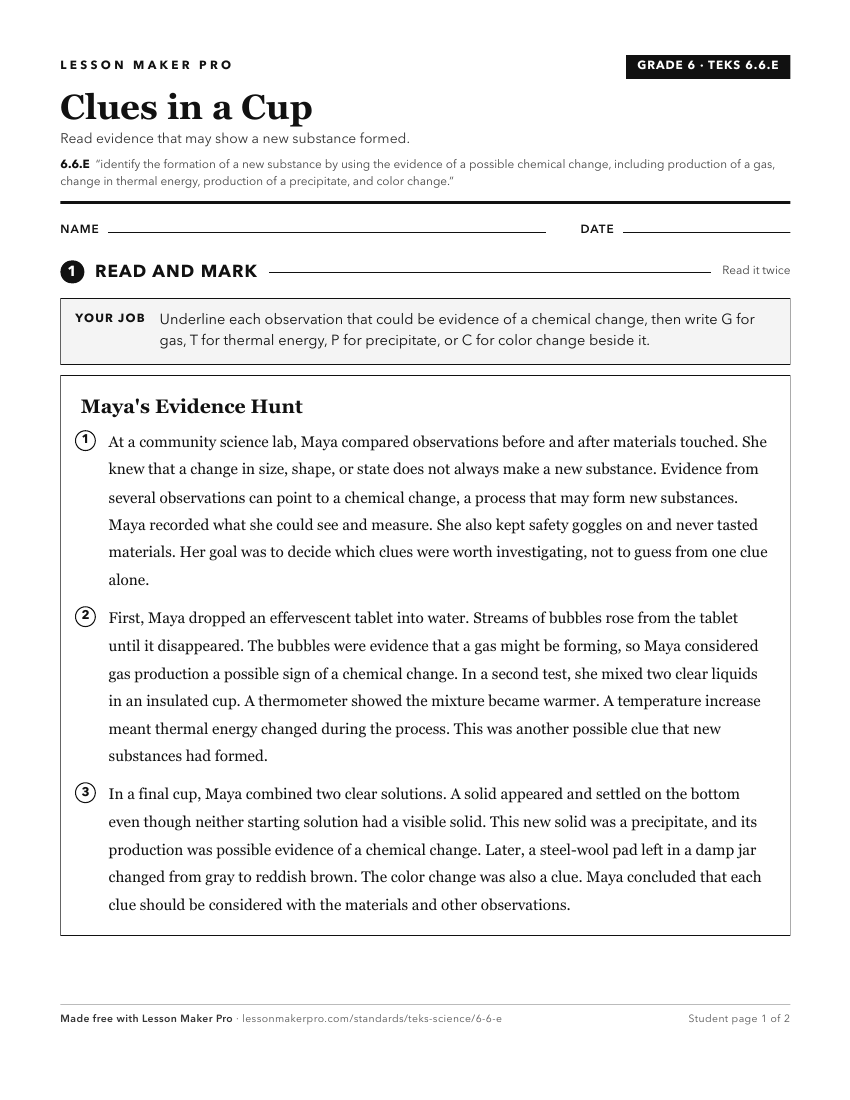
A ready-to-print activity worksheet aligned to 6.6.E, with an answer key for the teacher on its own page. No account needed.
PDF, US Letter, prints cleanly in black and white.
Download the worksheetKeep exploring
Related Standards
- 2.6.A
classify matter by observable physical properties, including texture, flexibility, and relative temperature, and identify whether a material is a solid or liqui...
- 5.6.C
compare the properties of substances before and after they are combined into a solution and demonstrate that matter is conserved in solutions
- 2.6.B
conduct a descriptive investigation to explain how physical properties can be changed through processes such as cutting, folding, sanding, melting, or freezing
- 3.6.C
predict, observe, and record changes in the state of matter caused by heating or cooling in a variety of substances such as ice becoming liquid water, condensat...
Turn this exact standard into a lesson
Grade, subject, topic, and the complete standard are prefilled. Create one free, no account needed.
Also for this standard:Make a WorksheetMake a QuizMake a Sub Lesson