Texas TEKS 3.10.C
The Standard
- 3.10
- Earth and space. The student knows that there are recognizable processes that change Earth over time. The student is expected to:
model and describe rapid changes in Earth's surface such as volcanic eruptions, earthquakes, and landslides.
Texas Essential Knowledge and Skills for Science
Teacher's field guide
What This Standard Means
What Students Need to Do
- Students build simple models showing how an eruption, earthquake, or landslide can quickly reshape land. They describe what moved and compare the surface before and after the event.
What Mastery Looks Like
- Students can use a model, drawing, or diagram to show a rapid surface change. They correctly name the event and explain how rocks, soil, or lava moved.
Common Misconceptions
- Students may think all land changes happen slowly or that every rapid change has the same cause. They may also confuse magma with lava or think earthquakes always create large open cracks.
How to Assess It
- Give students one event and ask them to draw the land before and after it. Have them label what moved and write one sentence explaining the change.
Lesson moves
Ways to Teach It
Use trays of sand, blocks, and clay to model shaking ground, sliding soil, and flowing lava, then photograph each surface change.
Ask students to write: Which event changes Earth's surface fastest, and what evidence from a model supports your answer?
Sort picture cards into eruption, earthquake, or landslide groups, then match each event with its resulting surface change.
Compare before-and-after news photos of a real event, then mark changed landforms on printed copies.
Free download
Printable 3.10.C Worksheet
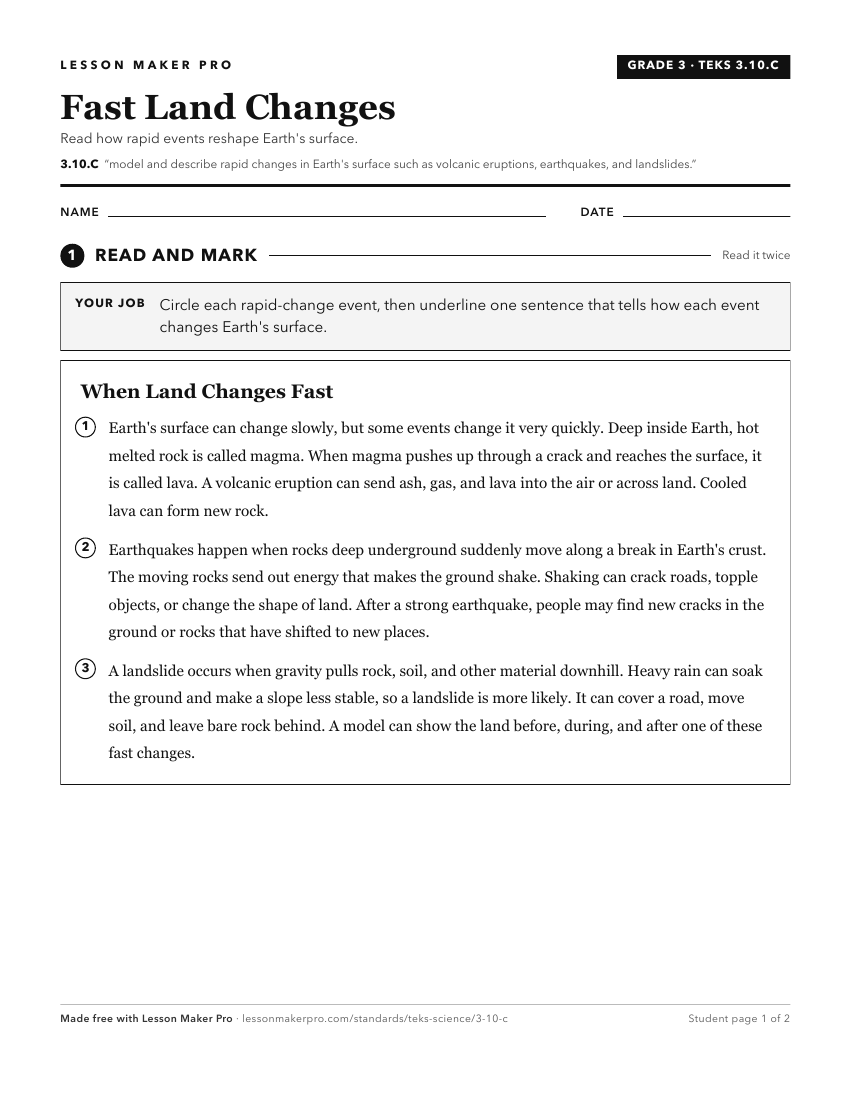
A ready-to-print activity worksheet aligned to 3.10.C, with an answer key for the teacher on its own page. No account needed.
PDF, US Letter, prints cleanly in black and white.
Download the worksheetKeep exploring
Related Standards
- 5.10.C
model and identify how changes to Earth's surface by wind, water, or ice result in the formation of landforms, including deltas, canyons, and sand dunes.
- 8.11.A
use scientific evidence to describe how natural events, including volcanic eruptions, meteor impacts, abrupt changes in ocean currents, and the release and abso...
- 7.10.B
describe how plate tectonics causes ocean basin formation, earthquakes, mountain building, and volcanic eruptions, including supervolcanoes and hot spots.
- 4.10.B
model and describe slow changes to Earth's surface caused by weathering, erosion, and deposition from water, wind, and ice
Turn this exact standard into a lesson
Grade, subject, topic, and the complete standard are prefilled. Create one free, no account needed.
Also for this standard:Make a WorksheetMake a QuizMake a Sub Lesson