Texas TEKS 8.11.A
The Standard
- 8.11
- The student knows that natural events and human activity can impact global climate
use scientific evidence to describe how natural events, including volcanic eruptions, meteor impacts, abrupt changes in ocean currents, and the release and absorption of greenhouse gases influence climate
Texas Essential Knowledge and Skills for Science
Teacher's field guide
What This Standard Means
What Students Need to Do
- Students explain how natural events can change climate through specific cause and effect chains. They use graphs, measurements, or physical evidence to support each explanation. They distinguish short-term effects from long-term climate changes.
What Mastery Looks Like
- Students can connect an event to changes in sunlight, heat transfer, ocean circulation, or greenhouse gas levels. They cite relevant evidence and explain whether the effect causes warming, cooling, or regional change.
Common Misconceptions
- Students may think volcanic heat warms the whole climate, while volcanic particles often cause temporary cooling. They may assume all greenhouse gases come from people or that meteor impacts always cause warming. They may also confuse short-term weather changes with climate patterns.
How to Assess It
- Give students a graph showing lower global temperatures after a major eruption. Ask, “What evidence shows a climate effect, and what process caused it?”
Lesson moves
Ways to Teach It
Shine a flashlight through clear and cloudy containers, then use a light meter to model how volcanic particles reduce incoming sunlight.
Write a cause and effect chain explaining how a meteor impact could change sunlight, temperature, and plant growth.
Match event cards with evidence cards and climate effect cards, then defend each match to a partner.
Examine temperature data from the 1991 Mount Pinatubo eruption and identify the size and length of the climate response.
Free download
Printable 8.11.A Worksheet
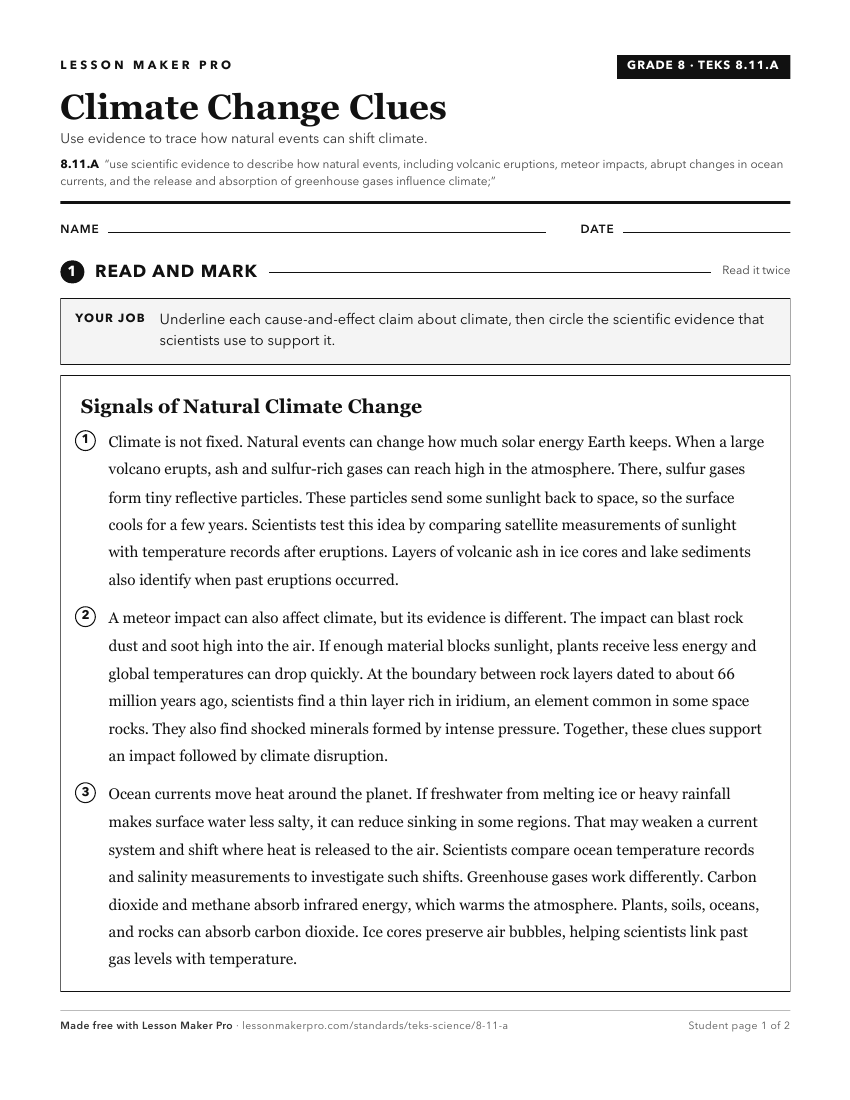
A ready-to-print activity worksheet aligned to 8.11.A, with an answer key for the teacher on its own page. No account needed.
PDF, US Letter, prints cleanly in black and white.
Download the worksheetKeep exploring
Related Standards
- 3.10.C
model and describe rapid changes in Earth's surface such as volcanic eruptions, earthquakes, and landslides.
- 8.11
The student knows that natural events and human activity can impact global climate
- 7.10.A
describe the evidence that supports that Earth has changed over time, including fossil evidence, plate tectonics, and superposition
- 8.11.B
use scientific evidence to describe how human activities, including the release of greenhouse gases, deforestation, and urbanization, can influence climate
Turn this exact standard into a lesson
Grade, subject, topic, and the complete standard are prefilled. Create one free, no account needed.
Also for this standard:Make a WorksheetMake a QuizMake a Sub Lesson