Texas TEKS 2.9.B
The Standard
- 2.9
- Earth and space. The student knows that there are recognizable patterns in the natural world and among objects in the sky. The student is expected to:
observe objects in the sky using tools such as a telescope and compare how objects in the sky are more visible and can appear different with a tool than with an unaided eye.
Texas Essential Knowledge and Skills for Science
Teacher's field guide
What This Standard Means
What Students Need to Do
- Students observe the same sky object with their eyes and with a telescope or binoculars. They compare visible details, apparent size, brightness, and clarity.
What Mastery Looks Like
- Students record observations from both views using labeled drawings or words. They explain that the tool reveals details but does not change the object itself.
Common Misconceptions
- Students may think a telescope makes an object larger or moves it closer. They may also think it is safe to view the Sun through any telescope or binoculars.
How to Assess It
- Show unaided-eye and telescope images of the Moon. Ask students to name two visible differences and explain whether the Moon itself changed.
Lesson moves
Ways to Teach It
Observe the Moon with eyes and binoculars, then make side-by-side drawings of visible shapes, edges, and dark areas.
Write a response to this prompt: What details can a telescope reveal that your eyes might miss?
Match cards showing unaided-eye views of sky objects with cards showing magnified views, then explain each match.
Examine astronomers’ Moon sketches and telescope images, then list how the tool helps them collect better information.
Free download
Printable 2.9.B Worksheet
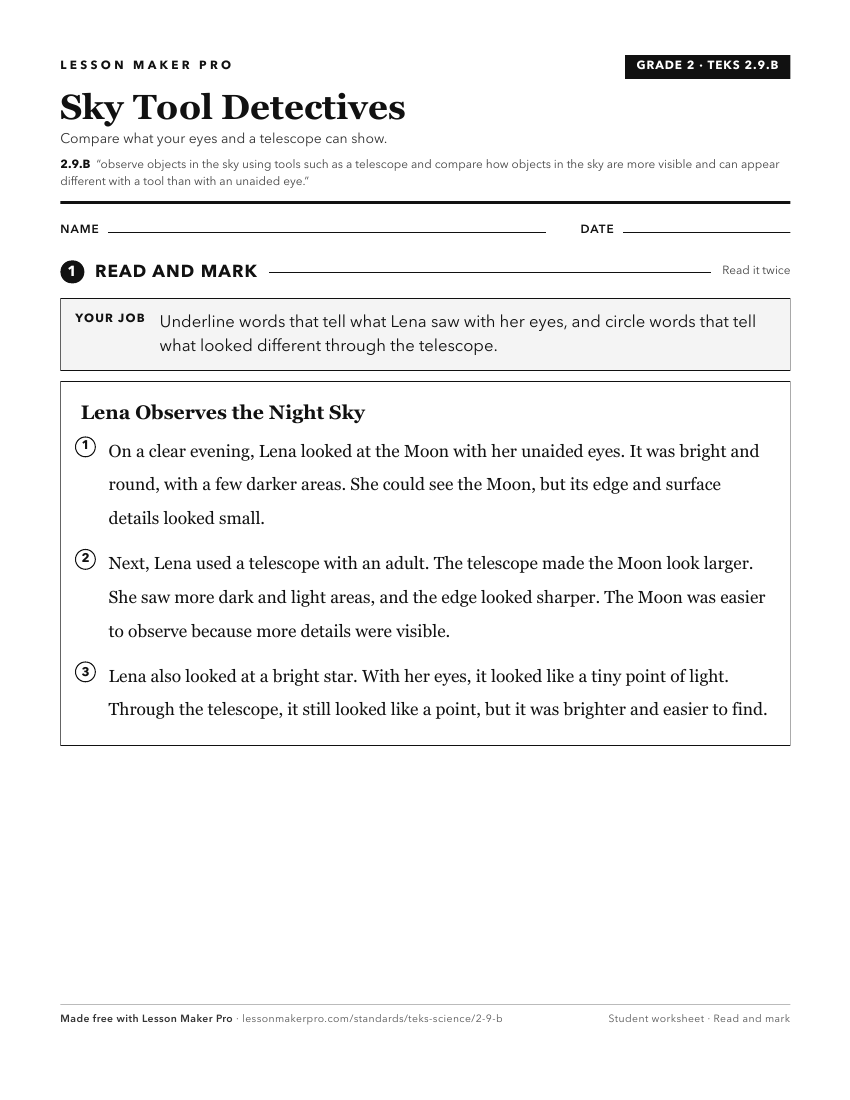
A ready-to-print activity worksheet aligned to 2.9.B, with an answer key for the teacher on its own page. No account needed.
PDF, US Letter, prints cleanly in black and white.
Download the worksheetKeep exploring
Related Standards
- 2.9
Earth and space. The student knows that there are recognizable patterns in the natural world and among objects in the sky. The student is expected to:
- K.9
Earth and space. The student knows that there are recognizable patterns in the natural world and among objects in the sky. The student is expected to:
- K.9.B
observe, describe, and illustrate the Sun, Moon, stars, and objects in the sky such as clouds.
- K.1.D
use tools, including hand lenses, goggles, trays, cups, bowls, sieves or sifters, notebooks, terrariums, aquariums, samples (rocks, sand, soil, loam, gravel, cl...
Turn this exact standard into a lesson
Grade, subject, topic, and the complete standard are prefilled. Create one free, no account needed.
Also for this standard:Make a WorksheetMake a QuizMake a Sub Lesson