Texas TEKS K.9.B
The Standard
- K.9
- Earth and space. The student knows that there are recognizable patterns in the natural world and among objects in the sky. The student is expected to:
observe, describe, and illustrate the Sun, Moon, stars, and objects in the sky such as clouds.
Texas Essential Knowledge and Skills for Science
Teacher's field guide
What This Standard Means
What Students Need to Do
- Students observe objects in daytime and nighttime sky scenes. They name visible features, describe what they notice, and make simple drawings that match their observations.
What Mastery Looks Like
- A student correctly identifies the Sun, Moon, stars, and clouds in photos or observations. Their drawing includes recognizable features, and they can describe one detail about each object.
Common Misconceptions
- Students may think the Moon appears only at night or that stars disappear during the day. They may draw familiar symbols instead of features they actually observe.
How to Assess It
- Show a sky photo and ask: “Name two objects you see, describe one feature, and draw one object as it appears.”
Lesson moves
Ways to Teach It
Take clipboards outside, observe without looking directly at the Sun, then draw and label two things visible in the sky.
Show daytime and nighttime sky photos, then ask, “What is alike, and what is different?”
Play Sky Object Match by pairing Sun, Moon, star, and cloud cards with simple description cards.
Assign a daily sky reporter to look outside, sketch the sky, and tell the class what people might need to wear.
Free download
Printable K.9.B Worksheet
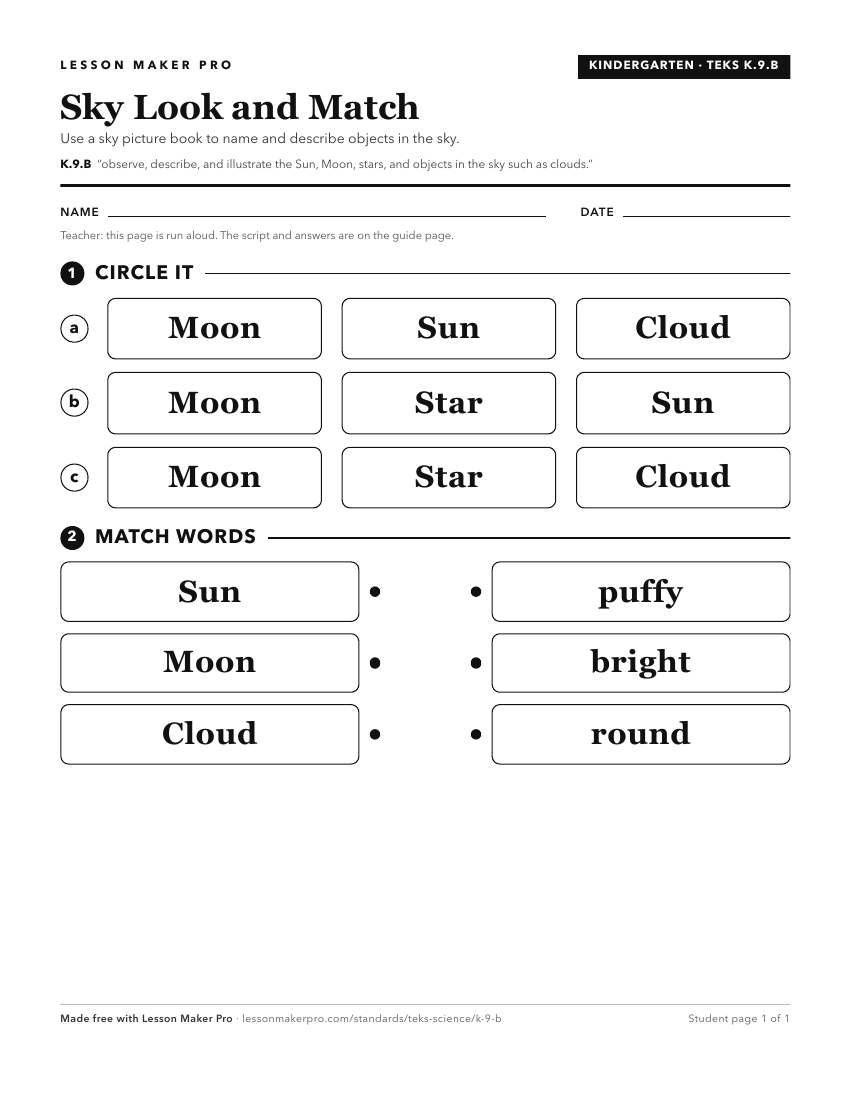
A ready-to-print activity worksheet aligned to K.9.B, with an answer key for the teacher on its own page. No account needed.
PDF, US Letter, prints cleanly in black and white.
Download the worksheetKeep exploring
Related Standards
- 2.9.B
observe objects in the sky using tools such as a telescope and compare how objects in the sky are more visible and can appear different with a tool than with an...
- 4.9
Earth and space. The student recognizes patterns among the Sun, Earth, and Moon system and their effects. The student is expected to:
- 6.9
Earth and space. The student models the cyclical movements of the Sun, Earth, and Moon and describes their effects. The student is expected to:
- K.9.A
identify, describe, and predict the patterns of day and night and their observable characteristics
Turn this exact standard into a lesson
Grade, subject, topic, and the complete standard are prefilled. Create one free, no account needed.
Also for this standard:Make a WorksheetMake a QuizMake a Sub Lesson