Texas TEKS 2.13.C
The Standard
- 2.13
- Organisms and environments. The student knows that organisms have structures and undergo processes that help them interact and survive within their environments. The student is expected to:
record and compare how being part of a group helps animals obtain food, defend themselves, and cope with changes
Texas Essential Knowledge and Skills for Science
Teacher's field guide
What This Standard Means
What Students Need to Do
- Students observe examples of animals acting in groups and record what the animals do. They compare how group behavior helps with finding food, avoiding danger, or handling cold, storms, and habitat changes.
What Mastery Looks Like
- Students can complete a chart that names the animal, its group behavior, and the benefit. They can compare two animals and support the comparison with details from observations, pictures, or videos.
Common Misconceptions
- Students may think every animal lives in a group or that groups help all animals in the same way. They may also confuse protection from danger with protection from weather or other habitat changes.
How to Assess It
- Show picture cards of wolves hunting and penguins huddling. Ask students to record each group benefit, then write one sentence comparing them.
Lesson moves
Ways to Teach It
Hide paper food tokens, have students search alone and in teams, then record and compare how many tokens they find.
Ask students to write how a wolf pack and a penguin colony receive different benefits from staying together.
Sort animal scenario cards into finding food, avoiding danger, or handling change, then explain one choice to a partner.
Observe ants or birds outside, tally group behaviors, and discuss how one behavior may help the animals survive.
Free download
Printable 2.13.C Worksheet
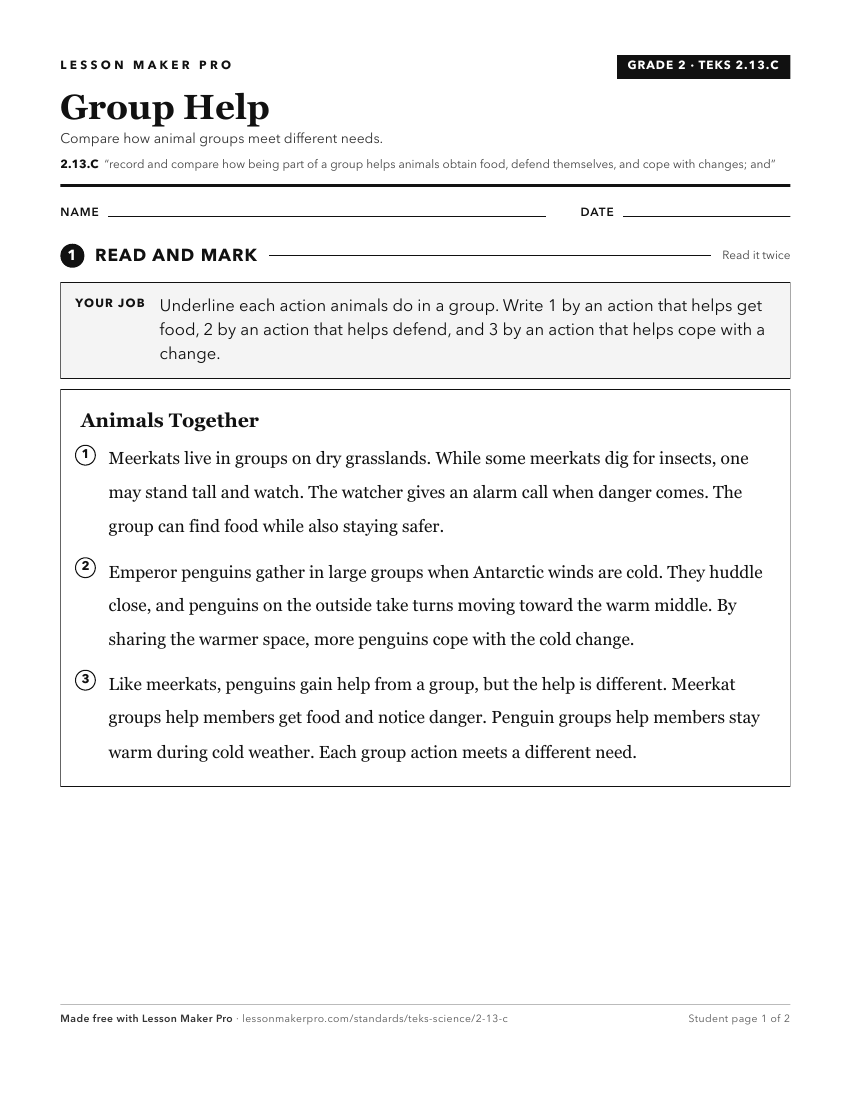
A ready-to-print activity worksheet aligned to 2.13.C, with an answer key for the teacher on its own page. No account needed.
PDF, US Letter, prints cleanly in black and white.
Download the worksheetKeep exploring
Related Standards
- K.12.B
observe and identify the dependence of animals on air, water, food, space, and shelter.
- 1.13.A
identify the external structures of different animals and compare how those structures help different animals live, move, and meet basic needs for survival
- 2.13.B
record and compare how the structures and behaviors of animals help them find and take in food, water, and air
- 1.13.B
record observations of and describe basic life cycles of animals, including a bird, a mammal, and a fish
Turn this exact standard into a lesson
Grade, subject, topic, and the complete standard are prefilled. Create one free, no account needed.
Also for this standard:Make a WorksheetMake a QuizMake a Sub Lesson