TEKS Math 6.14.E
The Standard
describe the information in a credit report and how long it is retained
Texas Essential Knowledge and Skills for Mathematics
Teacher's field guide
What This Standard Means
What Students Need to Do
- Students read a sample credit report and name the types of information it contains. They explain that different records remain for different lengths of time, commonly 2, 7, or 10 years.
What Mastery Looks Like
- Students can identify personal details, credit accounts, payment history, inquiries, collections, and public records on a sample report. They can explain that retention varies, often from 2 to 10 years.
Common Misconceptions
- Students may think a credit report shows a credit score, income, or bank balance. They may also believe missed payments disappear once paid or that every item stays forever.
How to Assess It
- Give students four items from a mock report. Ask them to name each type of information and estimate whether it remains for about 2, 7, or 10 years.
Lesson moves
Ways to Teach It
Give pairs a mock credit report, highlighters, and category labels to mark personal data, accounts, payment history, inquiries, and public records.
Ask students to write why a paid late payment might still matter to a future lender.
Play a card sort matching report items with typical retention periods, such as inquiries for 2 years and bankruptcies for up to 10 years.
Have students review a fictional renter's credit report and decide what information a landlord might consider when reviewing an application.
Free download
Printable 6.14.E Worksheet
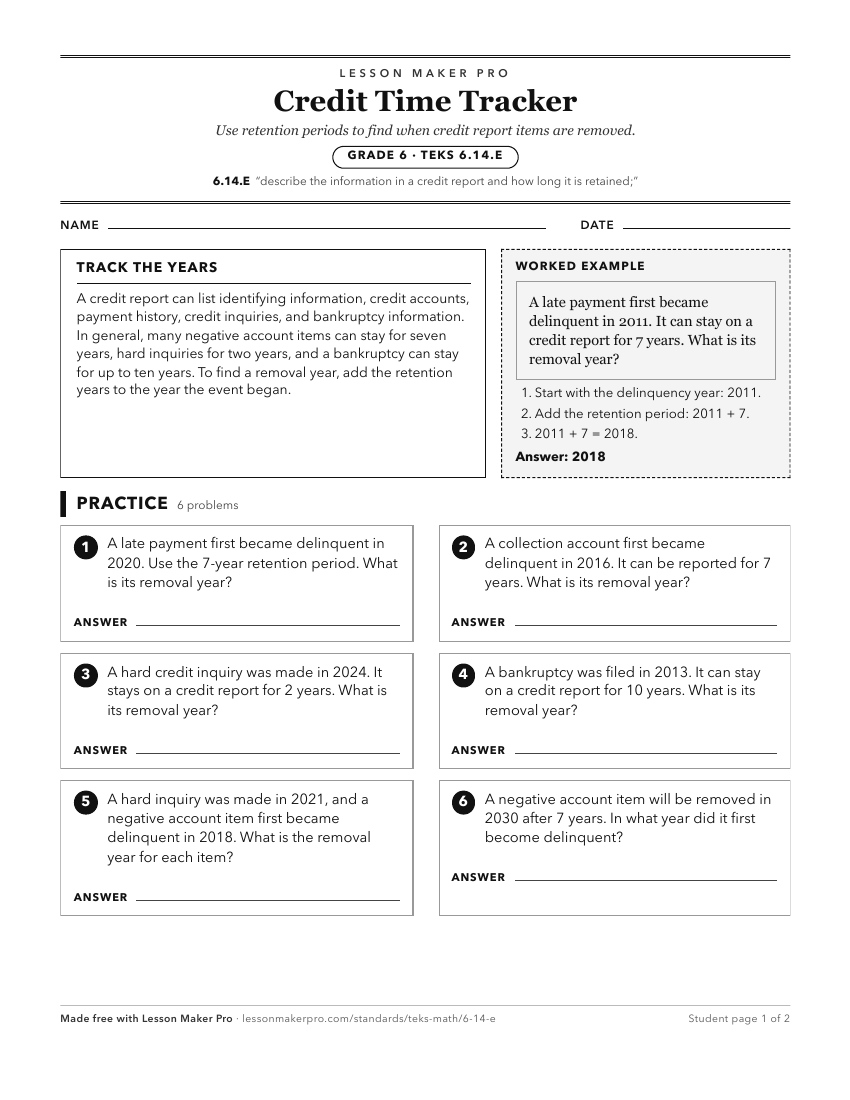
A ready-to-print activity worksheet aligned to 6.14.E, with an answer key for the teacher on its own page. No account needed.
PDF, US Letter, prints cleanly in black and white.
Download the worksheetKeep exploring
Related Standards
- 8.12.A
solve real-world problems comparing how interest rate and loan length affect the cost of credit
- 6.14.D
explain why it is important to establish a positive credit history
- 6.14.F
describe the value of credit reports to borrowers and to lenders
- 3.9.D
explain that credit is used when wants or needs exceed the ability to pay and that it is the borrower's responsibility to pay it back to the lender, usually wit...
Turn this exact standard into a lesson
Grade, subject, topic, and the complete standard are prefilled. Create one free, no account needed.
Also for this standard:Make a WorksheetMake a QuizMake a Sub Lesson