TEKS Math 4.10.C
The Standard
compare the advantages and disadvantages of various savings options
Texas Essential Knowledge and Skills for Mathematics
Teacher's field guide
What This Standard Means
What Students Need to Do
- Students compare places to save money using interest, safety, fees, and access. They choose an option for a savings goal and explain its benefits and drawbacks.
What Mastery Looks Like
- A student explains that a savings account offers quick access but may pay less interest than other options. Given a savings goal, the student selects an option and supports the choice with accurate tradeoffs.
Common Misconceptions
- Students may think the option with the highest interest rate is always the best choice. They may assume every option allows instant withdrawals, or that cash at home earns interest and has bank protections.
How to Assess It
- Exit ticket: Luis needs $300 for a bike in two months. Choose a savings account or a one-year certificate of deposit, then give one advantage and one disadvantage of each.
Lesson moves
Ways to Teach It
Give pairs cards for a cash jar, savings account, and certificate of deposit, then have them sort benefit and drawback cards beneath each.
Write: Which savings option would you choose for money needed next month, and which for money saved five years? Explain both choices.
Play Savings Match: teams pair goal cards with option cards, then earn a point for naming one accurate benefit and drawback.
Use printed bank rate sheets to compare interest, fees, and withdrawal rules, then recommend an account for saving $100 for six months.
Free download
Printable 4.10.C Worksheet
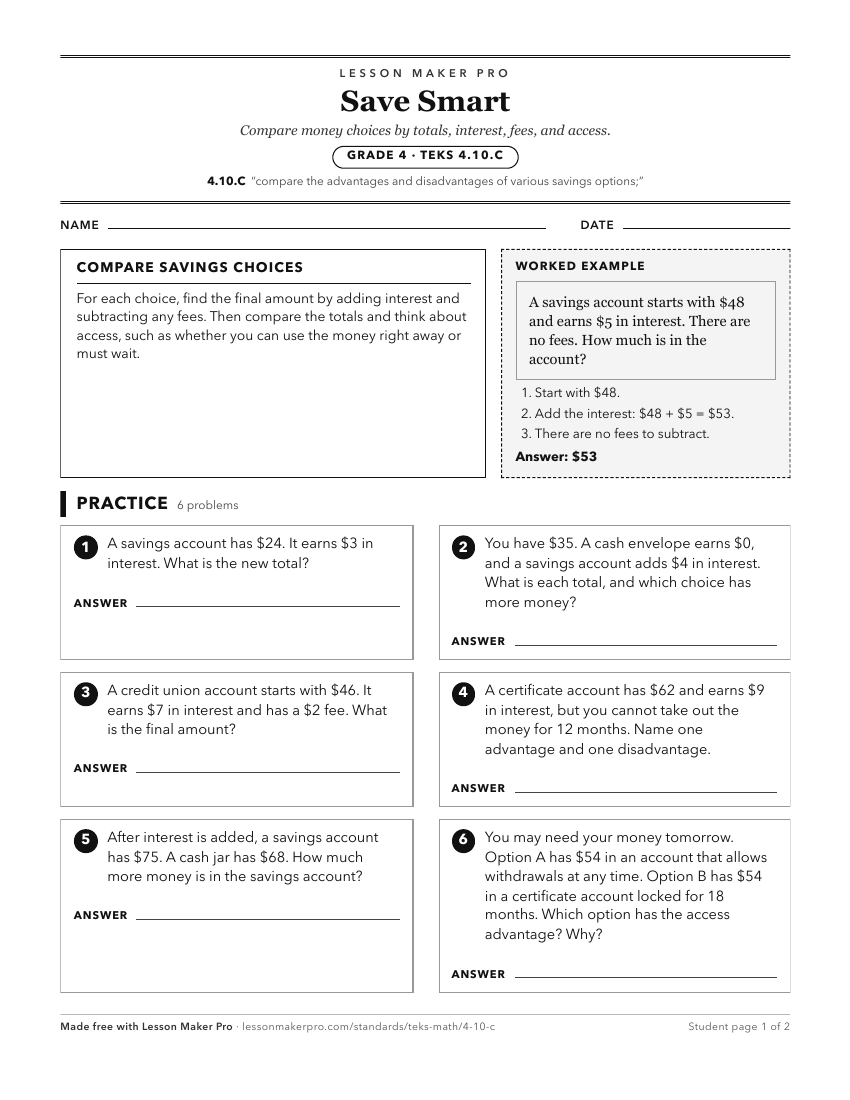
A ready-to-print activity worksheet aligned to 4.10.C, with an answer key for the teacher on its own page. No account needed.
PDF, US Letter, prints cleanly in black and white.
Download the worksheetKeep exploring
Related Standards
- 3.9.E
list reasons to save and explain the benefit of a savings plan, including for college
- 6.14.A
compare the features and costs of a checking account and a debit card offered by different local financial institutions
- 8.12.E
identify and explain the advantages and disadvantages of different payment methods
- 5.10.C
identify the advantages and disadvantages of different methods of payment, including check, credit card, debit card, and electronic payments
Turn this exact standard into a lesson
Grade, subject, topic, and the complete standard are prefilled. Create one free, no account needed.
Also for this standard:Make a WorksheetMake a QuizMake a Sub Lesson