TEKS Math 3.9.E
The Standard
list reasons to save and explain the benefit of a savings plan, including for college
Texas Essential Knowledge and Skills for Mathematics
Teacher's field guide
What This Standard Means
What Students Need to Do
- Students name reasons people save money, including future education, emergencies, and large purchases. They explain how a regular savings plan makes future costs easier to manage.
What Mastery Looks Like
- Students can name several reasons to save, such as college, emergencies, or a planned purchase. They can explain how regular deposits help someone reach a future goal.
Common Misconceptions
- Students may think saving is only for adults or people with high incomes. They may believe saved money grows automatically or that small deposits cannot help with large goals like college.
How to Assess It
- Exit ticket: “Maya receives $10 each month. Name one reason she might save some money and explain how a savings plan would help.”
Lesson moves
Ways to Teach It
Give pairs play money, three labeled jars, and goal cards, then have them divide the money and explain each choice.
Ask students to write: “Why might someone begin saving for college in elementary school?” Then discuss their answers with a partner.
Play a card match game where students pair saving goals with reasonable plans, such as saving part of an allowance each week.
Use a calendar to track saving $5 each week for one month, then connect repeated deposits to long-term college savings.
Free download
Printable 3.9.E Worksheet
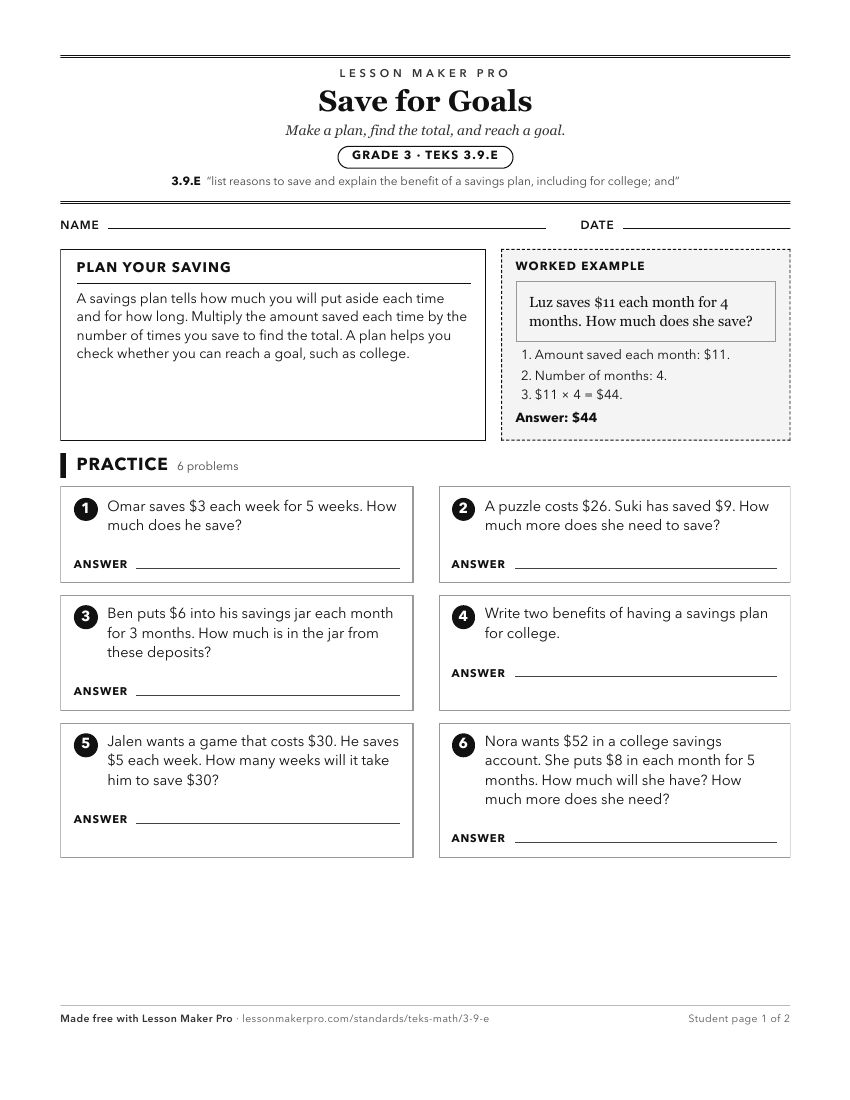
A ready-to-print activity worksheet aligned to 3.9.E, with an answer key for the teacher on its own page. No account needed.
PDF, US Letter, prints cleanly in black and white.
Download the worksheetKeep exploring
Related Standards
- 4.10.D
describe how to allocate a weekly allowance among spending; saving, including for college; and sharing
- 4.10.C
compare the advantages and disadvantages of various savings options
- 8.12.C
explain how small amounts of money invested regularly, including money saved for college and retirement, grow over time
- 2.11.B
explain that saving is an alternative to spending
Turn this exact standard into a lesson
Grade, subject, topic, and the complete standard are prefilled. Create one free, no account needed.
Also for this standard:Make a WorksheetMake a QuizMake a Sub Lesson