TEKS Math 2.11.B
The Standard
explain that saving is an alternative to spending
Texas Essential Knowledge and Skills for Mathematics
Teacher's field guide
What This Standard Means
What Students Need to Do
- Students decide whether to use money for something now or keep it for something later. They explain how each choice affects what they can buy.
What Mastery Looks Like
- A student can identify the choice between buying an item now and keeping money for a later goal. The student can explain what is gained and given up with each choice.
Common Misconceptions
- Some students think keeping money means never using it, rather than waiting for a later goal. Others think they can buy something now and still have the full amount later.
How to Assess It
- Exit ticket: Maya has $8. She can buy a $6 toy today or keep the $8 toward a $12 game. Ask students to name both choices and explain what happens with each.
Lesson moves
Ways to Teach It
Give pairs 20 play dollars, item cards, and a savings jar, then have them choose purchases while reserving money for a goal.
Ask, “Would you buy a $5 toy now or keep the money for a $10 book later, and why?”
Play Goal or Buy: students draw choice cards and explain whether each choice helps them reach a pictured savings goal.
Compare a class snack purchase with keeping the same amount for a future field trip, using a simple two-column chart.
Free download
Printable 2.11.B Worksheet
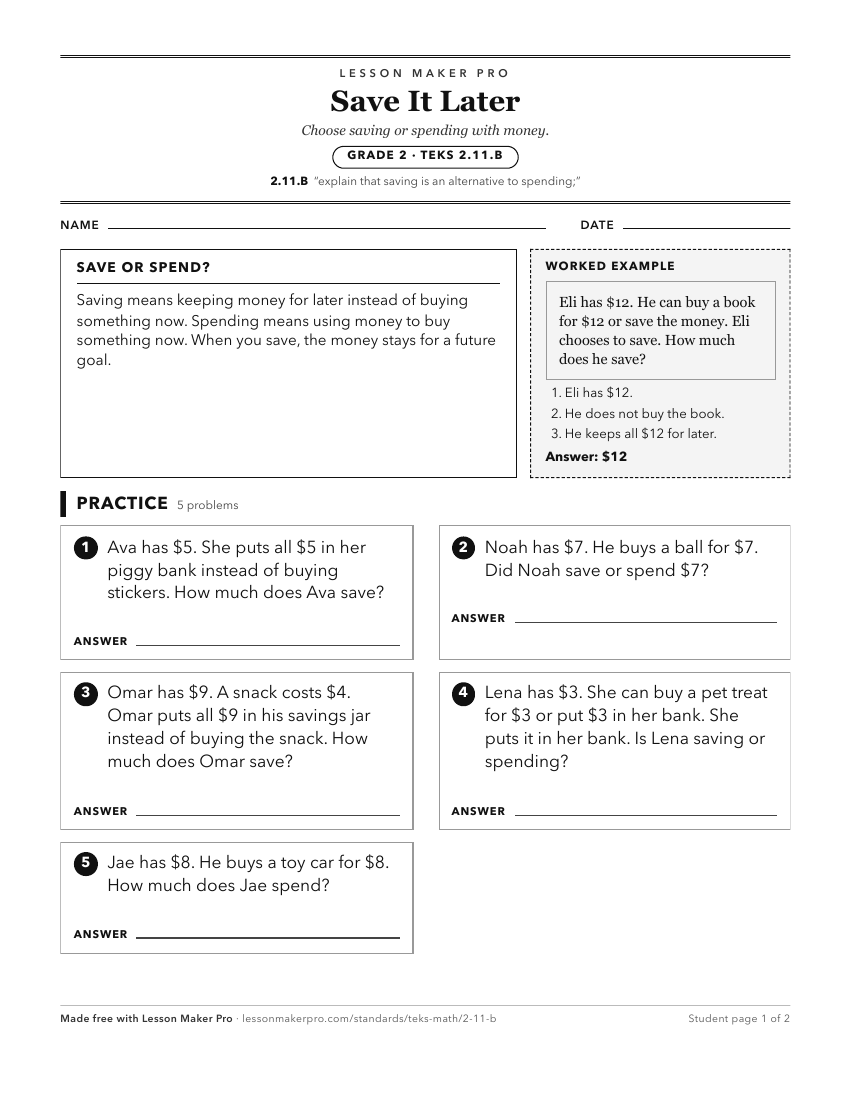
A ready-to-print activity worksheet aligned to 2.11.B, with an answer key for the teacher on its own page. No account needed.
PDF, US Letter, prints cleanly in black and white.
Download the worksheetKeep exploring
Related Standards
- 4.10.D
describe how to allocate a weekly allowance among spending; saving, including for college; and sharing
- 3.9.E
list reasons to save and explain the benefit of a savings plan, including for college
- 4.10.C
compare the advantages and disadvantages of various savings options
- 1.9.C
distinguish between spending and saving
Turn this exact standard into a lesson
Grade, subject, topic, and the complete standard are prefilled. Create one free, no account needed.
Also for this standard:Make a WorksheetMake a QuizMake a Sub Lesson