TEKS Math 1.9.C
The Standard
distinguish between spending and saving
Texas Essential Knowledge and Skills for Mathematics
Teacher's field guide
What This Standard Means
What Students Need to Do
- Students tell whether a person is using money now or keeping it for later. They sort everyday money choices and give a reason for each choice.
What Mastery Looks Like
- Students correctly sort examples based on whether money is used now or kept for later. They explain their choices using a simple reason.
Common Misconceptions
- Students may think saving means never using money. They may also confuse saving money with putting coins in any container, even when the money will be used right away.
How to Assess It
- Give students two cards: “Buy a snack today” and “Keep the money for a book later.” Ask them to label each choice and explain why.
Lesson moves
Ways to Teach It
Give pairs play coins, a piggy bank, and a class store menu, then have them choose which coins to use or keep.
Ask, “You have five dollars. Would you buy a toy today or keep the money for something later? Why?”
Play a sorting game where students place picture cards under “use money now” or “keep money for later.”
Show a grocery list and a family goal jar, then discuss which money choices pay for current needs and which support later goals.
Free download
Printable 1.9.C Worksheet
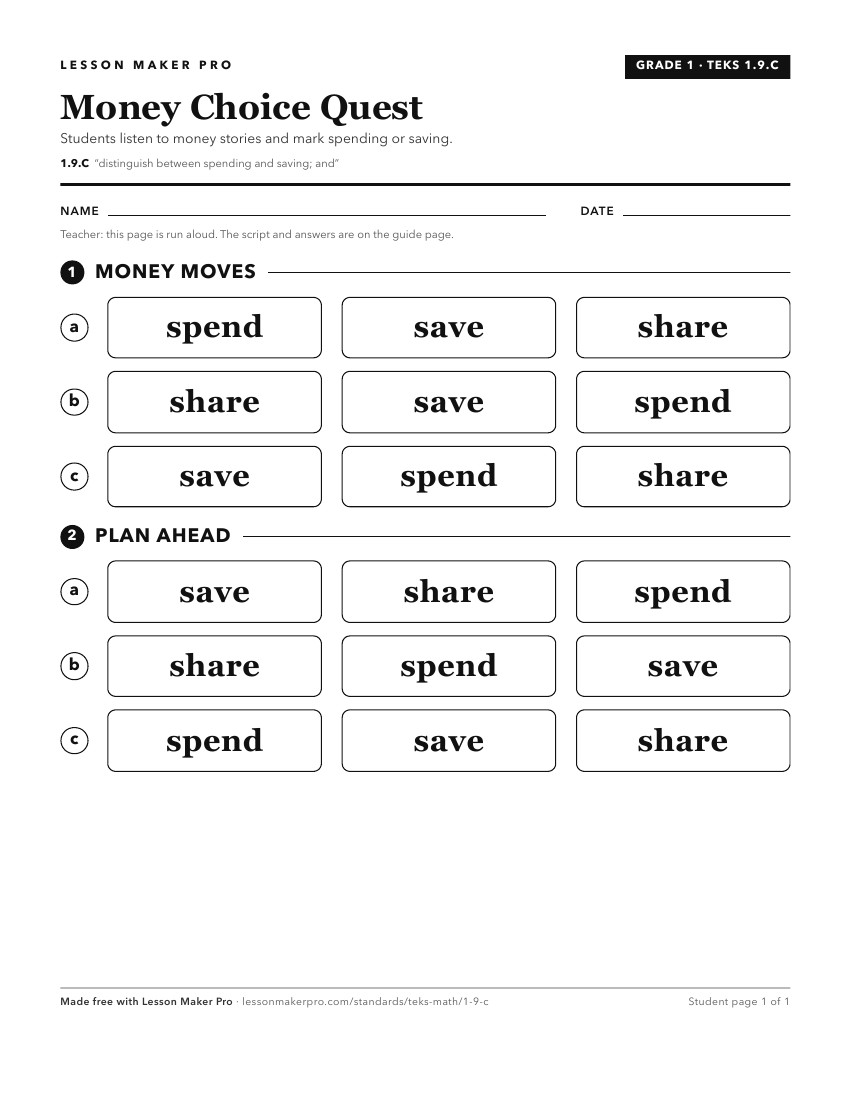
A ready-to-print activity worksheet aligned to 1.9.C, with an answer key for the teacher on its own page. No account needed.
PDF, US Letter, prints cleanly in black and white.
Download the worksheetKeep exploring
Related Standards
Turn this exact standard into a lesson
Grade, subject, topic, and the complete standard are prefilled. Create one free, no account needed.
Also for this standard:Make a WorksheetMake a QuizMake a Sub Lesson