TEKS Math 3.9.C
The Standard
identify the costs and benefits of planned and unplanned spending decisions
Texas Essential Knowledge and Skills for Mathematics
Teacher's field guide
What This Standard Means
What Students Need to Do
- Students distinguish purchases decided ahead of time from purchases made on the spot. They name what someone gains and what someone gives up with each choice. They consider effects on savings and future purchases.
What Mastery Looks Like
- A student correctly sorts purchases based on whether they were decided ahead of time. The student names a realistic gain and tradeoff for each choice. The student explains how the choice affects money available later.
Common Misconceptions
- Students may think planned purchases are always wise and unplanned purchases are always harmful. They may count only the price as a cost. They may overlook lost savings, delayed goals, usefulness, or enjoyment.
How to Assess It
- Exit ticket: “Jay saved $15 for a field trip, then spent $6 on a toy. Was the purchase planned or unplanned? Name one benefit and one cost.”
Lesson moves
Ways to Teach It
Give pairs $20 in play money, purchase cards, and a surprise expense card, then have them explain what each choice gains and gives up.
Ask students to write about a time they wanted something suddenly, then name one benefit of buying it and one reason to wait.
Play Scenario Sort: teams place spending cards under planned or unplanned, then earn a point for naming a realistic cost and benefit.
Use a grocery flyer and a $25 budget to choose planned items, then discuss how an unplanned snack changes the budget.
Free download
Printable 3.9.C Worksheet
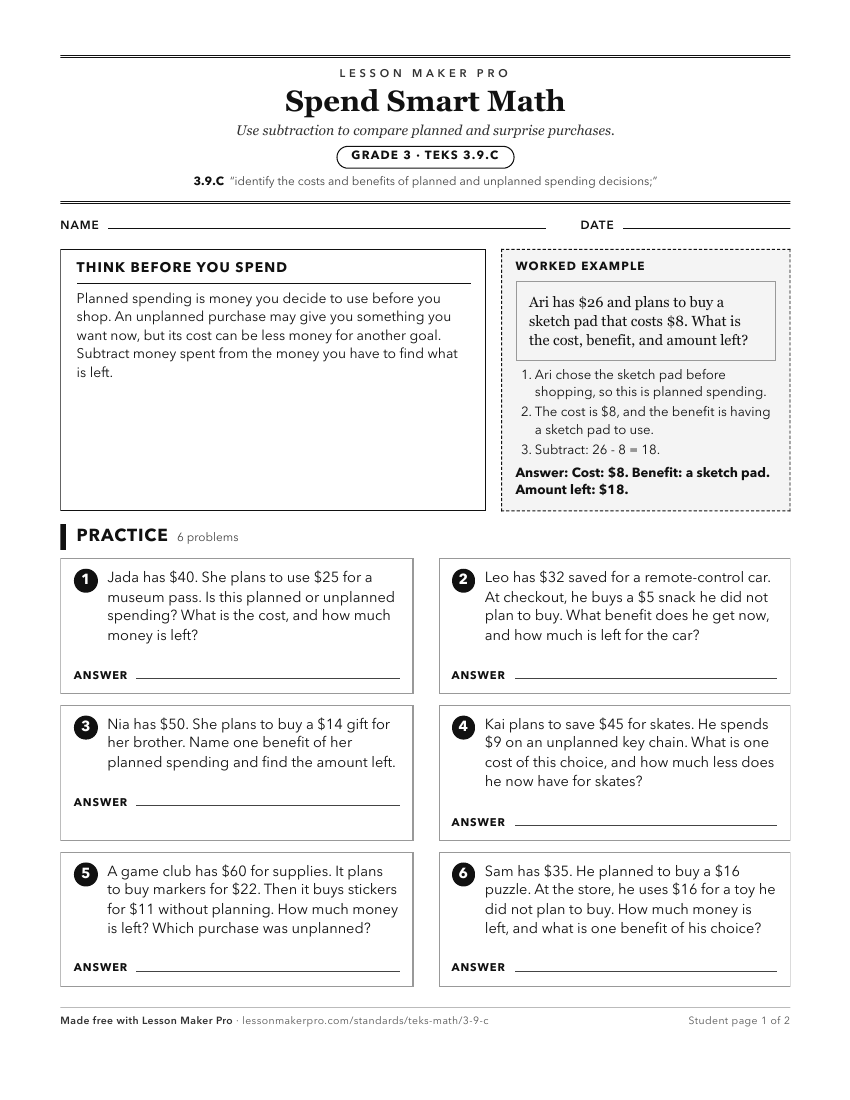
A ready-to-print activity worksheet aligned to 3.9.C, with an answer key for the teacher on its own page. No account needed.
PDF, US Letter, prints cleanly in black and white.
Download the worksheetKeep exploring
Related Standards
- 3.9.F
identify decisions involving income, spending, saving, credit, and charitable giving
- 8.12.F
analyze situations to determine if they represent financially responsible decisions and identify the benefits of financial responsibility and the costs of finan...
- 1.9.C
distinguish between spending and saving
- 2.11.E
identify examples of lending and use concepts of benefits and costs to evaluate lending decisions
Turn this exact standard into a lesson
Grade, subject, topic, and the complete standard are prefilled. Create one free, no account needed.
Also for this standard:Make a WorksheetMake a QuizMake a Sub Lesson