TEKS Math 2.11.E
The Standard
identify examples of lending and use concepts of benefits and costs to evaluate lending decisions
Texas Essential Knowledge and Skills for Mathematics
Teacher's field guide
What This Standard Means
What Students Need to Do
- Students recognize when a person or business lets someone use money or an item that must be returned. They weigh what the lender may gain against possible costs or risks.
What Mastery Looks Like
- Students can sort situations into lending and not lending, then identify who is the lender. They can name a likely benefit and cost and use both to explain a decision.
Common Misconceptions
- Students may think lending means giving something away forever. They may confuse the lender with the borrower or assume every cost is money. They may overlook risks such as damage, loss, or not having the item available.
How to Assess It
- Use this exit ticket: “Leo wants to lend Sam $5 until Friday. Name one benefit, one cost, and whether Leo should lend it.”
Lesson moves
Ways to Teach It
Give pairs classroom objects and scenario cards, then have them decide whether to lend each object and record one benefit and cost.
Ask students to write: “Would you lend your favorite book to a friend? Explain one benefit, one cost, and your decision.”
Play Lend or Keep by reading short scenarios while students hold up a card and earn points for giving a clear reason.
Compare borrowing a library book with borrowing money from a bank, including return dates, fees, and what each lender gains.
Free download
Printable 2.11.E Worksheet
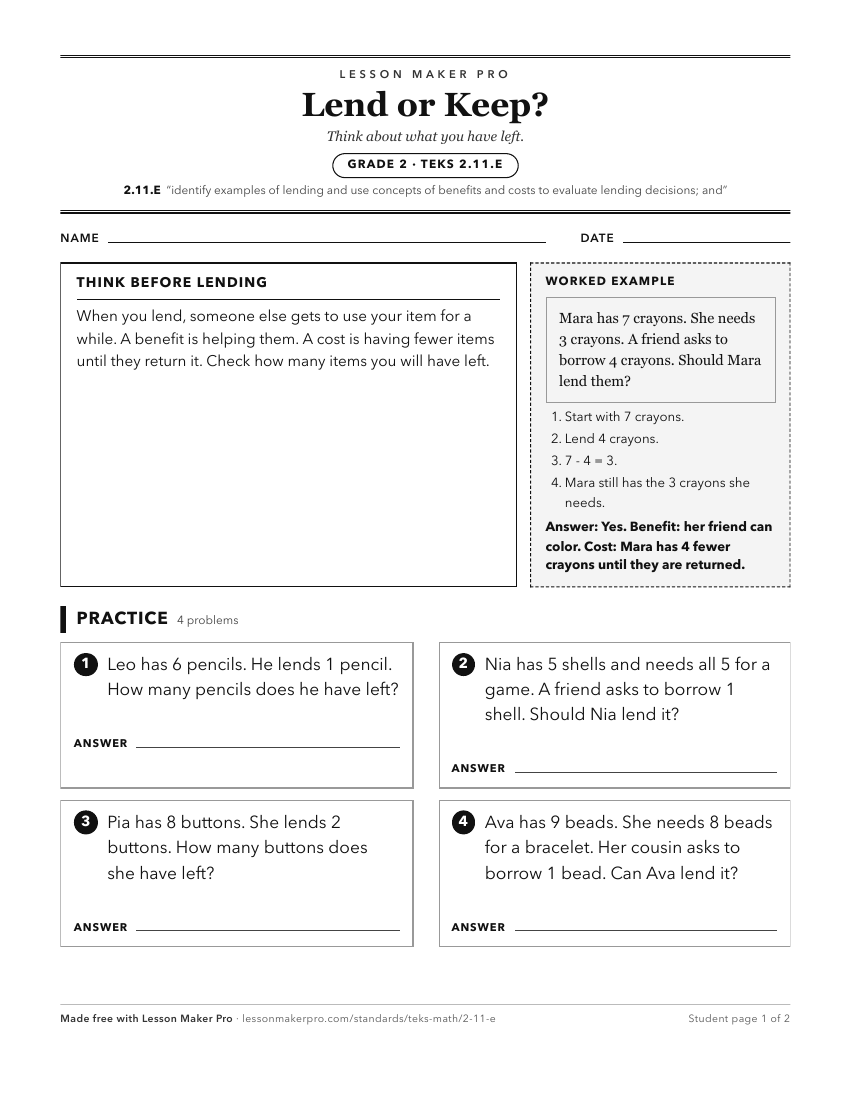
A ready-to-print activity worksheet aligned to 2.11.E, with an answer key for the teacher on its own page. No account needed.
PDF, US Letter, prints cleanly in black and white.
Download the worksheetKeep exploring
Related Standards
- 8.12.A
solve real-world problems comparing how interest rate and loan length affect the cost of credit
- 3.9.C
identify the costs and benefits of planned and unplanned spending decisions
- 8.12.F
analyze situations to determine if they represent financially responsible decisions and identify the benefits of financial responsibility and the costs of finan...
- 2.11.D
identify examples of borrowing and distinguish between responsible and irresponsible borrowing
Turn this exact standard into a lesson
Grade, subject, topic, and the complete standard are prefilled. Create one free, no account needed.
Also for this standard:Make a WorksheetMake a QuizMake a Sub Lesson