TEKS Math 2.11.D
The Standard
identify examples of borrowing and distinguish between responsible and irresponsible borrowing
Texas Essential Knowledge and Skills for Mathematics
Teacher's field guide
What This Standard Means
What Students Need to Do
- Students examine situations where someone uses an item or money that belongs to another person. They decide whether the borrower acts responsibly and give a reason.
What Mastery Looks Like
- Students correctly sort borrowing situations by whether the borrower asks permission, cares for the item, and returns or repays it as promised. They explain their choices clearly.
Common Misconceptions
- Students may think borrowing means an item becomes theirs. They may also judge borrowing only by what is borrowed, rather than permission, repayment, timing, and care.
How to Assess It
- Give students two scenarios: borrowing a library book and returning it on time, and borrowing money without a repayment plan. Ask them to label each choice and explain why.
Lesson moves
Ways to Teach It
Give pairs picture cards showing borrowing situations, then have them sort the cards into responsible and irresponsible choices.
Ask students to write what they should do before, during, and after borrowing a classroom pencil.
Play Borrowing Charades, where students act out a scenario and classmates identify the responsible or irresponsible behavior.
Examine library book rules and discuss how due dates and careful handling help everyone share the books.
Free download
Printable 2.11.D Worksheet
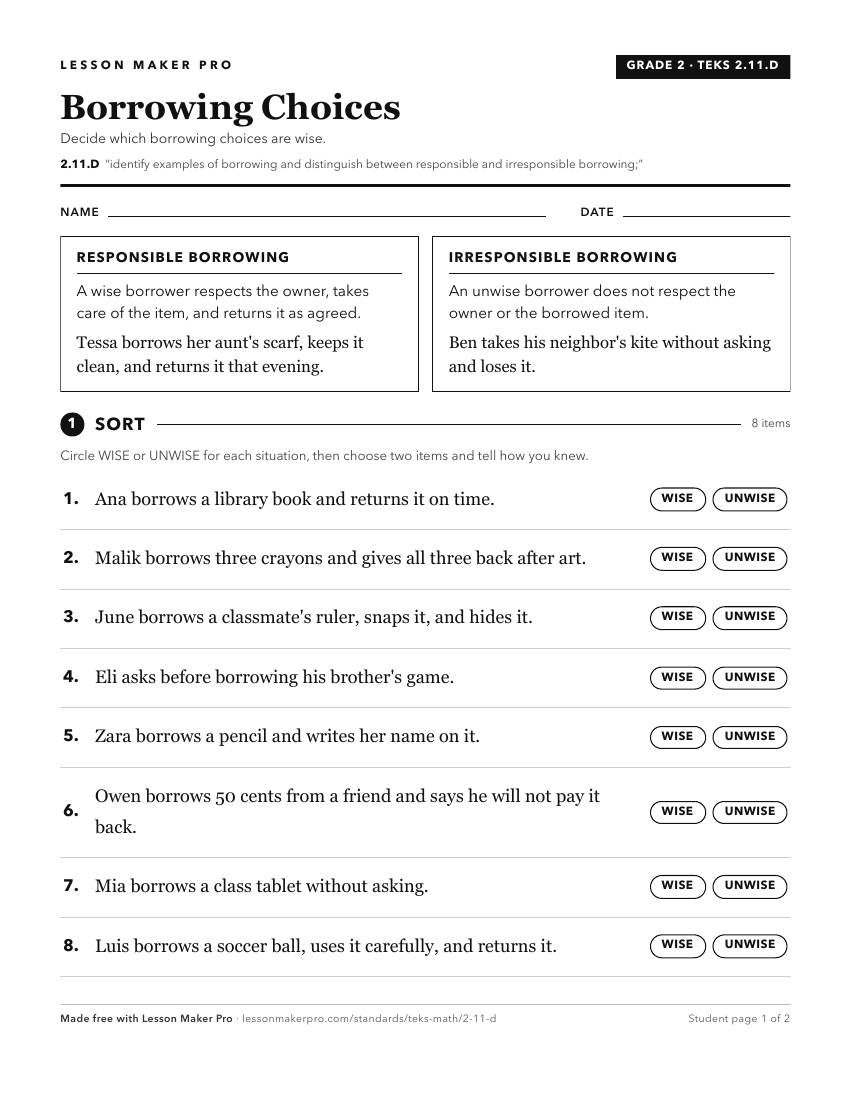
A ready-to-print activity worksheet aligned to 2.11.D, with an answer key for the teacher on its own page. No account needed.
PDF, US Letter, prints cleanly in black and white.
Download the worksheetKeep exploring
Related Standards
- 8.12.F
analyze situations to determine if they represent financially responsible decisions and identify the benefits of financial responsibility and the costs of finan...
- 1.9.C
distinguish between spending and saving
- 3.9.D
explain that credit is used when wants or needs exceed the ability to pay and that it is the borrower's responsibility to pay it back to the lender, usually wit...
- 2.11.E
identify examples of lending and use concepts of benefits and costs to evaluate lending decisions
Turn this exact standard into a lesson
Grade, subject, topic, and the complete standard are prefilled. Create one free, no account needed.
Also for this standard:Make a WorksheetMake a QuizMake a Sub Lesson