TEKS Math 6.14.A
The Standard
compare the features and costs of a checking account and a debit card offered by different local financial institutions
Texas Essential Knowledge and Skills for Mathematics
Teacher's field guide
What This Standard Means
What Students Need to Do
- Students read account and debit card details from local banks or credit unions. They compare fees, access, balance rules, and protections, then choose an option for a specific spending pattern.
What Mastery Looks Like
- Students can compare fees, balance rules, ATM access, overdraft policies, and debit card protections. They calculate likely costs for a given customer and justify which option fits best.
Common Misconceptions
- Students may think a debit card is a separate source of money rather than a way to access checking funds. They may overlook monthly fees, ATM fees, overdraft charges, or balance requirements. Some confuse debit cards with credit cards.
How to Assess It
- Give students two options: Account A costs $5 monthly with free ATM use. Account B has no monthly fee but charges $3 per withdrawal. Ask which costs less for four monthly withdrawals and why.
Lesson moves
Ways to Teach It
Give pairs two sample bank fee sheets, calculators, and customer profiles, then have them choose the lower-cost account for each customer.
Ask students to write which account feature matters most for a teenager who receives allowance and uses an ATM twice each month.
Play Fee Match by having teams match banking actions, such as overdrawing or using another bank's ATM, to the correct charges.
Use public fee pages from two local banks or credit unions, then calculate one year of costs for a student customer.
Free download
Printable 6.14.A Worksheet
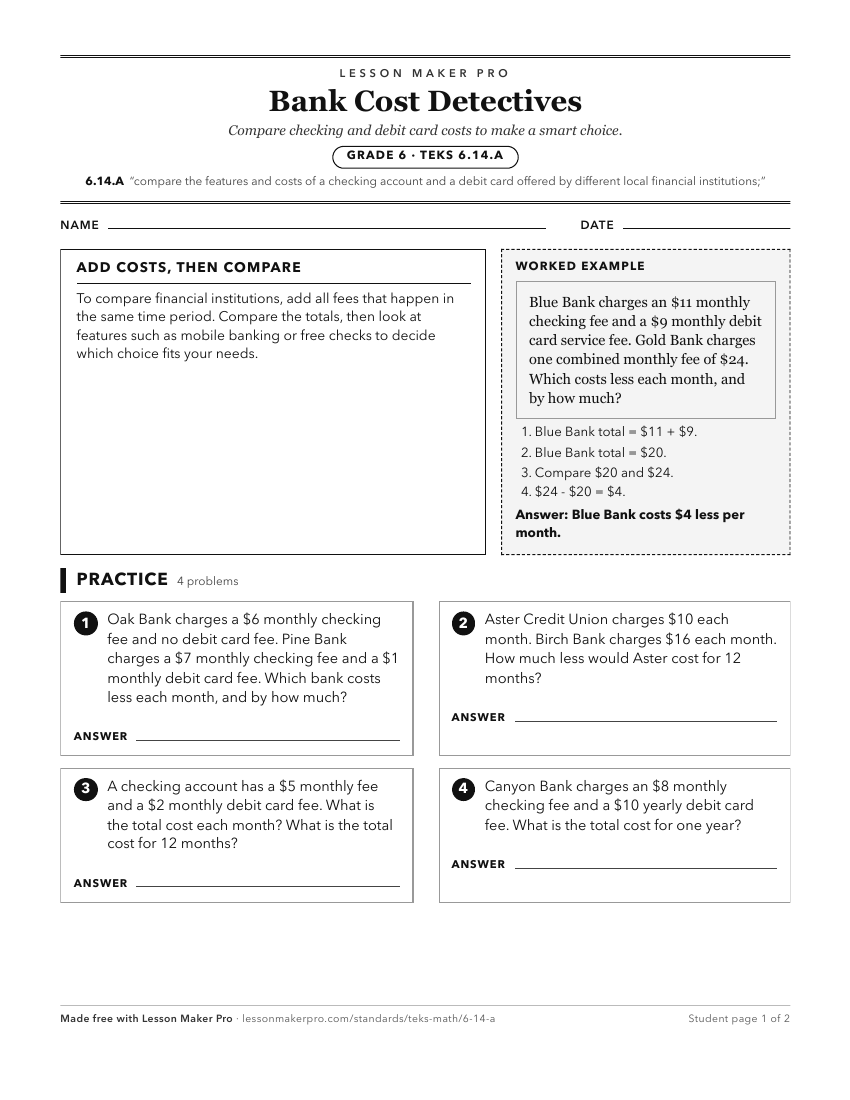
A ready-to-print activity worksheet aligned to 6.14.A, with an answer key for the teacher on its own page. No account needed.
PDF, US Letter, prints cleanly in black and white.
Download the worksheetKeep exploring
Related Standards
- 4.10.C
compare the advantages and disadvantages of various savings options
- 6.14.B
distinguish between debit cards and credit cards
- 8.12.E
identify and explain the advantages and disadvantages of different payment methods
- 5.10.C
identify the advantages and disadvantages of different methods of payment, including check, credit card, debit card, and electronic payments
Turn this exact standard into a lesson
Grade, subject, topic, and the complete standard are prefilled. Create one free, no account needed.
Also for this standard:Make a WorksheetMake a QuizMake a Sub Lesson