TEKS Math 3.9.B
The Standard
describe the relationship between the availability or scarcity of resources and how that impacts cost
Texas Essential Knowledge and Skills for Mathematics
Teacher's field guide
What This Standard Means
What Students Need to Do
- Students connect how much of an item is available to what it may cost. They explain why fewer available items can raise prices and greater supplies can lower them.
What Mastery Looks Like
- Students predict that a limited item will usually cost more when people still want it. They explain that a plentiful item will usually cost less and use a clear example.
Common Misconceptions
- Students may think scarce means completely gone rather than limited. They may assume a scarce item always costs more, even when few people want it. Some confuse scarcity with buyers having less money.
How to Assess It
- Exit ticket: Two stands have the same number of buyers. One has 5 water bottles and one has 50. Which stand may charge more, and why?
Lesson moves
Ways to Teach It
Run two sticker auctions with play money, first offering two stickers, then twenty, and compare the winning bids.
Discuss: A freeze destroys half an orange crop. Predict what may happen to orange prices and explain why.
Students draw resource cards, label each item plentiful or scarce, then match it to a likely higher or lower price card.
Compare ticket prices when 500 seats remain and when 10 remain, then explain why the prices may differ.
Free download
Printable 3.9.B Worksheet
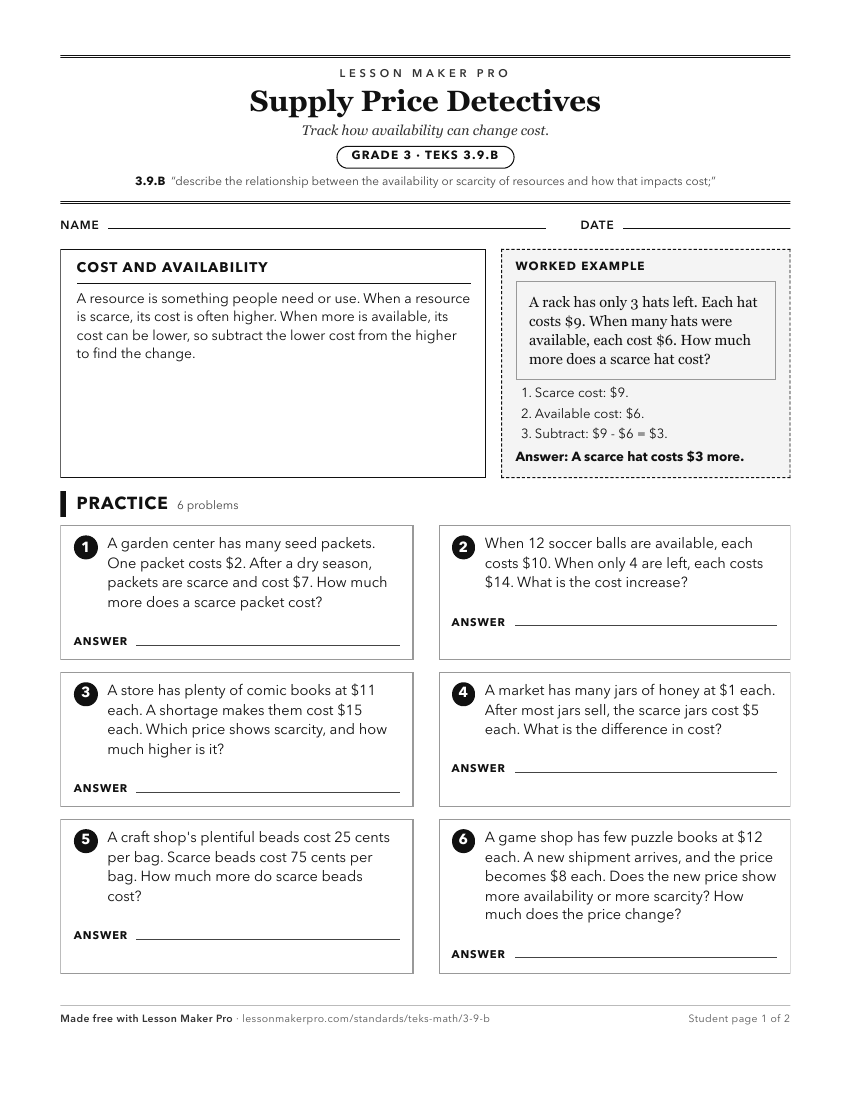
A ready-to-print activity worksheet aligned to 3.9.B, with an answer key for the teacher on its own page. No account needed.
PDF, US Letter, prints cleanly in black and white.
Download the worksheetKeep exploring
Related Standards
- 3.9.C
identify the costs and benefits of planned and unplanned spending decisions
- 2.11.F
differentiate between producers and consumers and calculate the cost to produce a simple item
- 3.9.A
explain the connection between human capital/labor and income
- 2.11.E
identify examples of lending and use concepts of benefits and costs to evaluate lending decisions
Turn this exact standard into a lesson
Grade, subject, topic, and the complete standard are prefilled. Create one free, no account needed.
Also for this standard:Make a WorksheetMake a QuizMake a Sub Lesson