TEKS Math 2.11.F
The Standard
differentiate between producers and consumers and calculate the cost to produce a simple item
Texas Essential Knowledge and Skills for Mathematics
Teacher's field guide
What This Standard Means
What Students Need to Do
- Students decide whether a person makes or provides something, or buys and uses it. They add the prices of materials needed to make one simple item.
What Mastery Looks Like
- Students correctly label people in simple situations as producers or consumers. They add all listed material costs, including repeated items, and state the total with a cent or dollar sign.
Common Misconceptions
- Students may think a producer must grow food or work in a factory. They may confuse production cost with the selling price or leave out repeated material costs.
How to Assess It
- Give students this exit ticket: “A student uses two 5-cent beads and one 10-cent string to make a bracelet. Find the production cost and name the producer and consumer.”
Lesson moves
Ways to Teach It
Give groups paper, ribbon, and supply price cards to make a bookmark, then add the cost of every material used.
Ask students to explain in writing how one person can be both a producer and a consumer during the same day.
Play a sorting game with job and shopping cards, then award a point when students correctly identify each producer or consumer.
Examine a school lunch item, list who produced it and who consumes it, then total the costs of its pictured ingredients.
Free download
Printable 2.11.F Worksheet
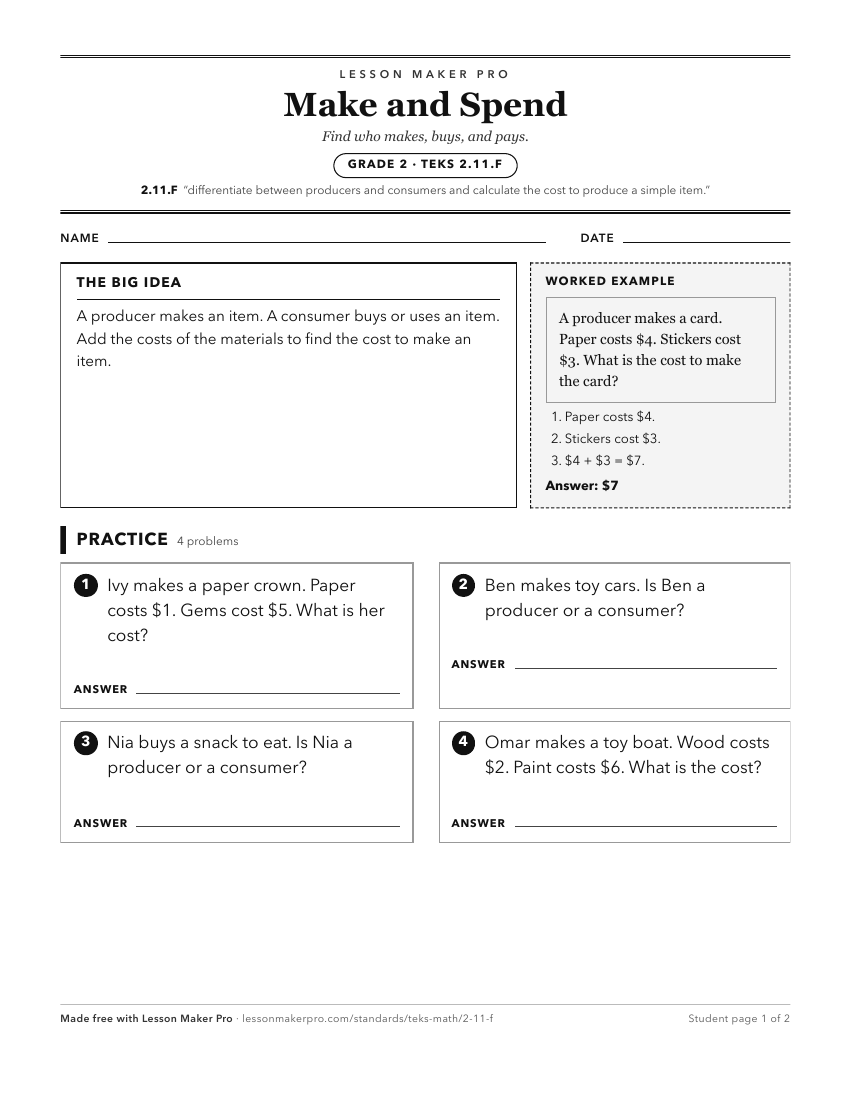
A ready-to-print activity worksheet aligned to 2.11.F, with an answer key for the teacher on its own page. No account needed.
PDF, US Letter, prints cleanly in black and white.
Download the worksheetKeep exploring
Related Standards
Turn this exact standard into a lesson
Grade, subject, topic, and the complete standard are prefilled. Create one free, no account needed.
Also for this standard:Make a WorksheetMake a QuizMake a Sub Lesson