TEKS Math 7.13.E
The Standard
calculate and compare simple interest and compound interest earnings
Texas Essential Knowledge and Skills for Mathematics
Teacher's field guide
What This Standard Means
What Students Need to Do
- Students calculate how much money an investment earns using simple interest and annual compounding. They compare the earnings when the principal, rate, and time are given.
What Mastery Looks Like
- Students correctly find the interest earned and final balance for each account. They compare equal investments and explain that compounding adds interest to earlier interest.
Common Misconceptions
- Students may add the same interest amount each year for both account types. They may use the percent as a whole number, confuse the balance with earnings, or compare accounts with different starting amounts.
How to Assess It
- Give students two $500 accounts at 4% for three years, one with simple interest and one compounded annually. Ask for each account’s earnings and which earns more.
Lesson moves
Ways to Teach It
Give pairs account cards, calculators, and a three-year balance table to model simple and annually compounded interest on $200.
Ask students to write which account they would choose, using calculated earnings from two equal deposits as evidence.
Run an interest match game where students pair account terms with correct earnings, balances, and simple or compound labels.
Compare two savings account offers from real bank websites, using the same deposit and time period to decide which pays more.
Free download
Printable 7.13.E Worksheet
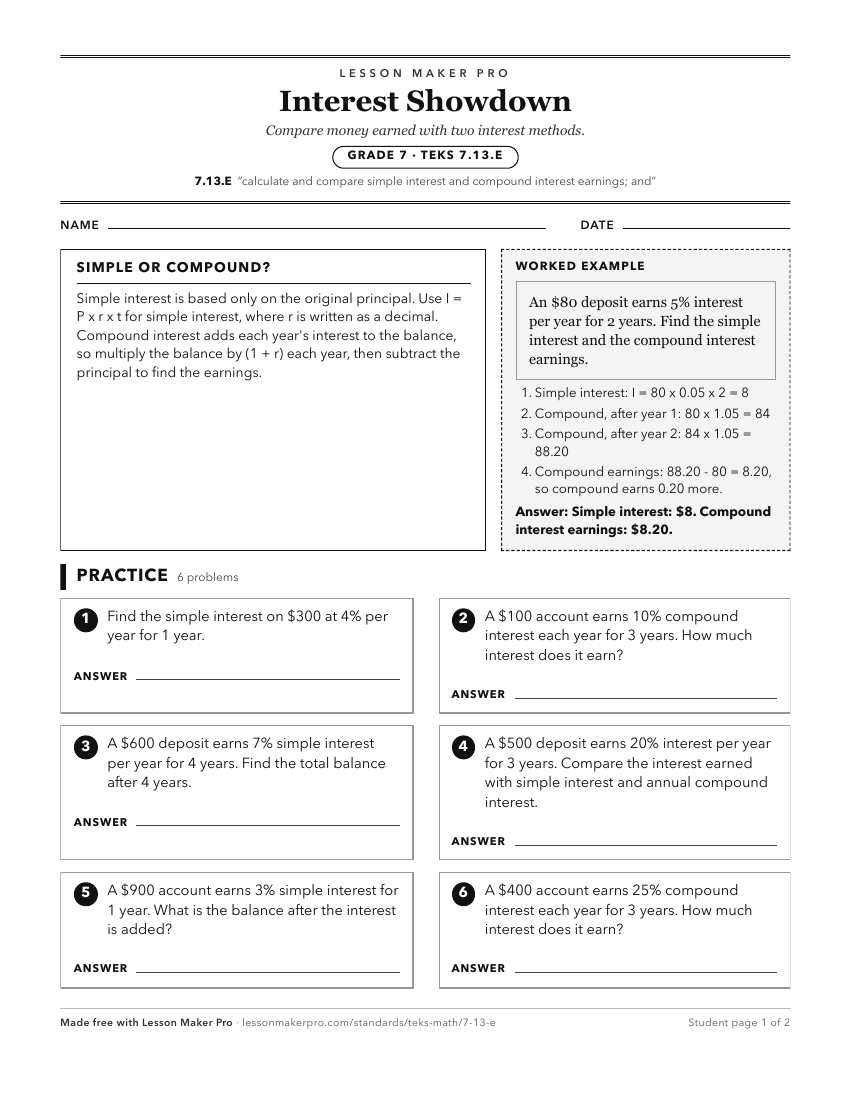
A ready-to-print activity worksheet aligned to 7.13.E, with an answer key for the teacher on its own page. No account needed.
PDF, US Letter, prints cleanly in black and white.
Download the worksheetKeep exploring
Related Standards
- 7.13.A
calculate the sales tax for a given purchase and calculate income tax for earned wages
- 8.12.B
calculate the total cost of repaying a loan, including credit cards and easy access loans, under various rates of interest and over different periods using an o...
- 2.11.A
calculate how money saved can accumulate into a larger amount over time
- 8.12.D
The 8th Grade version of this standard.
Turn this exact standard into a lesson
Grade, subject, topic, and the complete standard are prefilled. Create one free, no account needed.
Also for this standard:Make a WorksheetMake a QuizMake a Sub Lesson