TEKS Math 7.13.A
The Standard
calculate the sales tax for a given purchase and calculate income tax for earned wages
Texas Essential Knowledge and Skills for Mathematics
Teacher's field guide
What This Standard Means
What Students Need to Do
- Students convert a tax rate from a percent to a decimal and multiply it by the taxable amount. They find sales tax on a purchase and income tax on earned wages, then label the result as tax.
What Mastery Looks Like
- Given a price or wage amount and a tax rate, a student chooses the correct base and calculates the tax accurately. The student shows the multiplication and distinguishes the tax amount from the total cost or take-home pay.
Common Misconceptions
- Students often multiply by the whole-number percent, such as 8 instead of 0.08, or divide by 100 twice. They may report the purchase total instead of sales tax, subtract sales tax, or use hours worked instead of gross wages for income tax.
How to Assess It
- Exit ticket: A game costs $36 and sales tax is 8.25%. Jordan earns $420 and pays 12% income tax. Find each tax amount and show the equation.
Lesson moves
Ways to Teach It
Give pairs store ads, play money, and tax-rate cards. Students choose two items and calculate the sales tax for each purchase.
Ask students to explain why 7.5% becomes 0.075 and why the tax amount is smaller than the taxable purchase or wages.
Run a matching game with price or wage cards, tax-rate cards, equations, and tax amounts. Teams justify every match.
Use a sample pay stub and receipt to identify gross wages, taxable purchase amounts, rates, and the tax charged.
Free download
Printable 7.13.A Worksheet
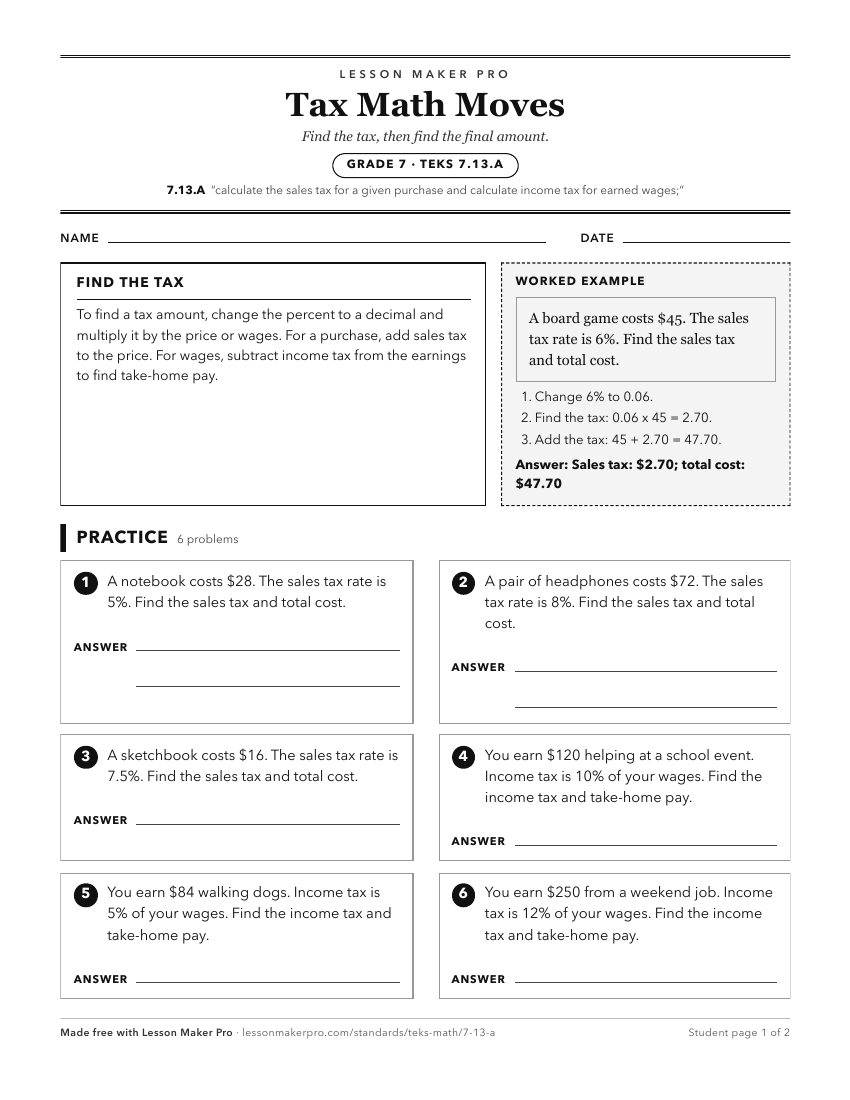
A ready-to-print activity worksheet aligned to 7.13.A, with an answer key for the teacher on its own page. No account needed.
PDF, US Letter, prints cleanly in black and white.
Download the worksheetKeep exploring
Related Standards
Turn this exact standard into a lesson
Grade, subject, topic, and the complete standard are prefilled. Create one free, no account needed.
Also for this standard:Make a WorksheetMake a QuizMake a Sub Lesson