TEKS Math 3.1.B
The Standard
use a problem-solving model that incorporates analyzing given information, formulating a plan or strategy, determining a solution, justifying the solution, and evaluating the problem-solving process and the reasonableness of the solution
Texas Essential Knowledge and Skills for Mathematics
Teacher's field guide
What This Standard Means
What Students Need to Do
- Students identify what they know, what they need to find, and which strategy fits the problem. They solve, explain why their method works, and check whether the answer makes sense.
What Mastery Looks Like
- A student can mark useful facts, choose an operation or model, and calculate accurately. The student can explain each step and use estimation, inverse operations, or the context to check the result.
Common Misconceptions
- Students may use every number in the problem without deciding whether it matters. They may stop after calculating, skip the explanation, or accept an answer that does not fit the situation.
How to Assess It
- Give this exit ticket: “A teacher puts 48 pencils into cups, with 6 pencils in each cup. How many cups are needed?” Students label the known facts, show a plan and solution, then explain one way they checked it.
Lesson moves
Ways to Teach It
Give pairs 36 counters and a story problem, then have them record know, need, plan, solve, and check on a five-part mat.
Post two sample solutions and ask, “Which plan is clearer, and how can you prove the answer fits the problem?”
Play Strategy Sort by having teams match problem cards with drawings, equations, tables, or number lines, then defend each match.
Have students plan equal snack bags for 24 classmates, calculate the items needed, and check whether their totals match the class size.
Free download
Printable 3.1.B Worksheet
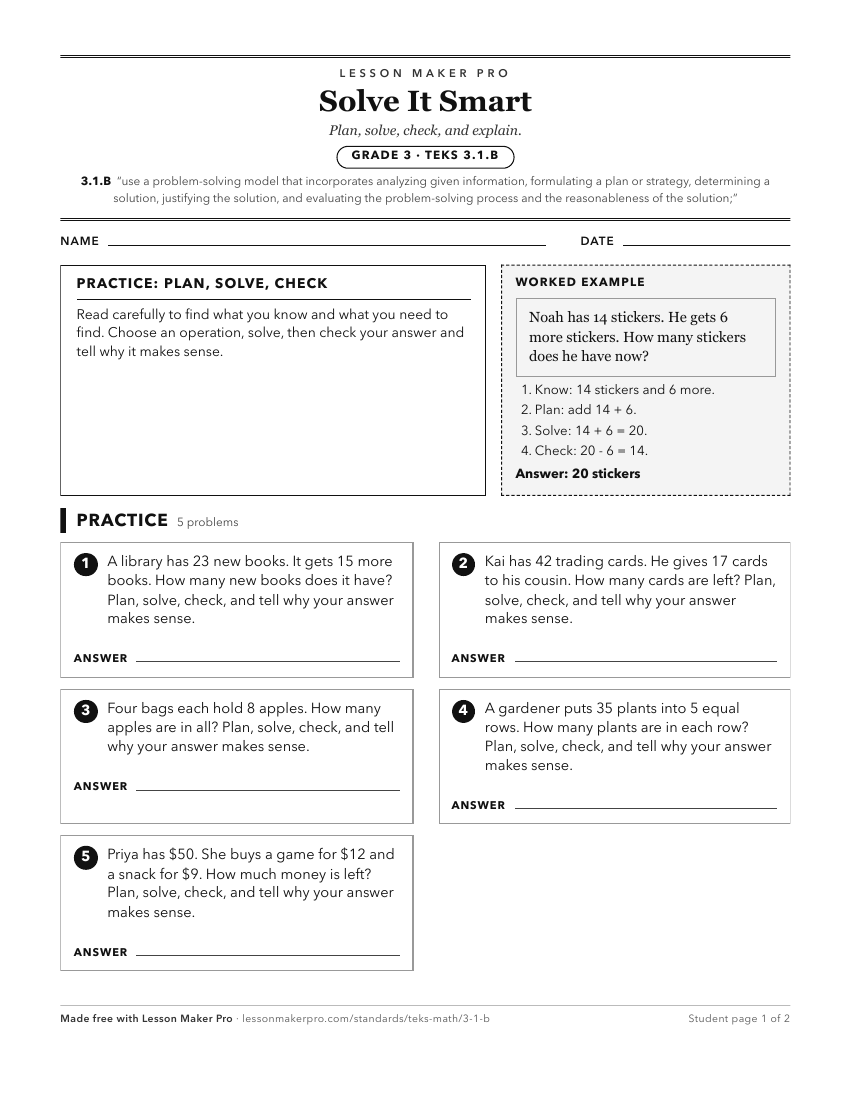
A ready-to-print activity worksheet aligned to 3.1.B, with an answer key for the teacher on its own page. No account needed.
PDF, US Letter, prints cleanly in black and white.
Download the worksheetKeep exploring
Related Standards
Turn this exact standard into a lesson
Grade, subject, topic, and the complete standard are prefilled. Create one free, no account needed.
Also for this standard:Make a WorksheetMake a QuizMake a Sub Lesson