TEKS ELAR K.6.F
The Standard
respond using newly acquired vocabulary as appropriate.
Texas Essential Knowledge and Skills for English Language Arts and Reading
Teacher's field guide
What This Standard Means
What Students Need to Do
- Students use words they recently learned when speaking, drawing and labeling, or writing about something read, heard, or viewed. They choose words that fit the meaning.
What Mastery Looks Like
- After a read-aloud, the student answers a question using a recently taught word correctly. The student can connect the word to a character, event, picture, or personal example.
Common Misconceptions
- Students may repeat a taught word without using it correctly. They may rely on vague words like “thing” or “nice,” or confuse words with related meanings.
How to Assess It
- Show a picture of an enormous elephant beside a tiny mouse. Ask, “Tell me about this picture using enormous or tiny.”
Lesson moves
Ways to Teach It
After a read-aloud, students choose a prop, act out one taught word, and use it in a sentence about the story.
Ask, “Which character was cautious, and what did the character do that shows it?” Require cautious in each response.
Play vocabulary charades with picture cards from the week’s read-alouds, then have guessers say, “The word is ___ because ___.”
During a classroom walk, students find something enormous, fragile, crowded, or empty and explain their choice using that word.
Free download
Printable K.6.F Worksheet
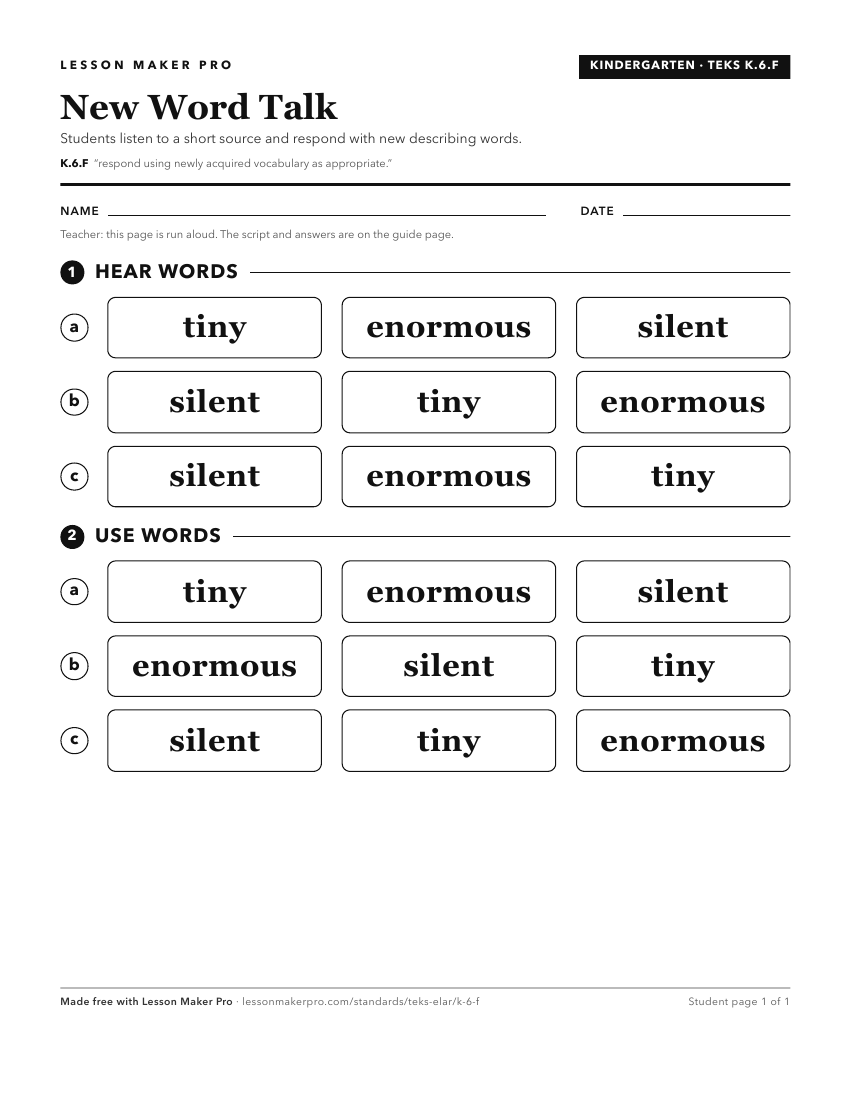
A ready-to-print activity worksheet aligned to K.6.F, with an answer key for the teacher on its own page. No account needed.
PDF, US Letter, prints cleanly in black and white.
Download the worksheetKeep exploring
Related Standards
Turn this exact standard into a lesson
Grade, subject, topic, and the complete standard are prefilled. Create one free, no account needed.
Also for this standard:Make a WorksheetMake a QuizMake a Sub Lesson